Plenty of entrepreneurs start a business for freedom and end up building a cage.
At first, the grind feels noble. Long hours. Constant problem-solving. Endless sacrifice. You tell yourself this is temporary. You believe the hustle is the bridge to time freedom, financial freedom, and a better life.
Then something strange happens.
The business grows, but your life shrinks.
You make more money, but you have less time. You have more responsibility, more pressure, more moving parts, and somehow even less room to breathe than when you had a job. Instead of owning a business, the business owns you.
That is the real trap.
And for many founders, the reason they stay stuck is not laziness, lack of intelligence, or lack of effort. It is something far more subtle and powerful: legacy patterns.
These are the beliefs, habits, emotional reactions, and identity-level assumptions inherited from family, school, work culture, and past environments. They helped you survive one world. But they may be sabotaging you in another.
This matters more than ever in a business environment shaped by AI, economic uncertainty, shifting buyer behavior, and accelerating change. Old operating systems are breaking. The entrepreneur who survives and scales is not necessarily the one who works hardest. It is the one who upgrades how they think, decide, build, and respond.
Table of Contents
- The Hard Truth About Entrepreneurship Nobody Likes to Say Out Loud
- A Problem Without a Solution Is Not a Complaint
- Why Entrepreneurs Run From Challenges Even When They Say They Want Growth
- The 5 Levels of Entrepreneurial Growth
- What Legacy Patterns Really Are
- How Family Patterns Show Up in Business
- Why School and Jobs Often Train You to Struggle in Business
- Why Change Is Not the Threat. Rigidity Is.
- How to Know You’re Moving in the Right Direction
- Using AI as Leverage Instead of Fear Fuel
- Every New Tool Gives Something and Takes Something
- Why Complaints Are a Hidden Revenue Opportunity
- Find the Person You’re Trying to Become
- The Real Meaning of Entrepreneurial Freedom
- Sales, Negotiation, and the Cost of Inaction
- Life Is Creation and Destruction at the Same Time
- How to Break the Pattern and Stop Being Enslaved to Your Business
- FAQ
- Final Thought
The Hard Truth About Entrepreneurship Nobody Likes to Say Out Loud
Entrepreneurship is often sold as escape.
Escape the boss. Escape the commute. Escape the paycheck ceiling. Escape the limits of employment.
There is truth in that. Owning a business can create a level of freedom that most jobs never will.
But there is another truth that hits much harder once the honeymoon phase ends: entrepreneurship does not remove constraints. It changes them.
When you are an employee, you operate inside a system somebody else built. That system limits your upside, but it also protects you from having to create the machine.
When you become an entrepreneur, your job is no longer just delivering the work. Your job is building the system that delivers the work.
That is a massive shift.
Miss that shift, and you do not create a business. You create a self-employed job with more stress and fewer boundaries.
This is why so many business owners plateau. Effort got them through the early stage. Force got them through the startup stage. But after a point, brute strength becomes the bottleneck.
If effort alone could fix it, you would already be scaling.
A Problem Without a Solution Is Not a Complaint
One of the most powerful mindset shifts in business is how you define a problem.
Most people hear “problem without a solution” and think: complaint, frustration, dead end.
A stronger lens is this: a problem without a solution is a challenge.
That sounds simple, but it changes everything.
A complaint is passive. A challenge is active.
A complaint makes you smaller. A challenge calls you forward.
A complaint keeps you stuck in emotion. A challenge demands perspective, experimentation, and action.
Entrepreneurship is built on this distinction. Businesses exist because problems exist. If there is no problem being solved, there is no business. So the founder who avoids challenges is avoiding the very material business is made of.
This is why language matters so much.
Take a common line many owners repeat: “Q1 is going to be slow.”
That statement sounds harmless. It sounds realistic. It may even sound seasoned.
But it quietly locks you into passivity.
A better question is: How can I maximize Q1?
That one change flips your brain from prediction to strategy. Instead of surrendering to seasonal patterns, you start looking for moves, leverage points, offers, campaigns, partnerships, and positioning shifts.
In other words, you stop rehearsing defeat and start engineering opportunity.

Why Entrepreneurs Run From Challenges Even When They Say They Want Growth
Most founders do not consciously run away from challenges. What usually happens is more subtle.
They hit a dead end with their current perspective.
They keep applying old behaviors, old assumptions, and old patterns to new problems. Then they get frustrated when the same approaches stop working. The real issue is not lack of commitment. It is that the solution often lives in what they do not know yet, or what they once knew but forgot to apply.
This is where mindset becomes incredibly practical.
Carol Dweck’s concept of fixed mindset versus growth mindset applies directly here. A fixed mindset wants situations where success feels predictable and safe. A growth mindset is willing to enter situations where the answer is not obvious yet.
That is the entrepreneur’s natural habitat.
If you only want to operate where you already know you can win, you will eventually cap your business. Growth lives outside your current skill set. Expansion requires discomfort.
That does not mean chaos for chaos’s sake. It means becoming comfortable with the reality that your day will often be spent in uncertainty, in experimentation, and in solving things you have never solved before.
The 5 Levels of Entrepreneurial Growth
One of the most useful frameworks shared in this conversation is the idea that entrepreneurs move through distinct stages. At each level, a different trap can keep them stuck.
These stages explain why someone can be highly driven and still deeply unhappy.
Level 1: The Employee Who Wants Out
This is the person in a job who feels constrained by the system. They believe they can build a better mousetrap. They want autonomy, ownership, and upside.
The problem is they often leave employment while still thinking like an employee.
So instead of building a business, they build themselves a job.
It feels better than having a boss. There is more control and more room to move. But structurally, they are still trapped in the same mental model: work more, do more, carry more.
Level 2: The Founder Who Matches Their Old Salary
At this stage, the business is real. Revenue exists. There is traction.
But the owner has only recreated their former income, often with significantly more pressure.
This is the moment where many realize that entrepreneurship has not yet delivered the freedom they imagined. They are working harder for a similar result.
To move beyond this level, they need to stop behaving like the main employee and start behaving like the architect of the business.
Level 3: The Business Owner Who Makes More but Becomes a Slave
This is a painful stage because, from the outside, it looks like success.
Revenue is up. Demand is growing. The founder is “winning.”
But internally, everything depends on them. They are there 24/7. They cannot unplug. They cannot take vacations. They feel guilty spending money because the business still feels fragile. Burnout starts setting in.
This is the classic scenario where effort creates growth, but no systems create freedom.
The business is bigger, but the dependency is still total.
Level 4: Financial Freedom and Time Freedom
This is where the system finally starts working without constant founder intervention.
Processes are in place. Roles are clear. The owner can step away without feeling the whole thing will collapse overnight. There is room to breathe.
For many entrepreneurs, this is the first taste of the freedom they imagined at the start.
It is powerful. And yet, it is still not the final stage.
Level 5: The Search for Significance
Here is where things get really interesting.
Some entrepreneurs reach financial freedom and time freedom, then ask: Is that it?
They thought the money and the freedom would complete the picture. Instead, they feel restless, empty, or strangely directionless.
This is the stage where some fall into overconsumption, overindulgence, distraction, or self-destruction. Not because they are weak, but because success amplified a misalignment that was there all along.
If the business was built around ego, validation, fear, or chasing someone else’s definition of winning, then achievement does not create peace. It creates confusion.
That is why significance matters.
You do not just need a business that gives you money and time. You need a business journey aligned with what actually matters to you.
What Legacy Patterns Really Are
Legacy patterns are inherited operating rules.
They come from your parents, your culture, your school experience, your early bosses, and the environment that shaped your survival instincts.
Some examples are obvious:
You must control everything.
You should not question authority.
Your opinion does not matter.
Play it safe.
Success means stability.
Failure means something is wrong with you.
These patterns often make sense in the environments where they were formed.
A parent from a harsher economy may teach control because control once meant survival. A school system may teach compliance because it was designed to produce reliable employees, not adaptive founders. A previous generation may value one company for 35 years because stability was a real and worthwhile goal in their era.
The problem is not that these patterns were evil. The problem is that they are often outdated for modern entrepreneurship.
Founders are trying to build dynamic, resilient, opportunity-driven businesses using internal rules designed for obedience, caution, and external validation.
That mismatch creates friction everywhere.
How Family Patterns Show Up in Business
Legacy patterns are not abstract. They show up in very practical ways.
If you grew up believing the leader must control everything, you may struggle to delegate.
If you learned that speaking up gets punished, you may hesitate to sell boldly, raise prices, or challenge a bad-fit client.
If you were trained to avoid mistakes, you may freeze when experimentation is required.
If your environment taught you that stable employment is the only respectable path, entrepreneurship may trigger guilt, even when the business is going well.
This is why some founders constantly seek validation from people who do not understand the entrepreneurial path. They want reassurance from family or peers whose frame of reference is built around security, not creation.
And that usually ends badly.
Not because those people are malicious. Usually they are caring. They simply interpret risk through their own life experience.
Someone shaped by scarcity, instability, or economic trauma will naturally value predictability. Their advice may come from love, but it may still be the wrong advice for the future you are trying to build.
Why School and Jobs Often Train You to Struggle in Business
Most people are raised in systems that reward being right, being compliant, and minimizing mistakes.
Entrepreneurship rewards something different.
It rewards acting between successes.
That is a powerful way to think about the entrepreneurial journey. Not as one long streak of wins, but as consistent action taken in the messy space between wins.
Failure is not an interruption. It is part of the path.
This clashes with traditional conditioning. School often teaches that mistakes lower your score. Jobs often teach that predictability and consistency are valued above all. But business creation requires experimentation, iteration, and adaptation.
If you unconsciously expect yourself to feel successful all the time, entrepreneurship will crush you.
If you understand that the role is to keep moving, learning, adjusting, and building between successes, entrepreneurship becomes far more sustainable.
Why Change Is Not the Threat. Rigidity Is.
We are living through a period of relentless acceleration.
The industrial age changed work. Automation changed process. The information age changed access. AI is changing leverage, speed, and capability.
Job security is weaker. Skill cycles are shorter. Entire categories of work are shifting.
That reality scares people, and understandably so.
But the deeper lesson is not “be afraid of change.” The deeper lesson is this: there is no permanent comfort zone anymore.
The spot that feels safe today may not even exist tomorrow.
So the goal cannot be to freeze reality. The goal has to be to become more adaptive than the environment is unstable.
This is where many people get stuck. They want certainty before movement. They want guarantees before experimentation. They want a map for a landscape that is changing in real time.
That map does not exist.
What does exist is a better way to move.
How to Know You’re Moving in the Right Direction
One of the smartest ideas in this conversation is that external chaos should not become the main driver of your direction.
Forget the headlines for a moment. Forget the noise. Forget the panic cycle.
The first anchor you need is vision.
Not a tiny tactical goal. A real horizon-level vision.
The kind that feels big enough that you do not yet know exactly how to get there.
That matters because it changes how you interpret challenge. Instead of reacting to every market tremor, you start evaluating things based on whether they move you toward the future you actually want.
From there, work backward:
Define the vision.
Ask what would need to be true for that vision to exist.
Step back again and ask what has to happen before that.
Keep reverse-engineering until you arrive at the next move you can make today.
This creates direction without pretending the road will be smooth.
It also protects you from false pivots. Sometimes the obstacle is a signal to change course. Sometimes it is simply the price of growth. Vision helps you tell the difference.
Using AI as Leverage Instead of Fear Fuel
AI came up as a perfect example of this principle.
One response to AI is avoidance: “I am not touching it.”
That is usually not wisdom. It is rigidity.
The better question is: How can this tool serve the system I want to build?
That shift is everything.
Instead of seeing AI as a threat, it can become leverage. A founder who wants a scalable business with fewer operational burdens can use AI to reduce friction, capture ideas, organize thinking, and create support functions that previously required more people.
One example shared was using AI almost like an executive assistant. Not just for content or automation, but to keep track of ideas, remind the owner of forgotten tasks, and point out sequencing errors. In other words, a custom support layer that increases consistency and reduces cognitive overload.
That is a practical use of technology: not replacing judgment, but extending capacity.
Every New Tool Gives Something and Takes Something
There is also an important warning here.
Every new tool expands one ability and weakens another.
Written language helped preserve ideas, but reduced the need to memorize orally. Smartphones improved access, but weakened attention. AI can increase speed, but may reduce original thinking if used lazily.
That does not mean reject the tool.
It means use it consciously.
The real danger is not technology itself. It is losing the ability to think, communicate, and reflect independently.
Many people do not just struggle to communicate with others. They struggle to communicate with themselves. Their internal dialogue is chaotic, negative, repetitive, and self-limiting.
That inner conversation matters immensely in business.
If your self-talk constantly predicts failure, magnifies problems, and reinforces helplessness, no tool will save you. Your mind will sabotage your execution before the market ever gets a chance.
Why Complaints Are a Hidden Revenue Opportunity
Here is one of the most practical and energizing ideas in the entire discussion: complaints are opportunities to make money.
That is not cynical. It is service-driven.
When someone complains, most people hear negativity. A sharper entrepreneur hears an unmet need.
A complaint often means one of two things:
This person has a problem and wants help.
This person has a problem and does not even realize a real solution exists.
Either way, there is value hiding inside the frustration.
If you can listen carefully enough to identify the underlying issue, you may uncover a product idea, service opportunity, sales angle, consulting engagement, or long-term partnership.
This reframes conversation completely. Instead of avoiding complaints, you start investigating them.
A Great Example of Complaint-to-Revenue Thinking
One example involved a business owner whose complaint was simple: people did not understand what she wanted. She gave instructions to employees, things got botched, and she had to redo the work herself.
That complaint could have been dismissed as ordinary frustration.
Instead, it was treated like a doorway.
The response was essentially: How can I help you overcome that?
That one question opened the door to a multi-year, six-figure collaboration. It also expanded into introductions to other business owners inside her network.
The lesson is huge.
Most opportunities do not announce themselves with a polished pitch. They show up disguised as inefficiency, frustration, confusion, and pain.
Find the Person You’re Trying to Become
When people feel lost in business, they often retreat inward. They isolate. They overthink. They hide because they feel shame, uncertainty, or distrust.
That instinct is understandable, but it is usually destructive.
A much stronger move is to find someone who has already built what you are trying to build.
Not someone who merely talks well. Someone who has actually arrived where you want to go.
Then get close to that person’s thinking.
Learn from them. Collaborate if possible. Bring value. Observe how they make decisions, where they focus, what they ignore, and how they frame obstacles.
You do not need to copy their personality. You need to understand the structure of their thinking.
This shortcut matters because many founders are trapped inside the reference points of parents, teachers, bosses, or the wrong mentors. If your frame of reference is too small, your decisions will be too small.
New results often require proximity to a better model.
The Real Meaning of Entrepreneurial Freedom
Freedom is not just making more money.
Freedom is not just leaving a job.
Freedom is not just having a calendar with fewer meetings.
Real entrepreneurial freedom has at least three layers:
Financial freedom: the business produces meaningful economic upside.
Time freedom: the business does not require your constant presence to survive.
Inner freedom: your business is aligned with what matters enough that success does not hollow you out.
Miss the third one, and the first two can still leave you empty.
This is why some people exit a business and feel lost. They built wealth, but sacrificed marriage, family, friendships, health, and identity. Then one day they look up and ask what they are supposed to do with their time.
That is not a winning formula. That is a delayed crisis.
“I see successful entrepreneurs exiting their business and then they’ve lost their wife, they lost their kids, they lost their friends because they became a slave to becoming successful.”
If that line hits hard, it should.
Because it exposes a brutal truth: success without alignment can become another form of failure.
Sales, Negotiation, and the Cost of Inaction
The conversation also touched on B2B sales and negotiation, especially around the influence of Chris Voss and Never Split the Difference.
There was an important distinction here.
The tactics from high-stakes one-to-one negotiation do not always transfer neatly into B2B environments where decisions are made by committees, multiple stakeholders compare vendors, and risk is distributed across the organization.
But the spirit of strong negotiation still applies.
The core idea is not just tactical cleverness. It is understanding motivation, pain points, and what makes change feel necessary and safe enough to pursue.
One especially valuable point: in modern selling, it is often not enough to reduce risk. You must also highlight the risk of not changing.
This is often called the cost of inaction.
But here is the crucial part. You cannot just drop the cost of inaction at the end of a sales conversation like a pressure move. If you do, it sounds manipulative and salesy.
You have to uncover it early.
You ask questions that reveal:
What is the real pain?
What has this problem already cost them?
What happens if nothing changes?
Why does that matter now?
Then the prospect effectively walks themselves toward the conclusion.
That is the difference between pressure and discovery.
Life Is Creation and Destruction at the Same Time
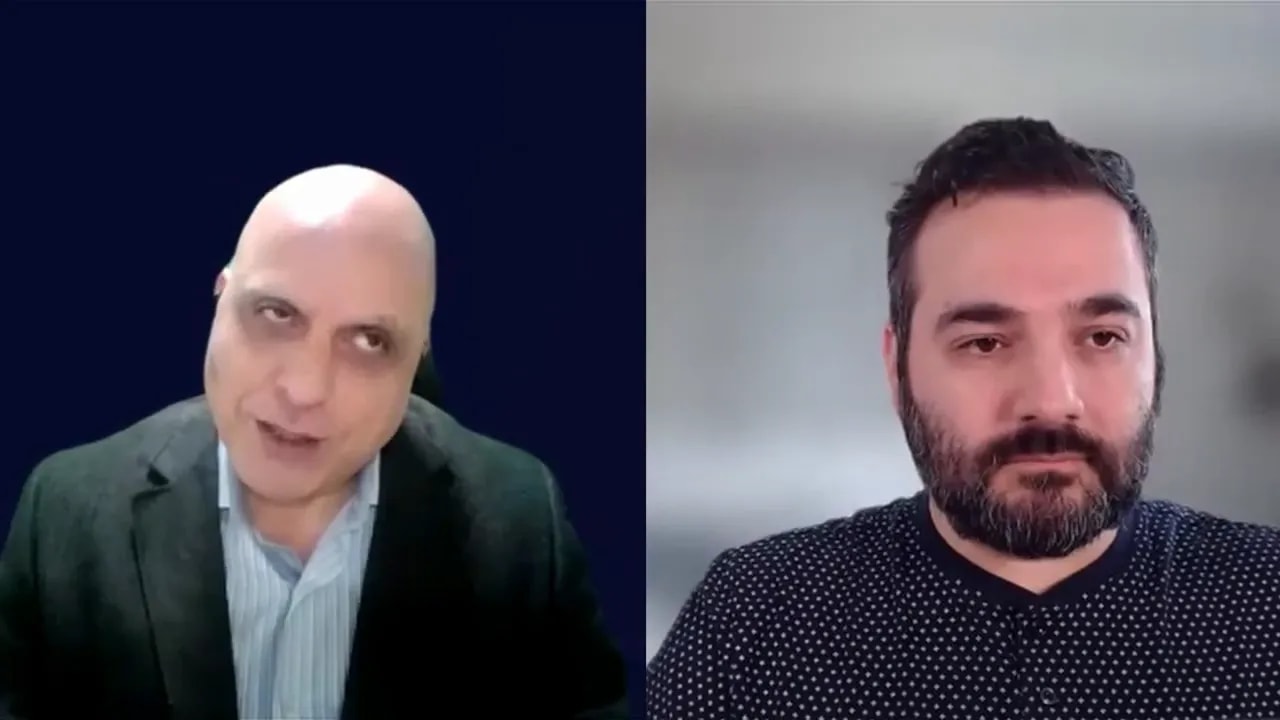
One memorable metaphor compared two different hairstyles to a larger truth: life is always a balance between destruction and creation.
The image was playful, but the principle is serious.
Growth does not happen in a world of perfect preservation. Things are constantly disappearing, shifting, breaking down, and being replaced. Businesses work the same way.
Markets change. Offers expire. Channels saturate. Tactics stop working. Old identities die.
The entrepreneur who expects permanence suffers. The entrepreneur who learns to create faster than reality destroys gains an edge.
This is close to an antifragile mindset. Not merely resisting stress, but using stress to get stronger, sharper, and more capable.
How to Break the Pattern and Stop Being Enslaved to Your Business
If this all sounds familiar, the path forward is not “just work harder.”
It is more strategic and more personal than that.
Here is a clean summary of the moves that matter most:
1. Stop glorifying brute force
If your only answer is more effort, you are likely reinforcing the trap. Effort matters, but effort without systems creates dependency, not freedom.
2. Reframe problems as challenges
Language shapes action. Complaints keep you stuck. Challenges invite creativity.
3. Identify your current entrepreneurial stage
Are you building yourself a job? Chasing more money while burning out? Searching for significance after achieving success? Different stages require different solutions.
4. Audit your legacy patterns
Notice what beliefs you inherited about work, control, failure, authority, money, and safety. Some of them are helping. Some of them are running your business into the ground.
5. Build systems for time freedom
The goal is not just more revenue. The goal is a business that functions without consuming your entire life.
6. Create a horizon-level vision
Without a compelling vision, every setback feels personal and every market shift feels like doom. With vision, chaos becomes information, not identity.
7. Use change as leverage
Tools like AI are not automatically good or bad. They become powerful when used intentionally to support the business you want.
8. Listen to complaints for hidden opportunity
Pain points are market signals. They are often the beginning of sales, partnerships, and innovation.
9. Learn from someone further ahead
Do not trap yourself inside your old reference points. Borrow a stronger frame of thinking from someone who has built what you want.
10. Align success with significance
Do not wait until after the money arrives to ask what really matters. Set that compass early.
FAQ
What are legacy patterns in entrepreneurship?
Legacy patterns are inherited beliefs and behaviors that come from family, culture, school, jobs, and past life experiences. They can shape how you think about risk, control, failure, authority, money, and success. In entrepreneurship, these old patterns often create limits because they were built for stability or compliance, not innovation and freedom.
Why do entrepreneurs become slaves to their business?
Many founders start by using brute force to grow. That works in the beginning, but if they do not build systems, delegate well, and shift from operator to architect, the business becomes dependent on them. Revenue grows, but freedom disappears. They end up trapped inside the machine they created.
What are the 5 stages of entrepreneurial growth?
The five stages discussed are: leaving a job while still thinking like an employee, reaching income parity with a former salary, making more money but becoming a slave to the business, creating financial and time freedom through systems, and finally searching for significance once success no longer feels complete on its own.
How can I tell if I’m stuck in an employee mindset as a business owner?
If you believe everything important must run through you, if your main solution is to work harder, if delegation feels unsafe, or if your business stops functioning when you step away, you are likely still operating with an employee-style mindset instead of a business-building mindset.
How should entrepreneurs think about AI?
AI should be approached as a tool, not a threat or a magic answer. The useful question is how it can support your vision, reduce friction, improve systems, and expand capacity. Avoiding it out of fear is usually rigidity. Using it consciously can create leverage.
Why are complaints considered business opportunities?
A complaint often reveals a problem someone wants solved. If you learn to hear complaints as signals of pain, confusion, inefficiency, or unmet need, you can uncover revenue opportunities, consulting engagements, better offers, and stronger messaging. Complaints are often unpolished expressions of demand.
What is the cost of inaction in B2B sales?
The cost of inaction is the downside of doing nothing. It includes lost revenue, continued inefficiency, wasted time, team friction, strategic delay, or deeper business pain. In sales, this should be uncovered through questions early in the conversation, not used as a last-minute pressure tactic.
How do I know if I’m on the right path in business?
Start with a clear vision for the future you want to build. Then work backward and identify what must happen to move toward that vision. If your current actions align with that direction, challenges are often part of the path rather than proof you should quit. Vision helps you tell the difference between a real pivot and temporary discomfort.
Final Thought
Entrepreneurship is not about escaping problems. It is about becoming the kind of person who can create value through them.
The business challenge in front of you may not be a sign that something is wrong. It may be the exact environment required for your next level of growth.
But that growth will demand more than grind.
It will demand that you break the patterns that no longer serve you. It will demand that you stop worshipping comfort. It will demand systems, perspective, better questions, stronger alignment, and the courage to build from a deeper place.
Because the goal is not just to win in business.
The goal is to build a business powerful enough to support your life, without becoming the thing that steals it.
From Mindset to Momentum (Get Help Implementing)
If you want to break the legacy pattern of staying “enslaved” to your business, you need more than insight—you need a repeatable system that brings in clients consistently. A practical next step is to use an outreach engine that helps you get conversations without constantly adding more manual work. (If you want to explore that approach, you can start here: DoneMaker.)
For founders thinking about moving from chaos to a clear operating rhythm, the simplest action is to book a time to talk with a specialist and map your outreach to your offer. You can schedule here: book a call.