What’s the best way to spark real conversations and drive revenue in today’s B2B landscape: cold email or cold LinkedIn DMs? If you’re looking to boost your outreach results but aren’t sure which channel delivers the highest ROI, you’re not alone.
In this article, we’ll break down the strengths and weaknesses of cold email vs cold LinkedIn DMs, compare their sales channel performance, and show you how each method can impact your B2B outreach strategy. Get ready to discover which approach will help you start more sales conversations and win more business. By analyzing engagement rates, response times, and overall conversion metrics, you will gain valuable insights into why LinkedIn outperforms cold emailing in many B2B scenarios. Additionally, we’ll explore the nuances of personalization and the type of content that resonates best with your target audience on each platform. Understanding these dynamics will empower you to refine your outreach and leverage the strengths of both channels effectively.
Cold Email vs Cold LinkedIn DMs: B2B Outreach Fundamentals
What Is Cold Email in B2B Outreach?
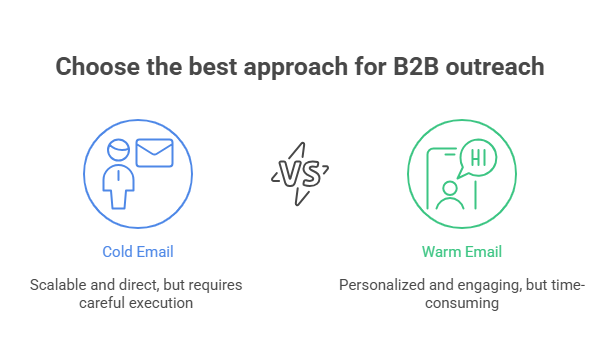
Cold email involves sending unsolicited emails to potential prospects with whom you have no prior relationship. It’s a classic B2B outreach tool, prized for its scalability and directness.
- How it works: Build a targeted list, craft a personalized message, and send it directly to the recipient’s inbox.
- Example: A SaaS company emails IT managers at mid-sized firms, introducing their platform and offering a demo.
- Actionable Tip: Warm up your email account before launching campaigns to avoid spam filters. Use personalized subject lines and reference recent company achievements for higher open rates.
What Are Cold LinkedIn DMs?
Cold LinkedIn DMs are direct messages sent through LinkedIn to prospects who may not know you. This channel leverages the professional context of LinkedIn, making it easier to build rapport.
- How it works: Connect or send a message to a prospect, often referencing a mutual connection or recent activity.
- Example: A consultant sends a LinkedIn DM to a marketing director, referencing a recent LinkedIn post and suggesting a quick call to discuss collaboration.
- Actionable Tip: Personalize your outreach by mentioning shared connections or commenting on recent posts before sending a DM.
For practical advice, check out Forbes: LinkedIn Messaging—How to Reach Out to Someone You Haven’t Met.
Head-to-Head: Sales Channel Performance Metrics
Open Rates: Cold Email vs Cold LinkedIn DMs
Channel Open Rate
Cold Email 15–80%
Cold LinkedIn DMs 90–100%
LinkedIn DMs are almost always opened because they appear as notifications in a professional context. Cold email open rates vary widely depending on list quality and subject lines.
Actionable Tip: For emails, test subject lines and use preview text to boost open rates. For LinkedIn, keep your first message short and relevant to increase the chance of a response.
For industry benchmarks, see Mailshake: B2B Cold Email Benchmarks and Best Practices.
Reply Rates and Engagement
Channel Reply Rate
Cold Email 1–15%
Cold LinkedIn DMs 5–39%
LinkedIn’s professional setting and visible profiles foster trust, leading to higher reply rates. Cold emails can achieve strong engagement with hyper-personalization.
Actionable Tip: Personalize every message, whether email or DM. Use the recipient’s name, mention recent achievements, and keep your ask clear.
Conversion to Meetings
Channel Meeting Conversion Rate
Cold Email 2–5%
Cold LinkedIn DMs 5–15%
LinkedIn DMs often convert to meetings faster due to higher engagement, but cold email can deliver more meetings overall thanks to its scale.
Actionable Tip: Use LinkedIn for high-value, targeted outreach and cold email for broader campaigns.
Cost Per Lead
Channel Average Cost Per Lead
Cold Email $3.63–$100
Cold LinkedIn DMs $40–$150
Cold email is more cost-effective for large-scale outreach. LinkedIn DMs involve higher costs due to manual effort and premium tool subscriptions. You can learn more about cold outreach here: https://donemaker.com/the-ultimate-guide-to-successful-cold-outreach-on-social-media/
Actionable Tip: Calculate your cost per lead by factoring in tool subscriptions, labor, and conversion rates for each channel.
Scalability
Channel Daily Outreach Limit
Cold Email 500–1,000 contacts
Cold LinkedIn DMs 100–150 messages
Cold email is ideal for reaching large audiences quickly. LinkedIn DMs are best for focused, high-value accounts.
Actionable Tip: Use cold email for volume, but reserve LinkedIn DMs for key decision-makers or strategic accounts.
Outreach ROI: Which Channel Delivers Better Results?
Cold Email: Outreach ROI Highlights
- High scalability: Reach thousands of prospects daily.
- Lower cost per lead: Automation and bulk sending keep costs down.
- Easy testing: A/B test subject lines and content to optimize performance.
- Integration: Sync with CRM tools for tracking and follow-up.
Example: A B2B SaaS firm used automated cold email sequences to reach 5,000 prospects, resulting in 250 replies and 25 booked meetings, all tracked through their CRM.
Actionable Tips:
- Clean your email list regularly to avoid bounces and spam traps.
- Use merge tags to personalize at scale.
- Follow up persistently, most replies come after several follow-ups.
For advanced strategies, see Backlinko: The Science of B2B Email Outreach.
Cold LinkedIn DMs: Outreach ROI Highlights
- Higher engagement: Prospects are more likely to respond to personalized messages.
- Relationship-building: Access to profiles and mutual connections builds instant credibility.
- Ideal for account-based marketing: Perfect for targeting high-value decision-makers.
- Content integration: Share posts, articles, and endorsements to nurture leads.
Example: A consulting agency targeted 50 CEOs on LinkedIn, engaging with their content before sending DMs. They booked 8 meetings and closed 2 deals, thanks to the trust built on the platform.
Actionable Tips:
- Engage with prospects’ posts before reaching out.
- Reference shared connections or recent achievements in your message.
- Use LinkedIn voice notes or video messages for added personalization.
For more on messaging strategies, see HubSpot: The Ultimate Guide to LinkedIn Messaging for Sales.
Hybrid Approach: Maximizing Outreach ROI
Combining both channels often delivers the best results:
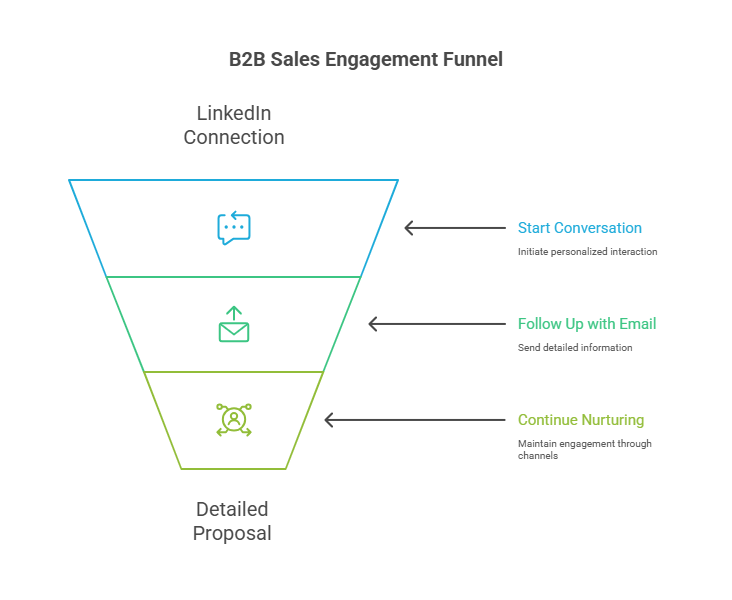
- Start with LinkedIn: Connect and engage with prospects’ content.
- Follow up with cold email: Use email for detailed proposals or meeting requests.
- Result: Higher reply and conversion rates, as LinkedIn warms up leads for email follow-up.
Actionable Tip: Build a multi-touch sequence, LinkedIn engagement, DM, then email, to maximize your outreach ROI.
Sales Conversation Starters: Cold Email vs Cold LinkedIn DMs
Effective Cold Email Starters
- “Hi [Name], I noticed your company recently [achievement]. Are you open to a quick chat about how we can help you build on that success?”
- “I’m reaching out because I believe [pain point] is a challenge in your industry. Would you be interested in a short call to discuss solutions?”
- “Congratulations on your recent [milestone]. Have you considered how [your solution] could help you reach your next goal?”
Actionable Tips:
- Keep your opener relevant and specific to the recipient.
- Avoid generic pitches, show you’ve done your homework.
- Always include a clear call to action.
Winning LinkedIn DM Starters
- “Hi [Name], I saw we share several connections in [industry]. Would love to connect and exchange insights.”
- “I enjoyed your recent post on [topic]. Would you be open to a quick chat about [related solution]?”
- “How do you see [industry trend] impacting your business this year?”
Actionable Tips:
- Reference recent activity, mutual connections, or shared interests.
- Keep your message short and conversational.
- Avoid hard-selling in your first message, focus on starting a dialogue.
Pros and Cons: Cold Email vs Cold LinkedIn DMs
Feature Cold Email Cold LinkedIn DMs
Scalability High reach: thousands daily Limited: 100–150/day
Cost Low per lead Higher per lead
Personalization Automated and impersonal High profile based
Engagement Lower reply rates Higher reply rates
Trust Harder to build Easier (mutual connections)
Best for Broad campaigns Relationship building
Cons Spam risk, ignored messages Time-consuming, daily limits, higher costs
Actionable Tips:
- Use cold email for volume and LinkedIn DMs for quality.
- Segment your audience and match the channel to their preferred communication style.

Real-World B2B Outreach Results
Case Study: Cold Email Success
A marketing agency segmented its list by industry and tailored each email. By focusing on recent company news and using personalized subject lines, they achieved a 45% open rate and a 10% conversion rate, booking 30 meetings from 300 emails sent.
Actionable Tip: Segment your list and personalize each email for higher engagement.
Case Study: LinkedIn DMs in Action
A B2B SaaS company targeted 50 decision-makers with personalized DMs referencing recent posts. They saw a 20% response rate and booked 8 meetings, converting 2 into clients.
Actionable Tip: Engage with prospects’ content before reaching out to build familiarity and trust.
Expert Opinions
- Cold email is the workhorse for conversions and scale, especially for SaaS and tech companies.
- LinkedIn DMs excel in building trust, especially for high-ticket products and account-based marketing.
Choosing the Right Channel: Key Factors
Audience
- If your buyers are active on LinkedIn, prioritize DMs for relationship-building.
- If you need to reach a broad audience, cold email offers better scale and lower costs.
Offer Complexity
- Simple offers (e.g., booking a demo): Cold email is faster and more efficient.
- Complex solutions (e.g., enterprise software): LinkedIn DMs help build trust and credibility.
Sales Cycle Length
- Short sales cycles: Cold email delivers quick, scalable outreach.
- Long sales cycles: LinkedIn DMs nurture relationships over time.
Resources
- Limited budget and time: Cold email is more cost-effective and easier to automate.
- Focus on high-value accounts: LinkedIn DMs justify the extra effort and investment.
Best Practices for Cold Email and LinkedIn DM Outreach
Cold Email Tips
- Personalize subject lines and content for each prospect.
- Keep emails concise and focused on the recipient’s needs.
- Use clear calls to action and make it easy to respond.
- Test and optimize with A/B experiments on subject lines and messaging to improve results.
- Clean your list regularly to enhance deliverability and prevent spam filters from blocking your emails. Learn more cold email tips here.
LinkedIn DM Tips
- Warm up leads by engaging with their content before messaging.
- Reference shared connections or recent posts to build rapport.
- Keep messages short, friendly, and relevant.
- Avoid aggressive sales pitches, focus on starting a conversation.
- Use LinkedIn voice notes or video messages for added personalization.
The Hybrid Approach: Combining Cold Email and LinkedIn DMs
Many B2B sales teams see the best results by blending both channels:
- Connect on LinkedIn: Engage with the prospect’s posts and send a connection request.
- Start a conversation: Use a personalized DM to introduce yourself and your value.
- Follow up with email: After building initial trust, send a detailed email to move the conversation forward.
- Continue nurturing: Alternate between LinkedIn and email to keep the prospect engaged and move them through the funnel.
Actionable Tip: Map out your outreach sequence in advance, using LinkedIn to warm up leads and cold email to deliver detailed proposals or booking links.
Final Recommendations
There’s no one-size-fits-all answer. Cold email wins on scale, cost, and automation. LinkedIn DMs win on engagement, trust, and relationship-building. For most B2B teams, the best results come from a thoughtful combination of both, strategically sequenced and always personalized to your audience and goals.
When deciding which channel to prioritize, consider not just your internal resources but also your target audience’s behavior. If your prospects are highly active on LinkedIn, investing more time in thoughtful DMs can yield better engagement and long-term relationships. On the other hand, if you need to reach a broad market efficiently, cold email remains a powerful tool, especially when combined with smart segmentation and follow-up.
Finally, remember that the most successful outreach strategies are those that evolve over time. Regularly review your results, test new approaches, and stay updated on platform changes. By staying flexible and data-driven, you’ll maximize your outreach ROI and keep your sales pipeline full.