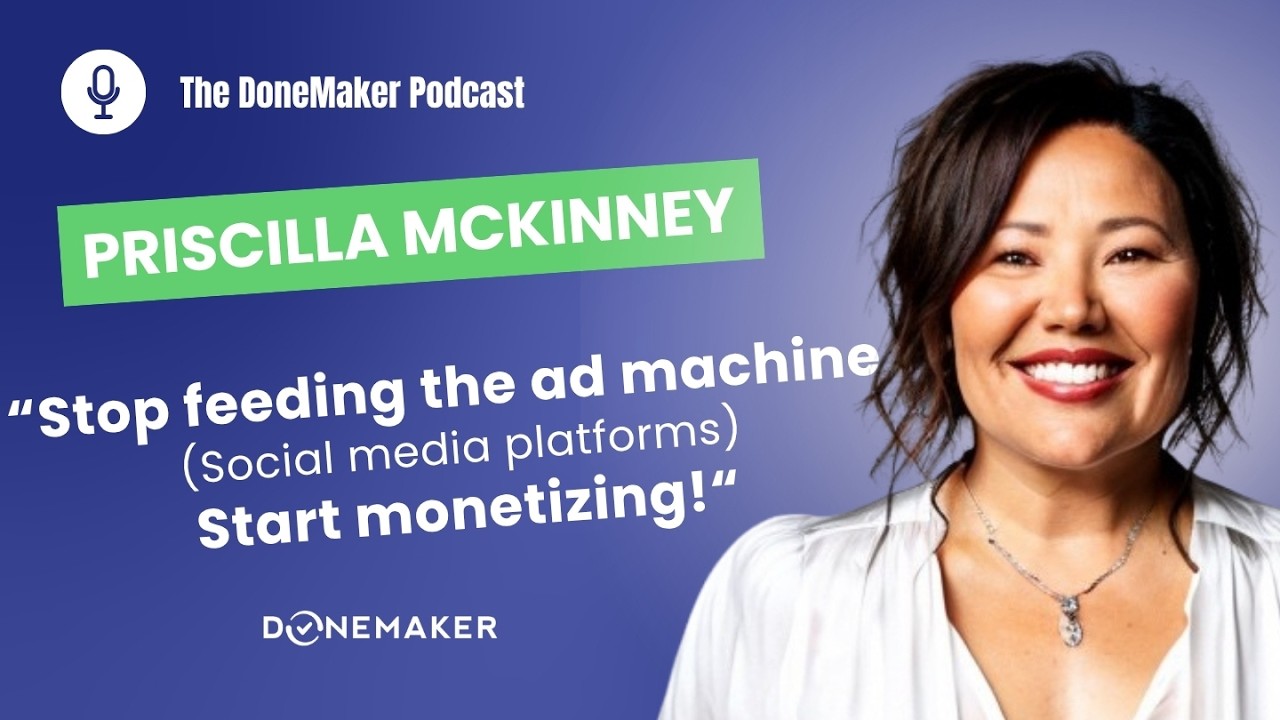
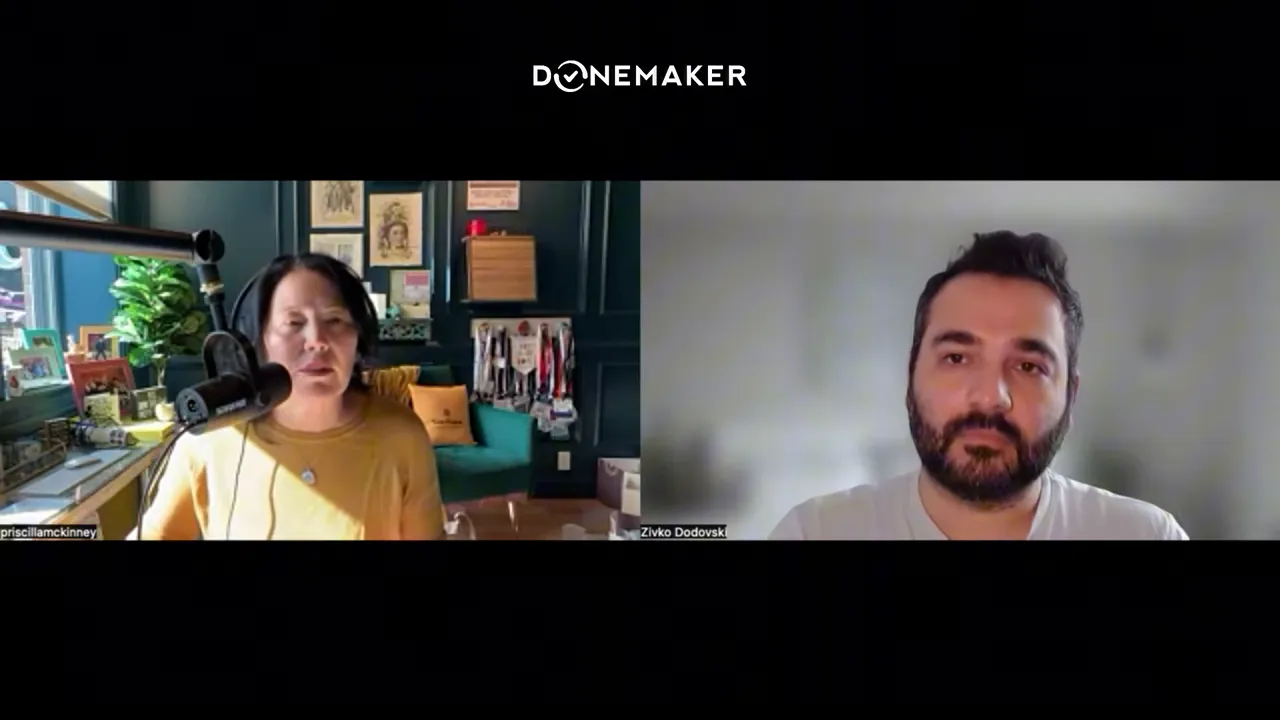
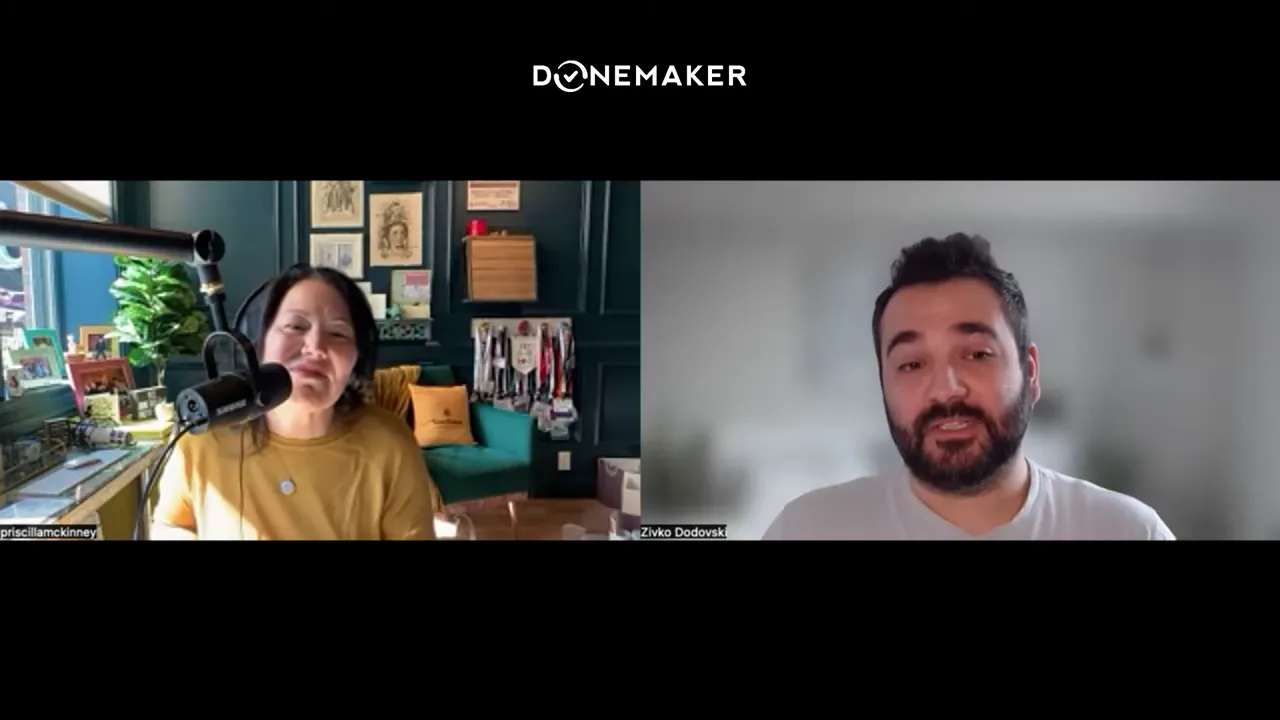
On the DoneMaker podcast I sat down with Priscilla McKinney to dig into what most people are getting wrong about LinkedIn For Entrepreneurs. If you want a real way to turn your presence into revenue, without feeding the ad machines, you need to change how you think about the platform, pick the right home base, and structure your marketing like a business, not a hobby. In this article I lay out ten practical rules you can apply right now, pulled from that conversation and expanded so you can take action today.
1. Treat LinkedIn For Entrepreneurs as a business tool, not a social fad
If you’re on LinkedIn for vanity metrics, you’re wasting time. The reality is that LinkedIn, like other major platforms, is an ad and media company. They want you to engage in behaviors that keep attention on the platform, because that helps them sell more ads. As an entrepreneur, your job is different: your job is to get paid.
So when people tell you “do carousel posts” or “do polls,” recognize those are tactics designed to game an algorithm—useful sometimes, meaningless often. The platform’s incentives are not your incentives unless you deliberately align them. LinkedIn For Entrepreneurs is a chance to make the world your oyster, but only if you use it intentionally.
2. Change your mindset: digital transformation beats checklist activity
Start with a mindset shift: this is not a task list item. This is digital transformation for your professional presence. When you think of LinkedIn For Entrepreneurs as part of your business transformation, you stop asking “what do I need to post today?” and start asking “what destination am I trying to reach?”
Priscilla’s favorite metaphor is powerful and simple: treat LinkedIn like a 24-7 cocktail party, a professional happy hour. That mental image immediately changes behavior: you speak like you would at a party—engaging, curious, generous—rather than preaching or spamming. If you show up to that party to build relationships and listen, you’ll meet people who become clients. If you show up to shout your offer one time and never follow up, you’ll be forgotten.
3. Pick a home base for LinkedIn For Entrepreneurs and own it
You don’t have to be everywhere. You have to be where your buyer is, and you have to be there when they are thinking about buying. That’s the two-part reality most entrepreneurs miss. Yes, your ideal client might scroll Instagram or Facebook, but they aren’t in the buying headspace there.
Ask yourself: where is my ideal client when they are researching services like mine? If they think about hiring marketing strategy while on LinkedIn, LinkedIn becomes your home base. If they search for personal coaching on TikTok and consume short videos while deciding, TikTok may be your home base. The point is to stop choosing platforms based on your personal preferences and choose them based on where your buyer is and in what mindset.
4. Build a buyer-centric profile and lead with giving, but don’t hide your business
Once you’ve picked your home base, make your profile buyer-centric. That means your headline, summary, and media must answer questions your buyers actually have. Lead with giving: share insights, tools, and frameworks that solve the problems your ideal buyer faces. But don’t be shy about being in business.
Priscilla gives a practical rule for balance: the rule of 15. If you touch a prospect 15 times, 10 touches should be interesting content, four should be prescriptive and problem-solving, and one of those 15 is your direct ask. In other words: 10-4-1. That means you can still be generous, but you’re also posting for someone to hand you money. You earned the right to ask.
5. Define real value for your buyer: don’t guess
“Value” is subjective. What is valuable to the CEO of a $100M company is different from what’s valuable to a solopreneur. LinkedIn For Entrepreneurs gets powerful when you stop guessing and start researching: build simple personas, ask the right questions, and identify the exact friction points your buyer has.
Priscilla’s example is telling: rather than guessing which events are worth a marketing budget, she built an Airtable calendar of global events so her ideal clients could quickly choose the best conferences to attend. That took legwork, but it solved a real pain point for a buyer juggling a marketing budget. That’s the kind of valuable content that converts.
6. Use strategy before tactics: strategy is who pays you
Too many people confuse tactics with strategy. Strategy asks: who will buy from me? A meaningful audience is not measured only by size; it’s measured by fit and buying power. If your audience doesn’t match what you offer, it won’t drive revenue.
Tactics are the vehicles: podcasts, webinars, carousels, polls, TikTok videos. They only matter if they serve the strategy. So before you buy tools or download blueprints, answer the strategic questions: who is my buyer, where are they, and what do they need to decide to buy? Only then choose tactics that move that buyer closer to a decision.
7. Use the SOAR framework to organize LinkedIn For Entrepreneurs activity
Priscilla’s SOAR framework is an accessible checklist to keep your marketing useful and accountable. Use it as a gate before any marketing investment:
- S — Strategy first: Does this activity align with business goals and buyer journeys?
- O — Organization: Who owns this? Where does it live? Do you have bandwidth?
- A — Accountability: Who measures success and when? What KPIs matter?
- R — Repeatability: Can this be measured and repeated or repurposed if it works?
SOAR helps you say “no” to shiny but irrelevant ideas and “yes” to work that aligns with revenue. When you add SOAR to your decision process, your LinkedIn For Entrepreneurs activity stops being random and becomes a repeatable business function.
8. Make the first piece of content great: then repurpose
Repurposing is powerful, but only if the source material is high-quality. If your YouTube video or long-form content isn’t excellent, chopping it into snippets won’t fix it. The first iteration has to be the best. Create an authoritative long form piece, an interview, a webinar, or a resource, and then slice, dice, and distribute it across channels.
That’s how LinkedIn For Entrepreneurs scales: you create one in-depth asset that solves a real problem, then distribute it in formats your audience prefers. This approach also ties into the rule of 15, use the repurposed pieces to fill your 10 interesting and four prescriptive touches.
9. Use AI as a productivity multiplier: but be deliberate and private
AI is not a threat; it’s a tool that can dramatically increase your output and level the playing field for small teams. If you adopt the right practices, AI can multiply your productivity, often by a factor of four for routine content, research, and workflow automation.
That said, there are three practical rules when you bring AI into LinkedIn For Entrepreneurs:
- Start small and be willing to sound dumb. Learn in public with your team. The best teams ask questions, iterate, and don’t expect instant mastery.
- Use a home base and pay for it. Start with widely used tools like ChatGPT or Claude depending on your needs. A paid plan protects you with stronger privacy terms and gives you features you will rely on.
- Protect client data. Don’t dump proprietary client strategies into public models. Read privacy policies. If you’re bound by NDAs, use paid private workspaces or on-premise solutions that don’t train public models with your sensitive data.
Tools Priscilla mentioned include ChatGPT, Claude, and CapCut for editing. Warning flags come up all the time, CapCut’s terms or a tool updating its usage rights can change your workflow overnight, so stay vigilant, and don’t default to “free” at the cost of privacy and ownership.
10. Build for revenue: measure what matters and hire the right help
Marketing must pay the bills. If your activity doesn’t connect to revenue, you’re doing busy work. Hire for outcomes, not activities. When you hire a marketing person, ensure they understand copy, video, analytics, SEO, and the business model you’re operating. If they’re only great at trends or a single platform, you may not be getting what you paid for.
If you’re not ready to hire, structure your activity using SOAR, use AI to scale, and focus on the rule of 15. If you do hire, keep the person accountable to clear KPIs: leads generated, qualified prospects, conversion rate, and ultimately revenue attributed to LinkedIn For Entrepreneurs activity.
Quick checklist: What to do this week
- Define one ideal client persona, where they go to buy and what their biggest friction is.
- Pick your home base platform for LinkedIn For Entrepreneurs and commit for 90 days.
- Create one flagship piece of content that solves a real buyer problem.
- Apply SOAR to any new marketing idea before you spend time or money.
- Sign up for a paid AI account for privacy and start experimenting with one small workflow.
Conclusion: Stop feeding ad algorithms: start monetizing intentionally
LinkedIn For Entrepreneurs is not about chasing every tactic you see in a short-form clip. It’s about strategy, discipline, and empathy for your buyer. Treat the platform like a professional party: be generous, be curious, listen, and then make a clear, tasteful ask when you’ve earned it. Use frameworks like SOAR, the 10-4-1 rule, and a sensible AI strategy to scale what works and kill what doesn’t. Do this and your LinkedIn activity will stop being a time sink and start being a revenue machine.
If you want to go deeper, check out the DoneMaker podcast episode where I speak with Priscilla McKinney, and explore her resources at littlebirdmarketing.com. Treat LinkedIn like a cocktail party—show up prepared, be generous, and don’t forget you’re posting for someone to hand you money.
Watch the full podcast here: 95% of entrepreneurs are wasting LinkedIn | Priscilla McKinney | DoneMaker Podcast