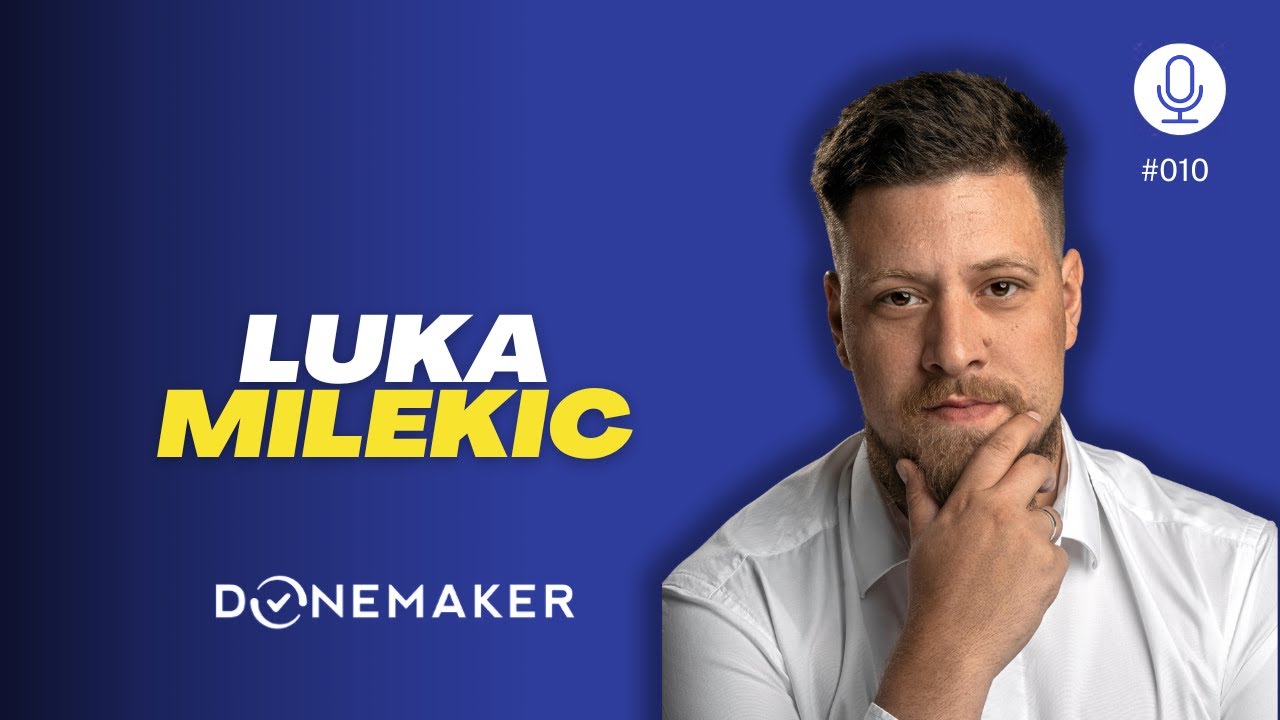
Building and scaling successful online stores is both an art and a science. Whether you’re a Shopify merchant or running an ecommerce business on other platforms, optimizing your store for conversions is critical for long-term growth and profitability. Drawing from over a decade of ecommerce expertise, Luka Milekic, founder of Clever Choice, a leading agency specializing in scaling big brands’ online presence, shares invaluable insights into how ecommerce businesses can enhance their conversion rates and build sustainable growth models.
This article distills Luka’s proven strategies on conversion rate optimization (CRO), platform selection, customer segmentation, and emerging trends every ecommerce entrepreneur should know. Whether you’re just starting out or already managing a thriving online store, these nine strategies will help you maximize your store’s potential and navigate the evolving ecommerce landscape.
1. Build a Balanced Routine to Boost Productivity and Client Success
Running an ecommerce agency or an online store while managing personal responsibilities can be daunting. Luka shares how he balances the demands of being a father of three with leading a growing agency. He emphasizes that “you cannot ever have the balance” perfectly, but you can align your business priorities with family life and vice versa depending on the stage of your business.
He follows a disciplined schedule where Friday afternoon to Monday morning is family time, completely offline from work. During the work week, he focuses intensely on business tasks and dedicates evenings and nights to his kids. This clear boundary helps him maintain high productivity and better service for clients.
“The better I am with myself, it’s better for everybody else around me, even with my teammates, even with the clients, and everybody.”
For online store owners, this approach translates to setting clear working hours, focusing on priority tasks during business hours, and ensuring you recharge to avoid burnout. When you are fully present during working hours, your decision-making and client interactions improve significantly.
2. Choose the Right Ecommerce Platform: Shopify vs WooCommerce
One of the first big decisions for online stores is selecting the right ecommerce platform. Luka’s journey started with freelancing website development for local businesses before transitioning to ecommerce platforms like ClickFunnels and then Shopify.
He highlights that Shopify has become the go-to platform for ecommerce due to its robust ecosystem, integrations, and user-friendly interface, especially for non-technical users. While WooCommerce offers customization advantages—such as the ability to customize the entire checkout process—it lacks the seamless integrations and ecommerce-first design that Shopify provides.
Most notably, Luka points out that he sees many more merchants migrating from WooCommerce to Shopify than the other way around. Shopify’s focus on ecommerce scalability and its extensive app ecosystem give it a significant edge.
“Shopify found the space and answered struggles that WooCommerce users had, delivering a better product for ecommerce.”
For new and growing online stores, Shopify’s ease of use, security, and continuous improvements make it an excellent choice. WooCommerce might still appeal to those needing deep customization and who have the technical resources to manage it.
3. Master Conversion Rate Optimization (CRO) Beyond A/B Testing
Many online store owners mistake CRO as merely A/B testing different design elements. Luka stresses that CRO is a holistic process that starts with qualitative and quantitative data analysis. It involves setting hypotheses, defining goals, and continuously learning from tests.
He cautions against blindly following CRO checklists and “best practices” without testing what works specifically for your audience. For example, while pop-ups and urgency notifications might work on some websites, overloading your store with all possible CRO tactics can backfire by overwhelming visitors.
Instead, focus on meaningful data-driven changes that align with your customers’ behaviors and preferences.
“You have to test every change and look for differences in your key metrics. There is no one-size-fits-all.”
Another critical CRO insight Luka shares is the difference between responsive design and mobile optimization. With 70-80% of visitors coming from mobile devices, your online store must be optimized specifically for mobile—not just responsive.
This means designing intuitive navigation, sticky call-to-action buttons within thumb reach, and utilizing mobile screen real estate effectively (like double top bars for promotions) to create an engaging mobile shopping experience.
4. Understand and Map Your Customer’s Journey
Successful online stores tailor their messaging and design to the customer journey—from initial motivation to purchase decision. Luka advises understanding your audience’s pain points, motivations, and values and reflecting those consistently throughout the site with copywriting and images.
Use tools like Google Analytics and Shopify Analytics to identify where visitors drop off and what pages need improvement. Complement this with qualitative data from customer interviews, exit surveys, and screen recordings (tools like Microsoft Clarity or Hotjar) to see exactly where users struggle.
Focus first on optimizing high-impact pages like product pages, where many customers decide whether to buy or leave.
“The journey of your audience from motivation to value to resolution should be accompanied by trust factors like social proof and credibility.”

5. Segment Your Customers for Personalized Marketing and Offers
One of the most powerful customer-focused strategies Luka recommends is segmentation. Instead of treating all customers the same, segment them based on behavior, purchase history, and preferences.
For example, if a customer bought a TV recently, don’t bombard them with more TV ads. Instead, offer complementary products like sound systems or mounts. Proper segmentation increases relevance, engagement, and repeat purchases.
Segmentation can be achieved through email marketing tools, Shopify apps, and direct customer communication like interviews or surveys. Luka shares how one Canadian mattress brand’s founders personally called customers to gather feedback and build products aligned with their needs—an approach that fosters community and loyalty.
6. Build Sustainable Growth Beyond Paid Ads
Paid advertising costs continue to rise, squeezing ecommerce margins. Luka emphasizes the importance of diversifying marketing channels for sustainable growth. This includes investing in SEO, building email lists, and leveraging SMS marketing.
These channels are more cost-effective and build long-term customer relationships. Brands that rely solely on paid ads risk instability if ad costs spike or platforms change.
Additionally, Luka notes a growing trend toward building communities and personal brands around ecommerce stores. Founders who engage actively on social media create loyal followings that enhance brand value and sales.
“Sustainable ecommerce brands focus on community, email, SMS, and SEO—not just immediate returns from ads.”
7. Delegate Operational Challenges to Focus on Strategic Growth
Scaling ecommerce businesses face challenges beyond marketing, such as supply chain delays and customer service issues. Luka observes that many founders get bogged down in day-to-day operational problems, leading to rushed decisions and lost focus on core growth activities.
He advises delegating operational tasks to agencies or in-house teams so founders can concentrate on solving the biggest strategic problems. This shift in focus is crucial for scaling effectively.
8. Invest in Speed Optimization for Better SEO and Lower Acquisition Costs
Site speed is a critical factor for user experience, SEO rankings, and conversion rates. While Shopify is known for decent speed, Luka explains that significant speed improvements are possible through specialized optimization.
Speed optimization is not a quick fix, it’s a detailed process involving minimizing scripts, cleaning up code, and optimizing images. Luka’s agency spends around ten days on these improvements, which yield tangible benefits like higher Google PageSpeed scores, better SEO, and reduced customer acquisition costs.
Beware of shortcuts that “turn off everything” to get a high speed score but do not improve real user experience.
“There are a lot of scams in page speed optimization. Real speed improvements take time and expertise.”
9. Prepare for the Future: Sustainability, AI, and Prototype Services
Looking ahead, Luka shares his vision for ecommerce and agency services in 2024 and beyond. The entry barrier for ecommerce is rising, requiring more investment to test and scale products. Hence, sustainability becomes paramount.
Clever Choice is developing prototype services and tools to help smaller stores (under $50k/month) optimize their Shopify sites without costly developer fees. This product aims to bridge the gap for smaller merchants to grow sustainably before engaging full-service agencies.
Luka also expects AI tools to play a bigger role in ecommerce optimization, though currently, manual expertise remains essential for complex tasks like speed optimization.
Final Recommendation
Optimizing online stores for high conversion is an ongoing journey that blends data analysis, customer empathy, technical expertise, and strategic thinking. Luka Milekic’s insights reveal that success comes from balancing business and personal life, choosing the right platform, deeply understanding your customers, and focusing on sustainable growth beyond quick wins.
By applying these nine essential strategies, from mobile optimization to community building and speed improvements, online store owners can create compelling shopping experiences that convert visitors into loyal customers. As ecommerce continues to evolve, staying adaptable and customer-focused will be key to thriving in this competitive space.
For ecommerce entrepreneurs looking to elevate their Shopify stores, these proven methods offer a roadmap to higher conversions and lasting success.
Watch the full podcast here: How a Shopify agency optimizes online stores for high conversion | Luka Milekic | DoneMaker Podcast