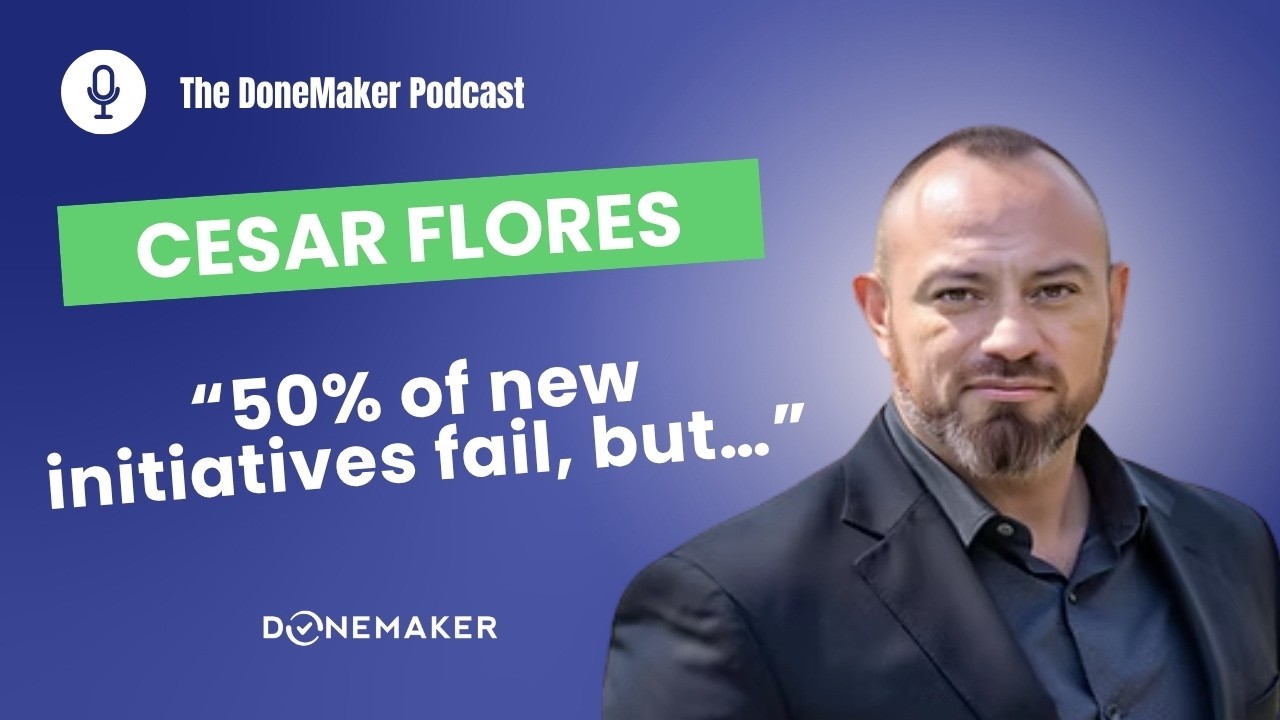
“If everyone is moving forward together, then success takes care of itself.” You may have heard that line from Henry Ford — it rings true when initiatives actually succeed. I’m Cesar Flores, founder and CEO of Coach What Matters, and I want to walk you through why most new initiatives collapse into a To-Do List circus and how you can flip the model so your work actually delivers measurable business value.
This article distills decades of experience running organizational transformations and coaching teams to move from checklists to outcomes. You’ll learn why starting with techniques or frameworks (agile, OKRs, SAFe) without aligning to your company’s core value is a trap, how to design pivot points that save money and time, and how to set meaningful OKRs and SMART goals that don’t degrade into a To-Do List.
1. You’re Treating Strategy Like a To-Do List Instead of a Value Journey
The most common failure I see is simple: you launch an initiative and track it like a To-Do List. Boxes get ticked, features get delivered, tickets close — and leadership breathes a sigh of relief. But the business impact? Often absent.
When you manage initiatives as a To-Do List, you focus on volume: how many features did you ship, how many items did you close. That feels measurable, but it misses the critical question: did you deliver more value to customers? Did you change the trajectory of your business? A To-Do List reduces work to tasks. Outcomes require a narrative tied to customer value and willingness to pay.
Start with the nucleus: the reason the company exists. What was the initial spark that launched your business? That origin story holds clues to the value you were built to deliver. Use that as a north star and ask, for every initiative, “Will this move the needle on that core value?” If your answer can’t be stated in terms of customer value and measurable impact, it’s probably a To-Do List in disguise.
How the To-Do List mindset shows up
- Quarterly goals become a laundry list of features instead of outcomes.
- Teams celebrate completion metrics (velocity, closed tickets) rather than customer adoption or revenue lift.
- Leadership measures success by effort spent, not by value delivered.
That approach leads teams to optimize for internal KPIs rather than customer willingness to pay. You can ship a lot and still fail to grow the business.
2. You’re Chasing Frameworks and Tools Instead of Solving Business Problems
Agile, OKRs, AI, SAFe — there is always a shiny new framework promising transformation. But frameworks are tools, not the mission. You should always ask: will this tool or practice help me deliver more value that aligns with my core vision?
I’ve seen companies buy into a framework because it worked somewhere else. “It worked at my last company” becomes the rallying cry. The problem: context changes. The people change. The market and product are different. When you adopt a framework without connecting it back to your business core, it becomes a To-Do List generator — you implement ceremonies and artifacts but never tie them to impact.
How to avoid the framework trap
- Start with why: define the business problem you’re solving and quantify the expected impact.
- Validate fit: ask how this framework will support that impact and how you’ll measure it.
- Invest incrementally: run a small, timeboxed experiment with clear learning outcomes before scaling.
When you make a framework serve your purpose instead of chasing the framework for its own sake, you prevent it from devolving into a To-Do List factory.
3. You Measure Activity, Not Learning — So You Keep Building the Wrong Things
One of the most lethal assumptions in transformation is equating effort with progress. You can spend six months assembling teams and environments and end up with nothing learned from customers. In that scenario, the project looks busy but provides zero validation that you’re delivering value. That’s how To-Do Lists run wild.
Instead of measuring “how much did we spend” or “are we on schedule,” measure “how much have we learned” and “what did we validate with customers.” The ratio of learning vs. spend matters more than spend alone. That ratio is your early-warning system. If you’ve burned budget without learning whether customers will pay for or use what you’re building, stop and pivot.
Design pivot points, not sunk-cost traps
- Break initiatives into stages with explicit hypotheses to validate.
- Invest enough to test the hypothesis but not so much that backing out becomes impossible.
- Schedule regular check-ins centered on learnings, not just status updates.
When you embed pivot points and learning milestones into initiatives, you remove the “we’ve already spent too much” psychology that keeps teams doubling down on failures. You stop feeding the To-Do List and start building a validated path to impact.
4. Your OKRs Are Disguised To-Do Lists — You Need Traceability to Business Impact
OKRs are powerful when used to pursue outcomes. They’re useless when they become a To-Do List in corporate clothing. I always align OKRs to executive vision, then cascade them with traceability: each team OKR should connect directly to business impact. If there’s no traceability, you’ve created yet another To-Do List.
Common OKR mistakes that create To-Do Lists
- Writing objectives like “Make the UI better” without a measurable outcome.
- Using KR metrics that track activity (features shipped) rather than value (conversion, retention, revenue lift).
- Allowing psychological insecurity to turn OKRs into hit-or-miss scorecards rather than learning tools.
OKRs should be aspirational and outcome-focused. If people fear being penalized for not hitting a 100% score, you don’t have psychological safety. That fear turns OKRs into a To-Do List where nobody experiments or pivots. Celebrate validated learning as much as execution. If an OKR didn’t hit but taught you something that redirected strategy effectively, celebrate that pivot as a win.
How to write OKRs that avoid the To-Do List pitfall
- Start with the executive “why” and translate it into measurable outcomes.
- Make key results explicitly tied to customer behavior or business metrics (not feature counts).
- Set evaluation cadence by learning velocity — monthly, bi-weekly, or whatever your market speed demands.
5. Departmental Silos Turn Everything into a To-Do List Because Leadership Isn’t Unified
When finance says one thing and product says another, execution becomes a negotiation. That dead time between departments — meetings, clarifications, rework — is pure To-Do List fuel. Leadership must align on guardrails and make decisions together. If you leave every integration problem “for the teams to figure out,” that’s an abdication of leadership and a direct path to a To-Do List.
How to fix siloed To-Do List behavior
- Get the senior team together to map dependencies and agree on cross-functional guardrails up front.
- Resolve conflicts at the leadership table — don’t push them down as unresolved problems.
- Design end-to-end processes (from budget cycles to release cadence) so teams aren’t constantly negotiating for alignment.
When leadership aligns around business outcomes and removes needless friction, teams can focus on delivering measurable value instead of maintaining a long To-Do List of blocked tasks.
How to Implement These Changes: A Tactical Playbook
Here’s a practical checklist you can start using today to stop turning initiatives into To-Do Lists and begin delivering real business impact.
- Define the core value proposition — Revisit the initial spark that birthed your company. Document in plain language who you serve and what value you create.
- Translate value into measurable outcomes — Pick 1–3 business metrics that reflect that value (e.g., retention, willingness to pay, EBITDA margin contribution).
- Assess new initiatives against those metrics — If you can’t map how an initiative influences these metrics, don’t start it as a strategic priority.
- Design small experiments — Create short, timeboxed pilots with hypotheses, learning objectives, and clear exit criteria.
- Set pivot points — Define checkpoints tied to learning, not just spend or timeline. Decide in advance how you’ll proceed depending on results.
- Align leadership — Secure executive buy-in and agree on budget guardrails and cross-functional processes before teams start.
- Write OKRs with traceability — Ensure every team OKR maps to a business outcome. Track learnings as a primary KPI.
- Celebrate learning — Recognize pivots and failed experiments that taught you something as wins.
When you follow this playbook, your To-Do List becomes smaller and more meaningful because you stop building things that don’t matter.
Case Studies & Examples (Practical Illustrations)
Real-world examples help translate theory into practice:
- Arm & Hammer (baking soda): They discovered customers used their product in unexpected ways. Rather than inventing new products, they educated users and marketed those use-cases. Same product, more perceived value. That’s not a To-Do List move — it’s a strategic insight that changed revenue without massive new development.
- Starbucks: Coffee didn’t fundamentally change, but the experience did. Willingness to pay rose dramatically because they reimagined how coffee was delivered and experienced; again, not by ticking items off a To-Do List but by aligning product to a value proposition.
- De Beers: Scarcity and market control increased perceived value. Their strategy shows how inventory and narrative can change willingness to pay — a reminder that value is partly psychological and strategic.
- Patagonia: Transparency, quality, and principles created a loyal customer base willing to pay more. Their investments aligned with the company’s core mission rather than being a To-Do List of features.
Practical Tips on Pricing and Willingness to Pay
Price reflects perceived value. If you’re trapped in revenue-first thinking, you’ll rely on short-term tactics (discounts, promotions) that can erode long-term value. Instead, test where you fit in the market and be intentional about your pricing position — low, premium, or niche. The middle rarely yields passionate customers.
Run pricing experiments with clear learning goals: measure conversion, churn, and lifetime value under different price points. Invest in the smallest viable experiment that proves whether customers will pay for the value you propose. If customers don’t show willingness to pay, your initiative is a To-Do List masquerading as strategy.
How to Know When to Kill a To-Do List Project
You should add intentional exits to every initiative. If your learning vs. spend ratio is poor at a pivot, pause or stop. No one wins by doubling down on a project that fails to demonstrate customer willingness to pay or meaningful behavior change. A graceful stop is evidence of good governance, not failure.
- Criteria to kill a project: no demonstrated customer demand, learnings plateau despite investment, or negative impact on core metrics.
- Document the learnings before you stop — that’s the value you take forward.
On Psychological Safety: Stop Turning OKRs Into Punishment
OKRs must be aspirational. If you punish teams for not hitting top-end targets, you convert a tool for learning into a To-Do List scoreboard. That discourages experimentation and leads to gaming the system. You should value validated learning as much as “success” in the narrow sense.
Final Checklist: Replace Your To-Do List with an Impact Roadmap
If you want one page to act on immediately, use this:
- Reassert your company’s core value proposition and pick 1–3 outcome metrics.
- For every proposed initiative, map the causal path from activity to those metrics.
- Design experiments that validate steps along that path with minimal spend.
- Agree pivot points and decision criteria up front with leadership.
- Write OKRs that map to outcomes, and celebrate learning as success.
- Kill projects fast when they don’t validate customer value and conserve budget for things that do.
Closing Thoughts
Think of transformation not as introducing a new checklist but as changing the questions you ask. Replace “How much did we ship?” with “What did we learn and how did it move customer behavior?” If you start there, the To-Do List shrinks. Teams become focused on validated impact, leadership becomes aligned, and your initiatives stop being coin tosses.
If you want to take this further, I’m available at Coach What Matters for practical, long-term engagements — not drop-and-run consulting. I’ll help you transform frameworks into outcomes and make sure your next initiative isn’t a To-Do List in disguise.
Remember: a To-Do List is easy to create. Turning work into measurable business impact is the hard work that actually matters.
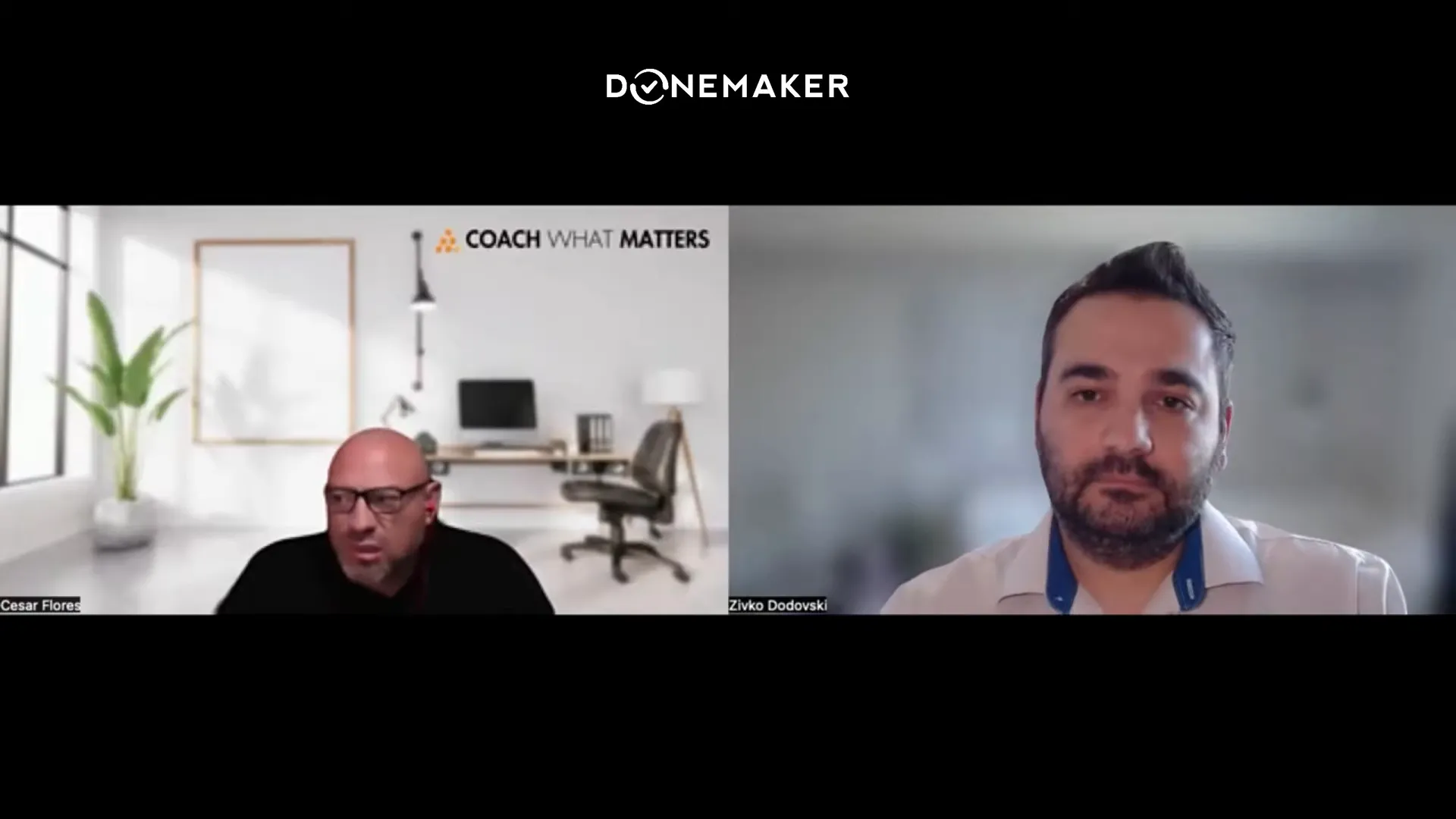
Watch the full podcast here: You’re creating To-Do lists, not OKRs so your new initiatives fail – Cesar Flores -DoneMaker Podcast
FAQ