If you want Brand Building that actually converts, real customers, steady revenue, and the freedom to scale, you need practical tactics, not hype. In a candid conversation with DoneMaker, Sidney Tarver (CEO of People’s First Content and former NFL player turned logistics CEO) shared the playbook he used to go from athlete to running a multi-million dollar operation and now to helping entrepreneurs turn content into cash. This article breaks down his lessons into actionable steps you can use right away.

1. Embrace team discipline and transfer sports habits to business
You’ve likely heard athletes praised for discipline, but Sidney explains how sports habits translate directly into Brand Building. When you played on a team you learned to show up early, prepare with consistency, and trust a system. In business, those same behaviors create predictable output.
Sidney’s core point: treat your business like a team sport. The lessons you learned in athletics—camaraderie, early mornings, strict routines—are not “just for athletes.” You’ll need them to build a brand that scales. You’ll still have to deal with people, handle different mindsets, and make decisions under pressure. The ability to connect with teammates becomes the ability to connect with partners, vendors, and your audience.

When you apply athletic discipline to Brand Building, you create repeatable processes: content schedules, product releases, promotional cycles. Those processes are what help the algorithm, customers, and your team predict and rely on your brand.
2. Focus on mental repetition: master the playbook of your market
At the NFL level, Sidney was surprised by how much of the job is mental: meetings, film study, and memorizing plays. You need the same mindset for Brand Building. Your product or skill might be excellent, but unless your mind is trained to see patterns, you won’t scale.
For you, that means studying your customer behaviors, repeatedly testing messaging, and refining the “playbook” of how your brand communicates. Repetition in content—publishing similar themes in new formats—is the equivalent of watching film: you train your audience and the algorithm to recognize and prioritize your content.

Practice beats flashes of inspiration. Sidney compares practice days to posting days: you don’t just show up for the big game. You build micro-habits that compound into audience trust and authority. This is essential for long-term Brand Building.
3. Use operational experience to inform your Brand Building
Sidney’s transition from the NFL into logistics (through roles with Mersec/DAMCO and Amazon) taught him how systems, tech, and people come together to deliver reliably. That operational background is invaluable when you’re building a brand, because a brand is ultimately a promise about an experience that must be delivered consistently.
You must think beyond creative content. Logistics and systems underlie every promise you make to customers: delivery times, customer service, product quality. Brand Building without reliable operations leads to high churn and negative word-of-mouth.
If you’re selling directly to consumers, you must align the following: product, fulfillment, customer touchpoints, and messaging. Your Brand Building survives and thrives only when the back-end systems support the front-end promises.
4. Hire fast, fire fast: people make or break your business
Sidney is blunt: the wrong hire can rot a company from the inside if you keep them too long. When you’re scaling, whether that’s your content production or fulfillment network, you must hire well and act fast on misalignment.
He learned the lesson the hard way with a high-level HR person who became “toxic” over time. The impact wasn’t process-related; it was cultural and relational. Top performers slowed down, client relationships suffered, and the entire operation felt the drag.
For you, the takeaway is straightforward: set expectations clearly, measure early signals, and don’t be emotionally tethered to hires who aren’t contributing. It’s not a hiring failure to replace someone quickly—it’s a leadership necessity that protects your Brand Building and growth trajectory.
5. Know when to delegate and buy back your time
At startup speed, you might wear every hat and celebrate the grind. Sidney did 16-hour days across his first years and burned out. The pivot point is when you realize you can pay someone to free up hours that you can reinvest in higher-impact work.
You don’t need to keep doing everything forever. Early on, deep involvement is necessary to learn the business. But after the learning curve, delegation is what unlocks scale. The paradox is that working less strategically often yields more results when you invest your time wisely.

So set a timeline: be prepared to grind for a defined period, then plan to delegate. That planning is part of your Brand Building strategy—because your brand needs your strategic leadership, not your perpetual micromanagement.
6. Go all-in early, then build balance
If you want a company that converts, don’t kid yourself: the first season is intense. Sidney recommends being “all in” for a year or two. This season is your sprint to find product-market fit, messaging resonance, and the initial operating cadence.
But that intensity is a means, not an end. After you’ve established what works, you trade off time for scale: hire to replace your operational tasks, standardize your messaging, and protect your energy for the tasks that move the needle.

Brand Building is a marathon with sprints. The early sprint is non-negotiable; the later marathon gives you sustainability and freedom. For most entrepreneurs, the realization that “you only start once from scratch” is the incentive to go hard the first time and smarter later.
7. Make content your sales machine: one topic until 10,000
This is one of Sidney’s most actionable rules for Brand Building: until you reach around 10,000 followers, talk about one thing—every day, in different iterations. You can’t confuse the algorithm or your audience with scattershot identity posts.
Pick your niche and be the best in that lane. If you have a business, talk about that business. Teach, demonstrate, screen-record, show day-in-the-life—do it consistently. The algorithm rewards clarity and repetition.

Here’s why it works: the platform learns what you represent and where to place you. If you publish content on SaaS sales, your videos will get recommended to people who watch SaaS content. If you jump between topics, the algorithm has no reliable signal, and your Brand Building stalls.
8. Turn views into trust: from followers to customers
Views don’t equal sales. Sidney emphasizes that people buy from brands they trust. Trust is built over many touchpoints—not one flashy post. Expect followers to enter your funnel, subscribe to your newsletter, and interact with multiple pieces of content before converting.
Convert attention into owned channels. When you get views, your priority is to collect emails and start nurturing leads. Email gives you direct access—no algorithm roulette—and converts higher when your copy and offer are strong.
In other words: use social to build attention. Use email to build trust and close sales. That’s the core structure for predictable Brand Building.
9. Scale reach with influencers and clipper networks
If you’re stuck in the shadow of competitors who seem to “get all the traction,” you have two practical ways to accelerate Brand Building: influencer collabs and clipper farms.
Influencer strategy: find creators who align with your niche and negotiate measurable deals. Sidney recommends contracts tied to views or conversions, tracked via affiliate links. Structure the agreement: X posts per month, Y minimum views, and a fail-safe (e.g., an extra free post if thresholds aren’t met). Track results and be realistic about lift.

Clipper networks: these are groups of creators who repurpose and re-share your content across many micro-accounts. Sidney explains that clipper farms can be organized via communities on platforms like Discord or web apps where clipper creators are paid per thousand views. It’s a volume play: smaller accounts repost clips, creating repeated exposure until audiences notice your main account.
Both strategies accelerate visibility, but always tie any paid distribution to measurable outcomes. For Brand Building, paid amplification should amplify a message that already converts organically—don’t use paid ads to hide a weak offer.
10. Build an email list before chasing viral
Sidney’s reminder is simple but easily ignored: emails are where money happens. People chase followers and virality, but an email list is an asset that you control. Amazon proved it: if they blast an email to their list, sales follow immediately. You can do the same at your scale.
SOCIAL = discoverability. EMAIL = convertibility. Use social to feed the email list. Treat emails as your primary conversion engine and social as the visibility engine that feeds it. When you combine both, Brand Building becomes predictable rather than wishful.
11. Consistency, calendar, and the phone in your pocket
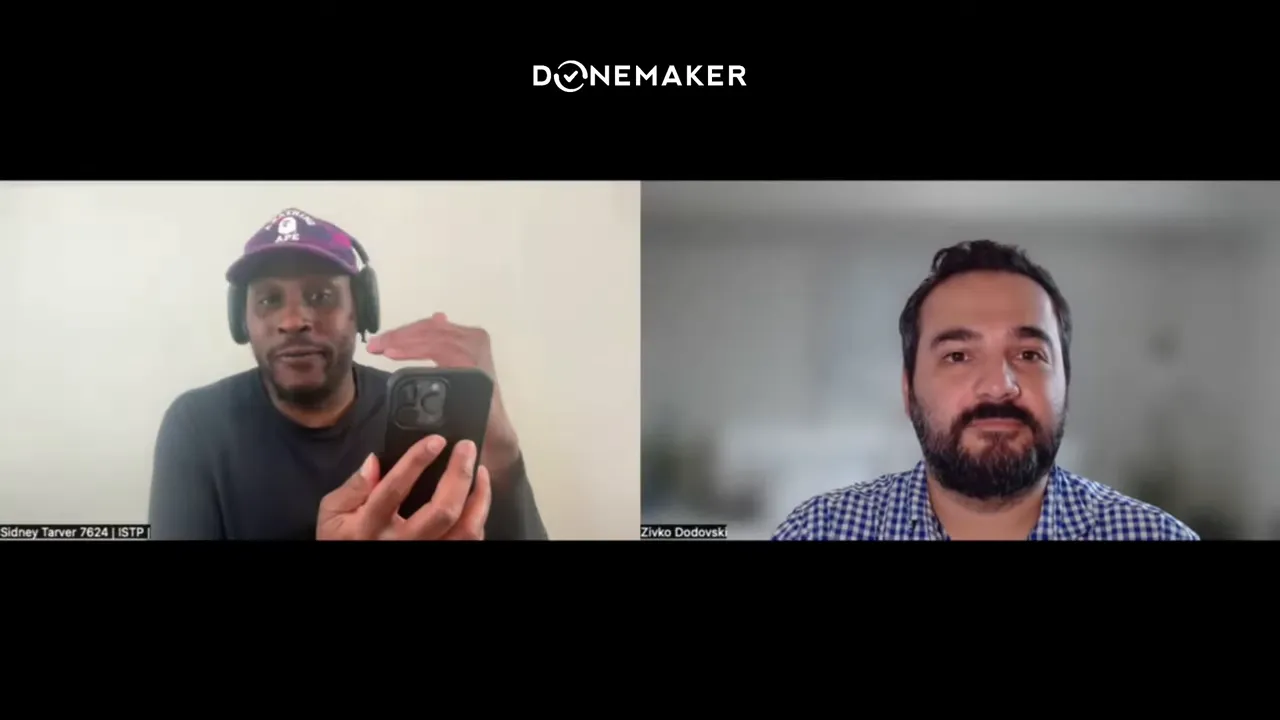
Consistency beats perfection. Sidney reduces production friction to three things: a clear message, a calendar, and your phone. Change your phone camera to 4K/60fps, get good lighting, and record. The message is the differentiator—not an expensive camera.
Pick a cadence you can sustain: daily, three times a week, or weekly. Put it on a public calendar and stick to it. When you maintain consistent publishing, the algorithm and audience both reward you. Consistency is a core pillar of Brand Building.
Quick production checklist
- Decide your single-topic focus until 10k followers.
- Create a content calendar with realistic cadence.
- Record with your phone (4K/60fps recommended).
- Use simple lighting and clear audio—message first, production second.
- Always include a clear call-to-action: join email, book a call, or visit a landing page.
FAQ: Common questions about Brand Building and converting attention into revenue
Q: How many topics should I post about when starting?
A: One. Keep your content laser-focused on one topic until you hit roughly 10,000 followers. This clarity signals the algorithm and your audience. Once you have a footing, you can expand into related topics and personal life segments.
Q: Will paid ads solve weak organic traction?
A: No—paid ads can accelerate a working funnel, but they won’t fix a weak message or offer. If your content or landing page doesn’t convert organically, scale will only magnify the problem. Use organic testing to discover what works, then amplify with paid spend.
Q: What metrics should I track with influencer deals?
A: Track views, click-through rates, and sales tied to unique affiliate links. Define minimum performance thresholds (e.g., 100k views or X% conversion rate) and include fallbacks in the contract. If the influencer consistently underdelivers, renegotiate or reallocate the budget.
Q: How do I structure a clipper campaign?
A: Find clipper communities on Discord or specialized platforms. Offer payment per thousand views for each clip. Provide clear guidance on timestamps, captions, or links to ensure the clips point back to your main content. Volume and repetition are the keys here.
Q: How important is email copy compared to social messaging?
A: Extremely important. Email converts better because it’s direct and less noisy. Learn to write subject lines that get opens and narratives that lead to clicks. Treat social as the funnel and email as the sales conversation.
Q: How do I know when to hire and when to fire?
A: Hire when you consistently need capacity beyond what you can handle, and have reliable processes to hand off. Fire quickly when someone’s behavior or performance creates cultural drag. Protect productivity and morale—both are critical to Brand Building.
Final play: turn attention into a system that scales
Brand Building that converts is not about chasing shortcuts or a single viral moment. It’s about stacking predictable systems: a clear content focus, disciplined production, a robust email funnel, reliable operations, and a team that executes your vision. Sidney’s journey—from staying disciplined on the field, to building a logistics operation, to discovering content as a revenue engine—illustrates one truth: scales aren’t built by chance, they’re built by process.
Start with this simplified roadmap for your Brand Building:
- Pick one topic and publish consistently for the first growth season.
- Use social to drive audience to an email list; use email to convert.
- Measure results and iterate: views, clicks, and conversions matter—not vanity metrics.
- Invest in systems and people who amplify your strengths; remove those who erode value.
- Scale reach through influencers and clipper networks, but only after you’ve validated your conversion funnel.

If you follow that framework, you’ll move from random posting to intentional Brand Building that turns attention into predictable revenue and freedom. You don’t need a fancy camera or an agency’s promise—start with clarity, consistency, and the discipline to iterate until you find what converts.
For practical next steps: pick your single topic right now, set up a content calendar for the next 90 days, and create an email capture on your website. Commit to the grind for a season and plan to scale via delegation and paid amplification once you’ve proven the funnel. That’s how you build a brand that converts.
Watch the full podcast here: From NFL athlete to $10M logistics CEO, here’s how to build a brand that converts