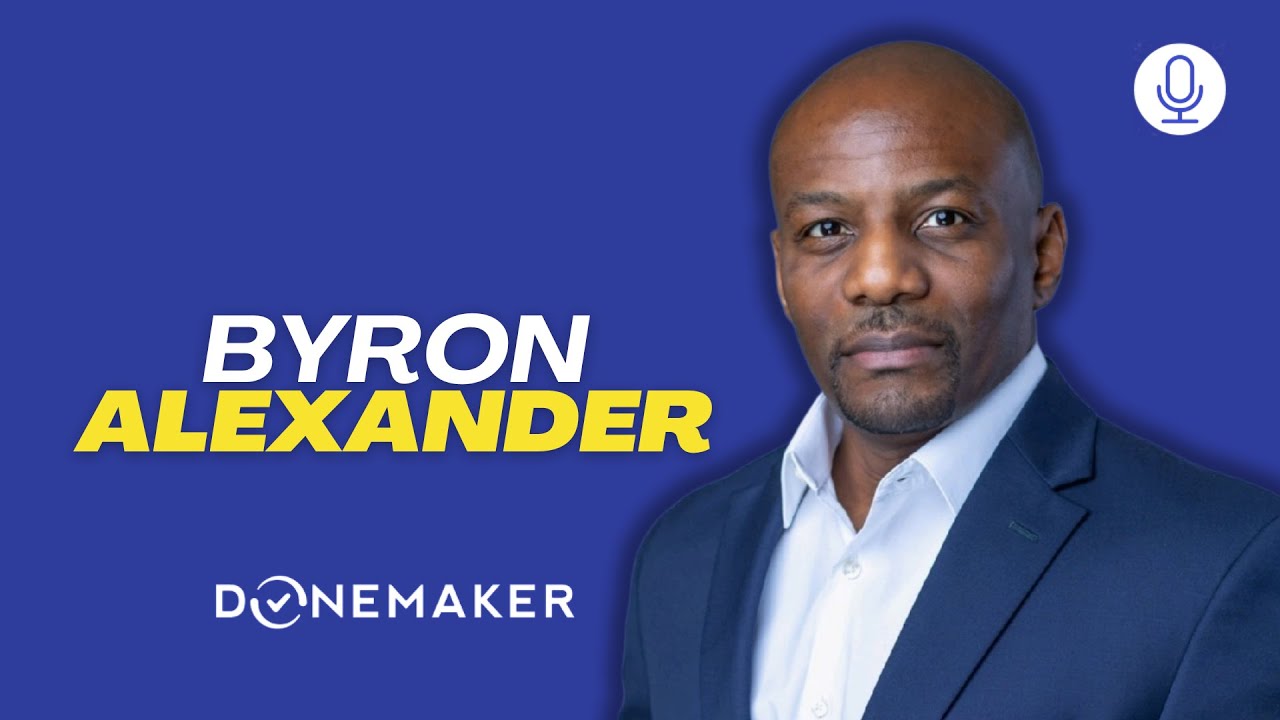
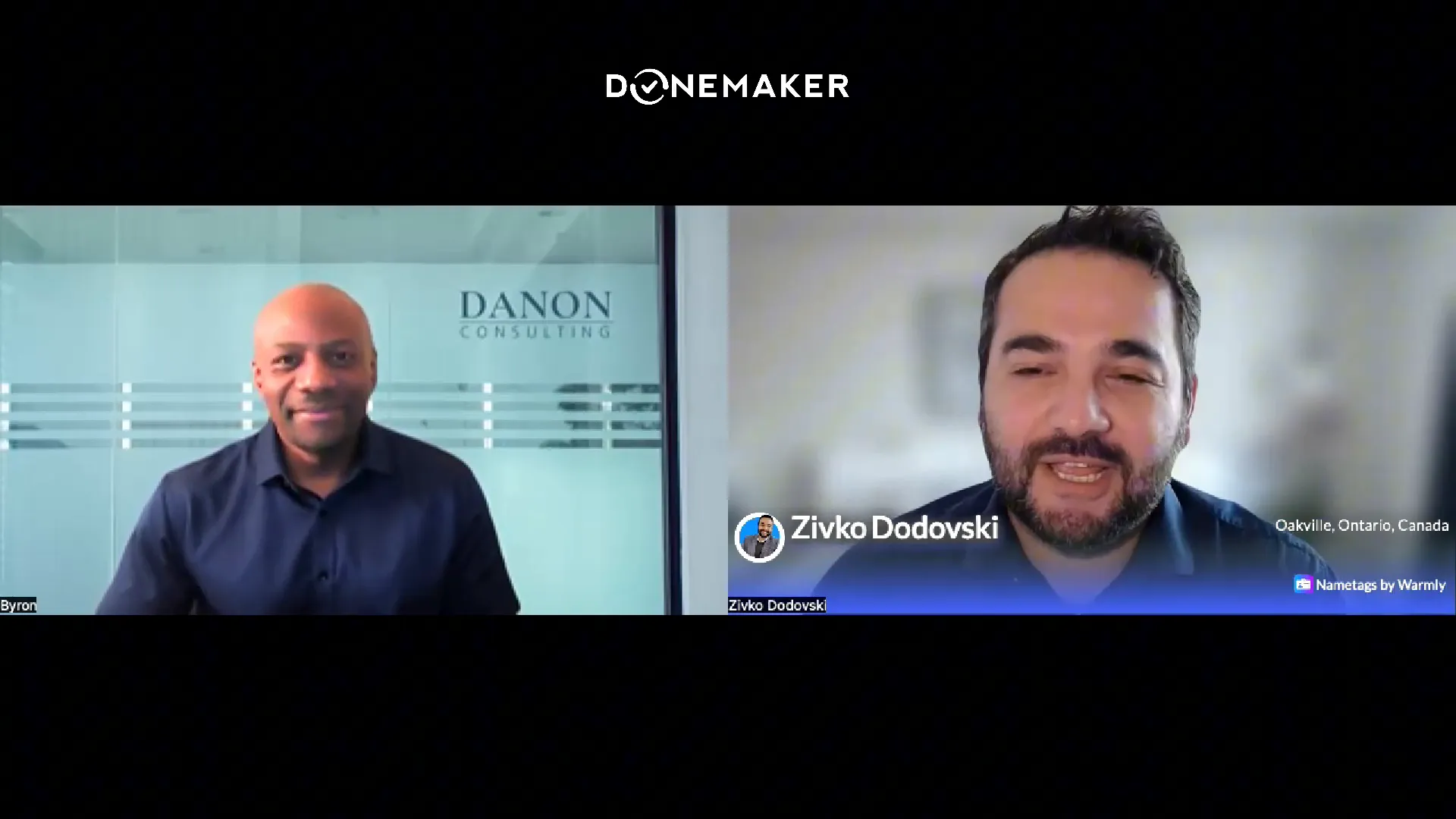
If you watched the podcast episode from DoneMaker featuring Byron Alexander, you already know how deep and practical this conversation gets. In this article I’ll walk you, step-by-step, through the Marketing Strategies Byron explains for small and medium manufacturing companies, distilled into a clear, actionable list you can use today. I’ll keep the tone honest and practical, because marketing isn’t about buzzwords, it’s about results, measurable goals, and real conversations with the people who buy from you.
Throughout this article you’ll find concrete examples, the pitfalls to avoid, and small experiments you can run immediately. If you want to skip to a specific section, use the numbered subheadings, this is a true listicle designed to be read in chunks and acted on. The aim: help you stop guessing and start using Marketing Strategies that move revenue, not just vanity metrics.
1. Start with research: know what truly motivates your customers
The first Marketing Strategies principle Byron emphasizes is simple but non-negotiable: do research before you make decisions. You might think price is the main lever, but your customers may value reliability, on-time delivery, quality, or flexibility more than a lower sticker price.
That difference matters. If you cut price because you assume customers care about cost, you might destroy margin and not win more business. Instead, ask targeted questions to discover drivers of purchase decisions and map those motivations back to product features and service promises.
- Do qualitative interviews with a sample of existing customers and lost deals.
- Run short surveys asking what matters most — speed, accuracy, warranty, service responsiveness, etc.
- Use social listening and LinkedIn searches to see what decision makers discuss in your industry.
These aren’t academic exercises — they tell you which Marketing Strategies to prioritize. The outputs should answer: who buys from you, what triggers their buying, and where they look for solutions.
2. Identify your strengths, then translate them into benefits
Once you know what motivates customers, the next Marketing Strategies step is to inventory what your company does well. Byron recommends a two-step approach:
- List what your organization is genuinely excellent at.
- Translate each strength into a customer benefit statement.
For example, if you are very reliable with on-time deliveries, don’t describe that as “we have improved logistics.” Say: “You’ll get your parts on time so production doesn’t stop.” Flip internal language into customer-centric benefits.
This is the difference between features and benefits — and it comes up again and again in effective Marketing Strategies. Your job is not to impress engineers with specs; your job is to make customers say “that solves my problem.”
3. Speak the language of your buyer: not your internal jargon
One of the most common mistakes Byron sees: businesses communicate in their own technical language. If you talk about apertures and pixel counts to a consumer buying a camera for family photos, you’ve already lost them. The same applies in manufacturing.
You need to speak your buyer’s language. If you sell to operations managers, talk about efficiency and throughput. If you sell to CFOs, talk about total cost of ownership and ROI. If you talk to procurement, highlight reliability and supplier risk reduction. This is a core Marketing Strategies move that changes both messaging and channels.
- Create messaging maps per persona: one page that shows how you’ll talk to each decision maker.
- Train sales and customer-facing staff to listen for keywords and pivot conversation based on the role they speak to.
- Remove buzzwords unless your buyer actually uses them, simplicity wins.
4. Build your brand on a real identity and core values
Brand strategy isn’t about colors and fonts first, it’s about identity. Byron stresses that the foundation of a brand is a clear sense of who you are: your core values, your promise to customers, and the principles you used to build the business.
Ask these questions and document answers honestly:
- Why did you start the company?
- What core values guide decisions inside and outside the company?
- What makes you different in the eyes of the customer?
Once you have that, visual identity, logo, color palette, fonts, becomes a tool to support the identity, not the other way around. Colors and logos matter, but only as signals that must be consistent with the promise you make.
5. Rebrand only when the foundation requires it, not as a quick fix
Rebranding is tempting. New leadership often wants a fresh stamp. But Byron warns: a rebrand done for the wrong reasons can confuse customers and undermine trust.
Rebrand for one or more of these valid reasons:
- Your business has evolved and the old brand no longer reflects your capabilities.
- You’re entering a new market and the current identity misaligns with that audience.
- Your brand is genuinely outdated and creating friction in customer perception.
Before you rebrand, run stakeholder research, staff, existing customers, and target prospects. A small sample can reveal whether a rebrand will be positive, neutral, or damaging. Rebranding is expensive and risky; make it a strategic decision backed by data.
6. Build practical personas (avatars) and prioritize them
When you’re ready to execute your Marketing Strategies, you must build personas, but keep them usable. Byron suggests creating several personas and prioritizing a primary one (P1), plus secondary targets (P2, P3).
Each persona should answer practical questions:
- What is their role and title?
- What problems keep them up at night?
- What outcomes do they measure (efficiency, margin, uptime)?
- Where do they look for suppliers or solutions (trade shows, LinkedIn, industry publications)?
Use these personas as listening filters in networking and sales conversations. When a contact says “I’m the CFO,” you should be able to instantly pivot to the messages that matter most to a CFO.
7. Make channel choices based on where your buyers actually are
Digital marketing is powerful because it’s measurable, but Byron stresses you must choose channels based on audience behavior. Don’t be on every platform because “everyone told me to.” Use Marketing Strategies that match where decision makers spend time.
Examples:
- LinkedIn for B2B manufacturing buyer engagement and thought leadership.
- Email for nurturing procurement and operations contacts with ROI-focused messages.
- Targeted industry publications and trade show presence for credibility in specialized markets.
Luxury manufacturers or high-ticket B2B sellers often rely less on mass social and more on targeted outreach and curated relationships. Make the choice that maps to your buyer and product positioning.
8. Use content and AI, but make it distinctively yours
AI is a productivity tool, but it won’t replace the need for authentic, brand-aligned content. Byron’s approach is practical: use AI to draft and iterate, but refine every output to include your specific voice, proof points, nicknames, client references, and context.
How to make AI part of your Marketing Strategies without sounding generic:
- Feed AI your brand assets: existing copy, case studies, customer quotes.
- Use AI to create structure and first drafts, then add specific examples that only you can provide.
- Run A/B tests to refine headlines, offers, and messaging based on measured response.
AI accelerates content production, but the uniqueness that drives trust comes from your real stories: specific customers, measurable outcomes, and details that a generic model won’t know.
9. Don’t underestimate video and human connection: even if you hate being on camera
Video and short clips (reels, snippets, short podcasts) capture attention far better than static posts. Byron highlights that you don’t have to do a formal pitch on camera, you can show processes, walk through a facility, capture candid conversations, or share real customer stories.
If you or your leadership don’t want to be the face of the company, consider alternatives:
- Walkthrough videos of your shop floor that show your process and pride in workmanship.
- Customer testimonial clips recorded on-site.
- Day-in-the-life style clips showing how your team solves problems.
People buy from people. Seeing your team and real situations builds trust. If you absolutely cannot be on camera, designate someone who can represent the company authentically, it’s often the difference between a good Marketing Strategies plan and no engagement at all.
10. Consider a fractional CMO: what to expect and how to vet one
If you need senior marketing strategy but can’t afford a full-time CMO, a fractional CMO can be a powerful solution. Byron outlines how to approach hiring and what to expect:
- Look for fit: the fractional CMO should understand your pain points and show similar examples of solving comparable problems.
- Ask for referrals and speak to former clients rather than asking for free strategic work.
- Set clear, measurable KPIs and a timeline. A fractional CMO’s work should be tied to business goals.
- Expect them to create the strategy, help with implementation, and upskill your existing team, not just churn out ideas.
Typical deliverables and activities from a fractional CMO include:
- Creating a marketing plan aligned to revenue targets
- Defining personas and messaging maps
- Recommending tools and streamlining tech stack
- Coaching and overseeing your team, with weekly or biweekly checkpoints
- Helping hire or contract the right execution resources
Importantly, Byron stresses you should require a plan and accountability framework at the start, timelines, checkpoints, and KPIs so both you and the fractional CMO are judged on outcomes, not activity alone.
Practical Marketing Strategies checklist to implement in 30/60/90 days
Use this checklist to turn the ideas above into action:
- Days 1–30: Run quick customer interviews (5–10 calls) to validate top motivators; create 2–3 buyer personas; document 3 core value statements.
- Days 31–60: Build your messaging map for the P1 persona; choose two digital channels to focus on; set 2 KPIs (lead quality and conversion rate).
- Days 61–90: Launch a small video series or walkthroughs; test 2 offers with A/B messaging; evaluate tech stack and consolidate tools if needed.
If you can execute this workflow, you’ll have created a tested marketing system, not a pile of unconnected tactics.
Conclusion: put these Marketing Strategies into action
Marketing isn’t magic. It’s a system: research, strategy, messaging, channels, execution, measurement, and iteration. If you start with the customer, translate your strengths into benefits, and pick the channels your buyers use, you’ll transform scattershot activity into a predictable growth machine.
Remember these final practical rules Byron emphasized:
- Be curious: start with research and listen first.
- Be simple: speak your customer’s language.
- Be accountable: set KPIs and timelines and review them regularly.
- Be human: show your people, your process, and your proof.
If you want to explore a fractional CMO relationship or a brand/marketing strategy built for manufacturing, you can find Byron at Danon Consulting, he offers an initial consultation to see if there’s a good fit. Applying these Marketing Strategies consistently will pay off: better leads, better conversions, and less wasted spend.
Now pick one small experiment from the 30/60/90 checklist and run it this week. Measure results, iterate, and keep building momentum. That’s how Marketing Strategies stop being theory and start producing revenue.
Watch the full podcast here: Marketing Strategies for Small & Medium Manufacturing Companies | Byron Alexander |DoneMaker Podcas
FAQ: your most pressing questions on Marketing Strategies