Have you ever wondered why some LinkedIn profiles consistently appear at the top of search results while others remain invisible? As LinkedIn’s search algorithm evolves in 2025, simply having a profile isn’t enough; you need to optimize every detail to stand out in the crowded B2B landscape.
In this article, we’ll dive into LinkedIn SEO, explore how the latest LinkedIn search algorithm works, and share practical strategies for LinkedIn profile optimization. Whether you’re aiming to boost your LinkedIn visibility for B2B or master the nuances of LinkedIn search, you’ll find actionable tips to help you get discovered and grow your professional impact.
Why LinkedIn SEO Matters in 2025
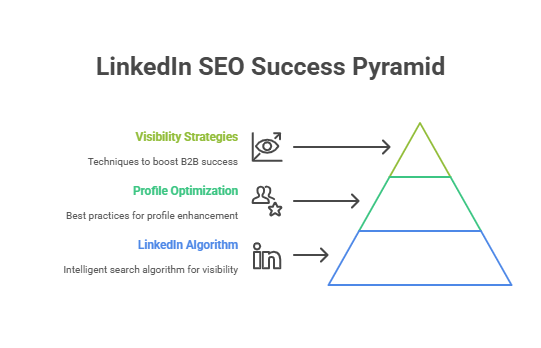
LinkedIn SEO in 2025 is a must-have for professionals and B2B brands aiming to stand out, attract opportunities, and drive business growth. With over 1 billion users and an increasingly intelligent search algorithm, optimizing your LinkedIn profile and content for search is crucial for enhancing visibility and credibility in the B2B space.
This guide covers how the LinkedIn search algorithm works, best practices for LinkedIn profile optimization, and strategies to boost your LinkedIn visibility for B2B success. You can learn more about LinkedIn Profile Optimization here: https://donemaker.com/linkedin-profile-setup-guide-for-maximum-organic/
Understanding LinkedIn SEO in 2025
What Is LinkedIn SEO?
LinkedIn SEO is the process of optimizing your profile, company page, and content to appear higher in LinkedIn search results and increase discoverability by your target audience. This involves using relevant keywords, completing your profile, and engaging with the platform on a regular basis.
Example:
A B2B marketing consultant who uses keywords like “B2B lead generation,” “LinkedIn strategy,” and “content marketing” in their headline, About section, and posts will appear more often in relevant searches.
Actionable Tip:
Identify the top keywords your audience uses and naturally incorporate them throughout your profile and content.
Why Is LinkedIn SEO Critical for B2B?
LinkedIn is the top platform for B2B lead generation, with 80% of social media B2B leads coming directly from it. In 2025, the platform’s search and content algorithms prioritize expertise, relevance, and engagement. If you want to reach decision-makers and build authority, mastering LinkedIn SEO is a must.
Data:
- 40% of B2B marketers say LinkedIn is their most effective channel for generating high-quality leads.
- LinkedIn accounts for 46% of social traffic to B2B websites.
- 97% of B2B marketers use LinkedIn for content marketing.
Actionable Tip:
Focus on building a complete, keyword-rich profile and consistently share valuable content to maximize your B2B visibility.
How the LinkedIn Search Algorithm Works in 2025
Key Changes in the LinkedIn Search Algorithm
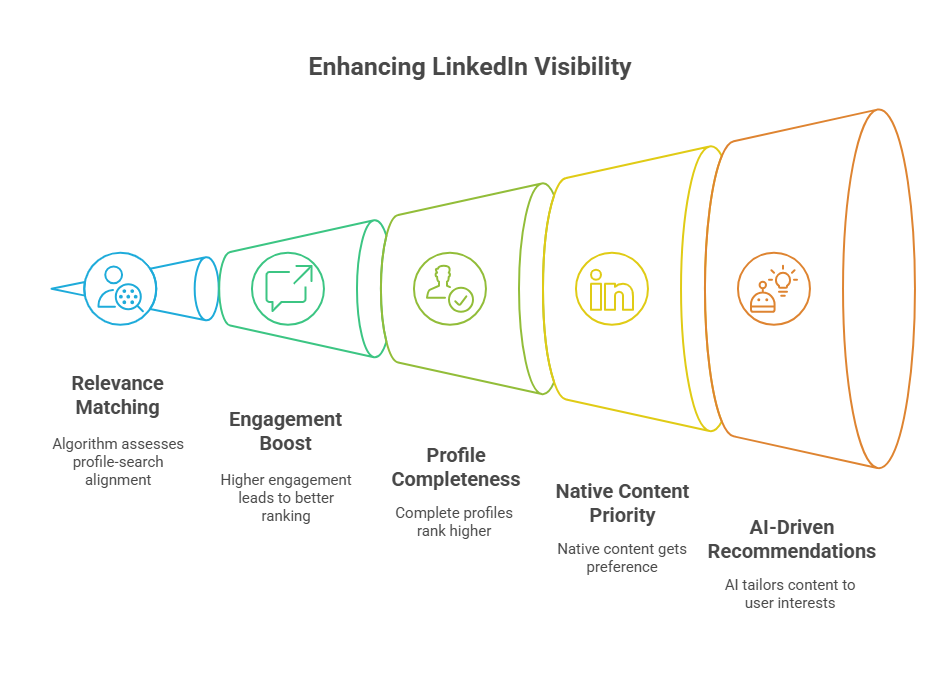
The LinkedIn search algorithm in 20254 is driven by artificial intelligence and focuses on delivering the most relevant, high-quality results to users. Here’s what’s new:
- Relevance Over Keywords: The algorithm weighs how closely your profile and content match what people are searching for, not just keyword density.
- Engagement Signals: Posts and profiles with higher engagement (comments, shares, recommendations) are more likely to appear in search results.
- Profile Completeness: Fully completed profiles rank higher, as LinkedIn wants to show users the most informative results.
- Native Content Priority: LinkedIn boosts native content (text posts, carousels, videos) over posts with external links, keeping users on the platform longer.
- AI-Driven Recommendations: Hashtags are less important for feed ranking, with AI now recommending content based on user behavior and interests.
Example:
A sales leader who posts regular carousels and receives thoughtful comments will see their content distributed more widely than someone who only shares external links.
Actionable Tip:
Prioritize native content and encourage meaningful engagement to boost your visibility in search and the feed. You can learn more about LinkedIn Algorithm here: https://donemaker.com/the-linkedin-algorithm-in-2025-what-actually-works/
How LinkedIn Ranks Profiles and Content
The algorithm uses a three-step process:
- Quality Filtering: Content is classified as spam, low quality, or high quality.
- Engagement Testing: Posts are shown to a small audience to gauge initial interaction. High engagement leads to wider distribution.
- Network and Relevance Ranking: LinkedIn prioritizes posts and profiles from people and topics with which you engage the most.
Actionable Tip:
Encourage early engagement by sharing your posts with close connections and responding quickly to comments.
LinkedIn Profile Optimization for Search in 2025
1. Customize Your LinkedIn URL
A clean, professional LinkedIn URL (e.g., linkedin.com/in/yourname) improves your branding and makes your profile easier to find in both LinkedIn and Google searches.
Example:
Instead of linkedin.com/in/john-doe-123456, use linkedin.com/in/johndoe-marketing.
Actionable Tip:
Edit your LinkedIn URL in your profile settings to include your name and, if relevant, your profession or industry. Learn more about that here: LinkedIn’s official guide to custom URLs
2. Complete Every Section of Your Profile
A complete profile is essential for LinkedIn SEO. Fill out all sections, including:
- Profile photo (public and professional)
- Headline (with relevant keywords)
- About section (focused on your audience’s needs)
- Experience (with keyword-rich descriptions)
- Skills, certifications, and awards.
Data:
Profiles with a photo get up to 21x more views.
Actionable Tip:
Use LinkedIn’s profile completion checklist to ensure no section is left blank.
3. Write a Keyword-Optimized Headline
Your headline is one of the first things people see and a key factor in LinkedIn search. Use keywords that reflect your expertise and what you offer, such as “B2B Marketing Strategist | LinkedIn SEO Expert | Content Marketing”.
Example:
“Helping SaaS companies grow with LinkedIn SEO and content strategy.”
Actionable Tip:
Keep your headline clear and specific. The first 45 characters are most visible in search results.
4. Craft a Compelling About Section
The About section should address your audience’s problems and how you solve them, naturally incorporating relevant keywords. Focus on clarity and value, not just a list of skills.
Example:
“I help B2B tech companies generate qualified leads through LinkedIn SEO, content marketing, and data-driven outreach”.
Actionable Tip:
Use the PAS (Problem-Agitate-Solution) framework: state your audience’s pain points, agitate the problem, and position yourself as the solution.
5. Optimize Your Experience and Skills
Use keywords in your job titles and descriptions that match what your target audience is searching for. Regularly update your skills section and seek endorsements and recommendations to build trust and authority.
Example:
Instead of “Sales Manager,” use “B2B Sales Manager | SaaS Lead Generation | LinkedIn Outreach”.
Actionable Tip:
List up to 50 skills and ask colleagues for endorsements, especially for your top skills.
6. Leverage the Featured Section
Showcase your best work, such as articles, case studies, or key posts, in the Featured section. This not only demonstrates expertise but also keeps your most important content visible.
Example:
Highlight a LinkedIn article that went viral or a case study that generated results for a client.
Actionable Tip:
Update your Featured section quarterly with your latest and most relevant work.
7. Use a Professional Photo and Banner
Profiles with a high-quality photo get up to 21x more views. A standout banner can visually communicate your expertise or brand message.
Example:
Use a banner that includes your tagline or a visual element related to your industry.
Actionable Tip:
Choose a high-resolution, friendly headshot and a banner that aligns with your professional brand.
LinkedIn Search Optimization: Best Practices for 2025
1. Use Relevant Keywords Strategically
- Place keywords in your headline, About section, experience, and skills.
- Avoid keyword stuffing; use natural language that matches how your audience searches.
Example:
If you’re a SaaS marketer, use phrases like “SaaS marketing,” “B2B lead generation,” and “content strategy” throughout your profile.
Actionable Tip:
Review competitor profiles and job postings to identify high-impact keywords that can drive traffic and increase visibility.
2. Post Regularly and Engage Authentically
- Consistent activity signals to LinkedIn that you’re an active, valuable member.
- Comment on industry posts, share insights, and respond to comments to boost engagement.
Data:
LinkedIn users who post weekly see 2x more engagement.
Actionable Tip:
Set a reminder to post or comment at least three times per week.
3. Publish LinkedIn Articles and Newsletters
- Long-form content, such as LinkedIn Articles and Newsletters, ranks well in both LinkedIn and Google search, providing long-term visibility.
- Articles that answer common questions or provide industry insights are especially effective.
Example:
Write a monthly LinkedIn Newsletter on “B2B Growth Strategies” to build authority and stay top-of-mind.
Actionable Tip:
Repurpose your best-performing posts into longer articles or newsletter editions.
4. Focus on Value-Driven Content
- The algorithm now rewards posts that offer genuine value, such as insights, solutions, or thought leadership.
- Avoid clickbait and engagement bait; instead, aim to start meaningful conversations.
Example:
Instead of “Like if you agree,” share a practical framework and ask for opinions or experiences.
Actionable Tip:
End every post with a question to encourage comments and discussion.
5. Use Advanced LinkedIn Search Features
- Master LinkedIn’s advanced search filters and Boolean operators to find and connect with the right people.
- Save searches and set up alerts for new opportunities.
Example:
Search for “VP Marketing” AND “SaaS” in your target location to build a focused prospect list.
Actionable Tip:
Regularly update your saved searches to discover new prospects as your network grows.
6. Encourage Employee Advocacy
- Content shared by employees often receives higher engagement than company page posts.
- Empower your team to share company updates and industry insights to amplify reach.
Data:
Employee-shared content can see up to 8x more engagement than content shared through company pages.
Actionable Tip:
Create easy-to-share content and provide your team with prompts or templates. You can discover more Hacks To Make Your Profile Stand Out From The Crowd here: https://www.youtube.com/shorts/10b6VPR3Kxk

Final Recommendations
Keep Your Profile Fresh: Update your LinkedIn profile every few months to reflect new skills, roles, or achievements. A current profile signals to both the algorithm and visitors that you’re active and engaged.
- Prioritize Engagement: Don’t just post and interact. Comment on others’ content, join relevant discussions, and respond to every comment you receive. Engagement is a key driver of visibility in both search and the feed.
- Focus on Value, Not Volume: Quality trumps quantity. Share insights, frameworks, and real-world examples that help your audience solve problems or see things differently.
- Leverage Analytics: Use LinkedIn’s analytics tools to track what’s working. Monitor profile views, post engagement, and search appearances to refine your strategy over time.
- Encourage Recommendations: Ask colleagues, clients, and partners for recommendations. These not only build credibility but also improve your profile’s search ranking.
- Stay Consistent: Consistency in posting, engaging, and updating your profile is what builds momentum and long-term visibility.