LinkedIn automation has become a popular tool for B2B outreach, promising efficiency and scalability. However, in 2025, the risks of automation far outweigh its benefits. From damaging your reputation to losing valuable connections, automation can do more harm than good.
This article explores why you should avoid LinkedIn automation and why manual outreach remains the best approach for building genuine, long-lasting relationships.
What is LinkedIn Automation?
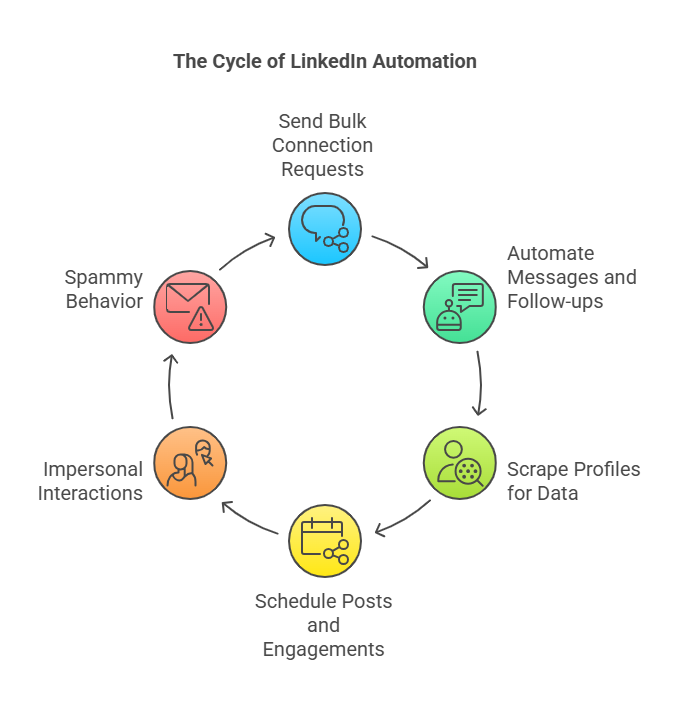
LinkedIn automation refers to using software tools to automate repetitive tasks on the platform, such as sending connection requests, messages, and follow-ups. While these tools may seem like a time-saver, they often lead to impersonal interactions and spammy behavior that can harm your brand.
How Automation Tools Work
Automation tools typically allow users to:
- Send bulk connection requests.
- Automate messages and follow-ups.
- Scrape profiles for data.
- Schedule posts and engagements.
While these features may sound appealing, they often result in generic, one-size-fits-all outreach that fails to resonate with prospects.
The Hidden Dangers of LinkedIn Automation
1. Impersonal Interactions
Automation tools rely on templates and generic messages, which lack the personal touch that prospects expect. When your outreach feels robotic, prospects are less likely to engage, and your messages may be ignored or marked as spam.
Example:
An automated message like, “Hi [Name], I’d love to connect with you!” feels impersonal and fails to address the prospect’s specific needs or interests.
Why It Matters:
Personalization is key to successful outreach. According to a study by HubSpot, personalized emails have a 29% higher open rate and a 41% higher click-through rate than generic ones. The same principle applies to LinkedIn messages.
2. Spammy Behavior
LinkedIn’s Algorithm is designed to detect and penalize spammy behavior. If you send too many connection requests or messages in a short period, your account could be flagged, leading to restrictions or even a permanent ban.
Fact:
LinkedIn limits users to 100 connection requests per week. Exceeding this limit or using automation to bypass it can result in account restrictions. You can read more about LinkedIn connections here: https://donemaker.com/linkedin-organic-outreach-methods-that-turn/
Real-Life Example:
A sales professional using automation tools reported having their account temporarily restricted after sending 200 connection requests in a single day. This halted their outreach efforts and damaged their credibility with prospects.
3. Difficulty Penetrating Competitive Markets
In highly competitive industries, standing out requires more than just generic outreach. Automation tools often fail to deliver the level of personalization and authenticity needed to break through the noise.
Case Study: J. Baker Media
One of the cases where we avoided automation at all costs was with J. Baker Media, a boutique PR agency specializing in digital marketing solutions for small business owners. Led by the dynamic Jaclyn, J. Baker Media needed to penetrate a saturated market and convert prospects into paying clients.
The Challenge:
J. Baker Media’s primary challenge was effectively reaching and engaging small business owners in a crowded market. With a vast and diverse target audience, the task was to demonstrate the unique value they could offer and stand out from the competition.
Our Solution:
We helped J. Baker Media implement a manual outreach strategy focused on personalization and authenticity.
Here’s what we did:
- Segmented Targeting: We identified and focused on specific segments within the small business market, ensuring that each message was tailored to the unique needs of the recipient.
- Compelling Messaging: We developed clear, impactful messages that resonated with small business owners, highlighting how J. Baker Media could help them achieve their goals.
- Performance Tracking: We utilized advanced analytics to measure engagement and tweak strategies for maximum effectiveness.
The Results:
Within the first two months, J. Baker Media saw:
- 5 new clients signed, providing a solid foundation for future growth.
- 30 booked prospects per month, demonstrating the effectiveness of the outreach strategy.
- 147 engaged prospects per month, showing high levels of interest and interaction.
- A 51% connection rate per month, indicating strong engagement with their target audience.
Long-Term Impact:
The partnership with DoneMaker had a significant impact on J. Baker Media:
- Market Penetration: The focused approach allowed J. Baker Media to effectively penetrate the small business market.
- Client Base Growth: Acquiring new clients provided a solid foundation for future business growth and expansion.
- Reputation Enhancement: Successfully signing clients quickly enhanced J. Baker Media’s reputation as an effective digital marketing provider for small businesses.
This case study underscores the effectiveness of manual outreach in the competitive digital marketing landscape. For J. Baker Media, the campaign achieved immediate client acquisition goals and laid a foundation for sustained growth and success in serving small business owners. The case is a testament to the power of targeted, data-driven marketing strategies to achieve tangible business results.
Why Manual Outreach is the Better Choice
1. Build Genuine Relationships
Manual outreach allows you to connect with prospects on a deeper level. By taking the time to craft personalized messages and engage with their content, you can build trust and establish meaningful relationships.
Example:
Instead of sending a generic connection request, you could say:
“Hi [Name], I noticed your recent post about [topic]. I found it really insightful and would love to connect to discuss how we can collaborate.”
Why It Works:
Personalized messages show that you’ve done your homework and genuinely care about the prospect’s needs. This level of effort is more likely to result in a positive response.
2. Tailor Your Messages
Manual outreach gives you the flexibility to tailor your messages to each prospect. This level of personalization is difficult to achieve with automation, but it can significantly improve your response rates and conversion rates.
Tip:
Use LinkedIn’s advanced search filters to find prospects who align with your target audience. Then, craft messages that address their specific needs and challenges.
Example:
“Hi [Name], I came across your profile and noticed your expertise in [field]. I’d love to connect and share some insights on how we’ve helped similar professionals achieve [specific result].”
3. Avoid Algorithm Penalties
By focusing on manual outreach, you can avoid triggering LinkedIn’s spam filters. Sending fewer, high-quality messages is more effective than blasting out hundreds of generic ones.
Pro Tip:
Limit your outreach to 20-30 personalized messages per day. This ensures that your activity remains within LinkedIn’s guidelines while still allowing you to make meaningful connections. You can read more about LinkedIn Algorithm here: https://donemaker.com/the-linkedin-algorithm-in-2025-what-actually-works/
The Future of LinkedIn Outreach in 2025
As we move into 2025, the future of LinkedIn outreach will be shaped by authenticity and personalization. While automation tools may continue to evolve, they cannot replicate the human touch that prospects value.
Trends to Watch:
- Increased Focus on Personalization: Prospects will expect even more tailored and relevant outreach.
- Stricter Algorithm Enforcement: LinkedIn will likely continue cracking down on spammy behavior, making automation even riskier.
- Rise of Relationship-Building Tools: Tools that enhance manual outreach (e.g., CRMs with LinkedIn integrations) will become more popular.
How to Succeed with Manual Outreach
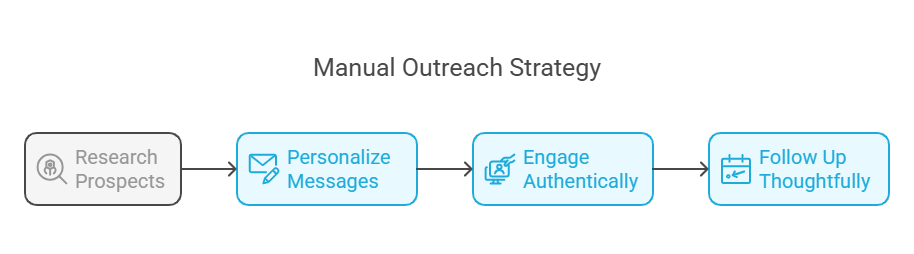
1. Research Your Prospects
Before reaching out, take the time to research your prospects. Look at their LinkedIn profiles, recent posts, and company updates to gather insights that can inform your messaging.
Example:
If a prospect recently shared an article about AI in marketing, you could reference it in your message:
“Hi [Name], I enjoyed your recent post about AI in marketing. I’d love to connect and discuss how we’re using AI to drive results for our clients.”
2. Personalize Every Message
Avoid using templates or generic messages. Instead, craft personalized messages that address the prospect’s specific needs and interests.
Tip: Use the prospect’s name, mention a recent achievement, or reference a shared connection to make your message stand out.
3. Engage Authentically
Don’t just send messages—engage with your prospects’ content. Like, comment, and share their posts to demonstrate your interest and build rapport.
Example:
If a prospect shares a post about a new product launch, you could comment:
“Congratulations on the launch! I’m excited to see how this product evolves. Do you have any early feedback from customers?”
4. Follow Up Thoughtfully
If you don’t receive a response, follow up politely. A simple, “Hi [Name], just checking in to see if you had a chance to review my previous message,” can go a long way.
Pro Tip: Space out your follow-ups by at least 5-7 days to avoid coming across as pushy.
Final Recommendations
LinkedIn automation may seem like a shortcut to success, but it comes with significant risks. In 2025, the key to effective B2B outreach lies in authenticity, personalization, and genuine relationship-building—all of which are best achieved through manual efforts.
By avoiding automation and focusing on manual outreach, you can build stronger connections, establish trust, and achieve long-term success on LinkedIn. You can watch this video from our YouTube Channel to learn more tips about this topic.
Frequently Asked Questions (FAQ’s)