Sales Development Representatives (SDRs) are the front line in many B2B sales organizations. They’re the people who make the first contact with potential customers, qualify leads, and set up meetings for the sales team. This role is vital for building a strong sales pipeline and ensuring consistent revenue growth. However, one of the biggest challenges sales leaders face today is high SDR turnover.
High turnover in SDR teams disrupts sales processes, increases recruitment and training costs, and can demoralize the remaining team members. Replacing SDRs frequently means sales organizations often struggle to maintain consistent outreach and pipeline momentum. For B2B companies that depend on long sales cycles, the impact of losing SDRs frequently is even more pronounced.
But why do SDRs leave? The reasons are varied but often include lack of career growth, insufficient compensation, burnout, poor management, and a lack of engagement or connection to the company culture. Understanding these challenges is the first step in addressing SDR retention in a meaningful way.
This article dives into six retention strategies tailored for SDR teams, offering practical advice you can implement to keep your SDRs motivated, engaged, and loyal. By applying these strategies, you’ll not only reduce turnover but also build a stronger, more productive sales team that drives better results over time. You can learn more about SDR here: https://donemaker.com/build-an-sdr-process-that-actually-converts-in-2025/
1. Establish Clear Career Progression Paths to Motivate SDRs
SDRs typically view their roles as entry points into broader sales careers. They want to know what the next steps are, whether that’s moving into Account Executive positions, Sales Operations, Customer Success, or even leadership roles within the sales organization. Without visible career pathways, SDRs may feel stuck and start looking for opportunities elsewhere.
One key reason SDR retention matters is that high turnover disrupts the entire sales process. When your team is constantly changing, it’s harder to build momentum, maintain relationships with prospects, and hit your targets consistently. Plus, hiring and training new SDRs takes time and resources that could be better spent on closing deals. By focusing on retention strategies early on, companies can create a more stable, motivated sales team that delivers steady results.
Why Career Paths Matter
Research shows that employees who see a clear progression within their organization are more likely to stay longer. For SDRs, this means understanding how their current work contributes to the bigger picture and what skills or milestones they need to achieve to move up.
How to Build Clear Career Paths
- Map the Journey: Create a documented career ladder for SDRs. Define roles, responsibilities, and expectations at each level, along with the skills needed to advance.
- Regular Career Conversations: Incorporate career development discussions into regular 1:1s. Ask SDRs about their aspirations and help them create personalized development plans.
- Provide Skill-Building Opportunities: Offer training sessions that focus not only on SDR tasks but on skills relevant to future roles, such as negotiation, closing techniques, or data analysis.
- Promote from Within: Whenever possible, fill open sales positions with internal candidates. This reinforces that growth is attainable and valued.
Real-World Example
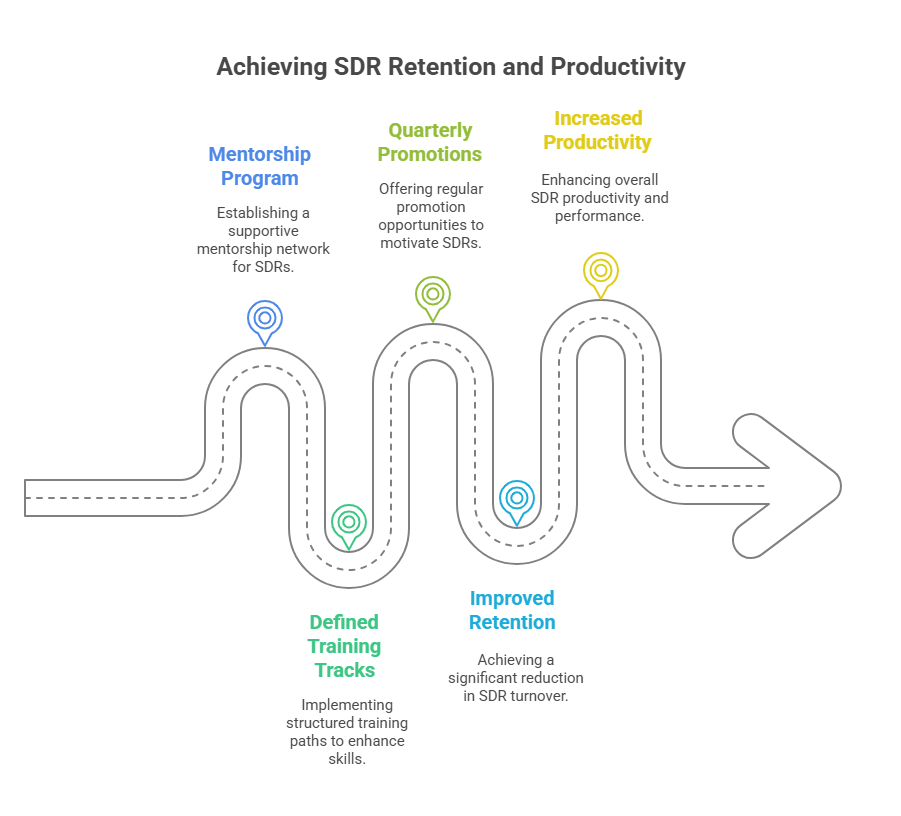
One SaaS company reduced SDR turnover by 30% within a year after launching a “Sales Career Pathway Program” that included mentorship, defined training tracks, and quarterly promotion opportunities. SDRs felt more invested in their future, which directly improved retention and productivity.
2. Offer Competitive Compensation and Incentives to Retain Top Talent
Compensation isn’t the only motivator, but it’s a key factor that influences SDR retention. Many SDRs leave because they feel their pay doesn’t match the effort or results they deliver. Additionally, a well-designed incentive program can boost motivation and encourage high performance.
Beyond just offering competitive pay, fostering a culture of open communication plays a crucial role in SDR motivation. When sales reps feel heard and valued, they’re more likely to stay engaged and committed. Regular check-ins, team meetings, and feedback loops create an environment where SDRs can share challenges and celebrate wins, which builds trust and strengthens their connection to the company’s mission.
The Role of Compensation in SDR Retention
B2B sales is challenging and competitive. SDRs often face rejection and pressure to meet quotas, so fair compensation and rewards make the effort worthwhile. Competitive base salaries combined with attainable commissions or bonuses create financial security and motivation.
Designing Effective Compensation Plans
- Benchmark Against Industry Standards: Use salary surveys and market data to ensure your pay structure is competitive.
- Incorporate Variable Pay: Tie bonuses or commissions to measurable goals such as qualified leads generated, meetings set, or conversion rates.
- Recognition Incentives: Beyond money, rewards like “SDR of the Month” programs, gift cards, or extra time off recognize hard work and foster a sense of achievement.
- Transparency: Clearly communicate how compensation works and what’s needed to earn incentives. Transparency builds trust and drives results.
Balancing Compensation with Business Goals
While increasing pay can reduce turnover, it’s important to balance this with business sustainability. Align incentive structures to encourage behaviors that lead to quality leads and pipeline growth, not just quantity.

3. Foster a Positive and Inclusive Work Environment to Improve Engagement
Beyond pay, SDRs want to work in a place where they feel valued, supported, and connected. A positive work environment reduces stress and helps employees stay engaged. It also encourages collaboration and innovation within the sales team.
Elements of a Positive Work Environment
- Open Communication: Encourage SDRs to share feedback, voice concerns, and participate in decision-making.
- Team Bonding: Host regular social events, whether virtual or in-person, to build camaraderie.
- Diversity and Inclusion: Promote an inclusive culture where different perspectives are welcomed and valued.
- Work-Life Balance: Support flexible schedules or remote work options when possible to help SDRs manage personal and professional lives.
The Impact on Retention
When SDRs feel a genuine connection to their coworkers and the company, they develop loyalty beyond just the paycheck. They’re more likely to stay through challenges and remain committed to the team’s success.
Case in Point
A B2B tech firm introduced weekly “team huddles” and monthly virtual coffee chats, increasing peer interaction and reducing isolation for remote SDRs. Over six months, their voluntary turnover dropped significantly.
4. Invest in Continuous Training and Professional Development
SDRs thrive when they have the tools and knowledge to succeed. Continuous training not only improves performance but signals to employees that the company is invested in their growth.
Why Training Matters for Retention
The sales landscape evolves quickly. New products, changing buyer behaviors, and updated sales methodologies require ongoing learning. SDRs who feel they are developing skills for the future are less likely to leave.
Effective Training Strategies
- Blend Formal and Informal Learning: Combine structured workshops with on-the-job coaching and peer learning.
- Leverage Technology: Use e-learning platforms and video tutorials for flexible, self-paced learning.
- Cross-Training: Allow SDRs to experience different sales roles or departments to broaden their skills and keep work interesting.
- Regular Feedback: Incorporate performance reviews that highlight strengths and areas for growth.

Practical Example
Companies that implement sales academies or certification programs report higher SDR motivation and lower churn rates. SDRs appreciate recognition for completing training modules and see it as a step toward career advancement.
5. Implement an Effective Onboarding Process
The onboarding experience can make or break an SDR’s initial impression of your company. A thoughtful onboarding program helps new hires ramp up quickly, feel supported, and start contributing sooner.
What Makes Onboarding Effective?
- Structured Orientation: Cover company values, sales processes, tools, and team introductions in a planned sequence.
- Mentorship Programs: Pair new SDRs with experienced colleagues who can answer questions and provide guidance.
- Clear Goal Setting: Define performance expectations for the first 30, 60, and 90 days.
- Early Wins: Assign achievable tasks early to build confidence.
Benefits for Retention
New SDRs who feel prepared and supported are less likely to become frustrated and leave within the first few months, which is a critical period for turnover.
6. Recognize and Address Burnout Before It Happens
SDR roles are demanding. Constant outreach, rejection, and pressure to hit targets can wear down motivation and lead to burnout if not addressed proactively.
Signs of Burnout in SDRs
- Declining performance and engagement
- Increased absenteeism
- Negative attitude or withdrawal from team activities
- Emotional exhaustion or stress-related complaints
Preventive Measures
- Frequent Check-ins: Managers should maintain open dialogues about workload and stress.
- Encourage Breaks: Promote taking vacation days and mental health time without stigma.
- Wellness Resources: Provide access to counseling, stress management workshops, or wellness programs.
- Adjust Workload: When possible, redistribute tasks or set realistic quotas to prevent overload.
Why Addressing Burnout Matters
Burnout not only reduces productivity but can cause talented SDRs to leave prematurely. Showing that you care about their well-being builds trust and long-term loyalty.
Bonus: Using Technology to Make SDRs’ Work Easier and Keep Them Motivated
Technology isn’t just about fancy tools — it can really make a difference in how SDRs feel about their job every day. When SDRs have the right apps and platforms to handle repetitive tasks, they don’t get stuck doing busywork. Instead, they get to spend more time talking to actual prospects and building relationships, which is the part of the job they usually enjoy most.
Many SDRs get frustrated when they feel overwhelmed or like they’re drowning in admin work. Having tools that automate outreach, organize leads, and track performance clearly can take a lot of that pressure off. When SDRs see that their efforts are making an impact, it gives them a boost to keep going.
Plus, technology can help managers give better feedback. When coaches have detailed insights into calls or emails, they can offer advice that actually helps SDRs improve — not just generic tips. This kind of support helps SDRs feel like they’re growing and that their work matters, which makes them want to stick around longer.
Final Recommendations: Building a Retention-Focused SDR Culture
Reducing SDR turnover isn’t about quick fixes; it requires a strategic, ongoing effort that integrates career growth, fair compensation, a supportive environment, continuous learning, strong onboarding, and proactive burnout management. By focusing on these areas, you create a workplace where SDRs feel valued, motivated, and invested in their future.
Start by conducting a thorough assessment of your current retention rates and employee feedback to identify pain points. From there, prioritize initiatives that align with your company culture and resources. Remember, transparency and communication are key — involve your SDRs in conversations about what matters to them.
Leadership plays a crucial role. Managers who lead with empathy, provide clear direction, and celebrate successes foster stronger connections with their teams. Consider establishing regular forums for SDRs to share experiences and suggest improvements. This inclusive approach not only improves retention but often surfaces innovative ideas that benefit the entire sales organization.
Finally, measure progress continuously. Track turnover trends, engagement scores, and performance metrics to evaluate the impact of your retention strategies. Adapt and refine your approach based on data and feedback.
Building a stable SDR team is a powerful investment that pays dividends in pipeline consistency, sales results, and company growth. It’s worth the time and effort to create an environment where SDRs want to grow their careers — with you. You can learn more about sales development here: https://donemaker.com/the-future-of-b2b-sales-exploring-the-biggest/