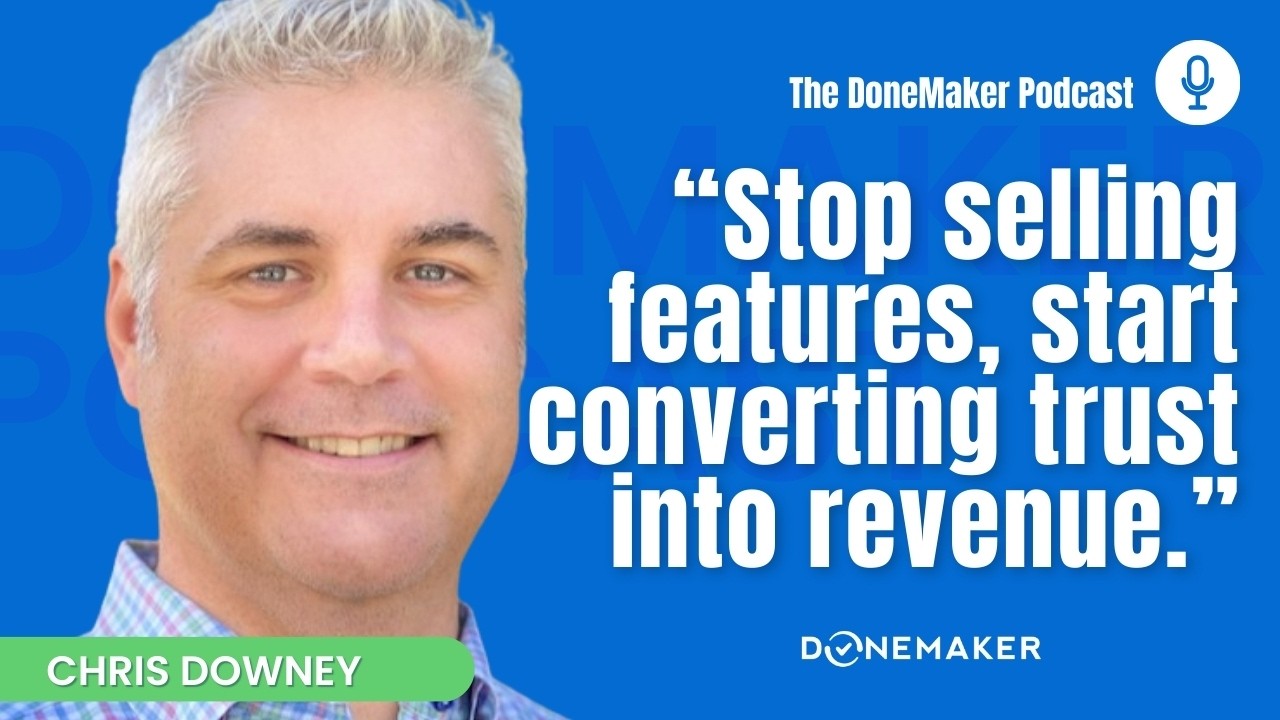
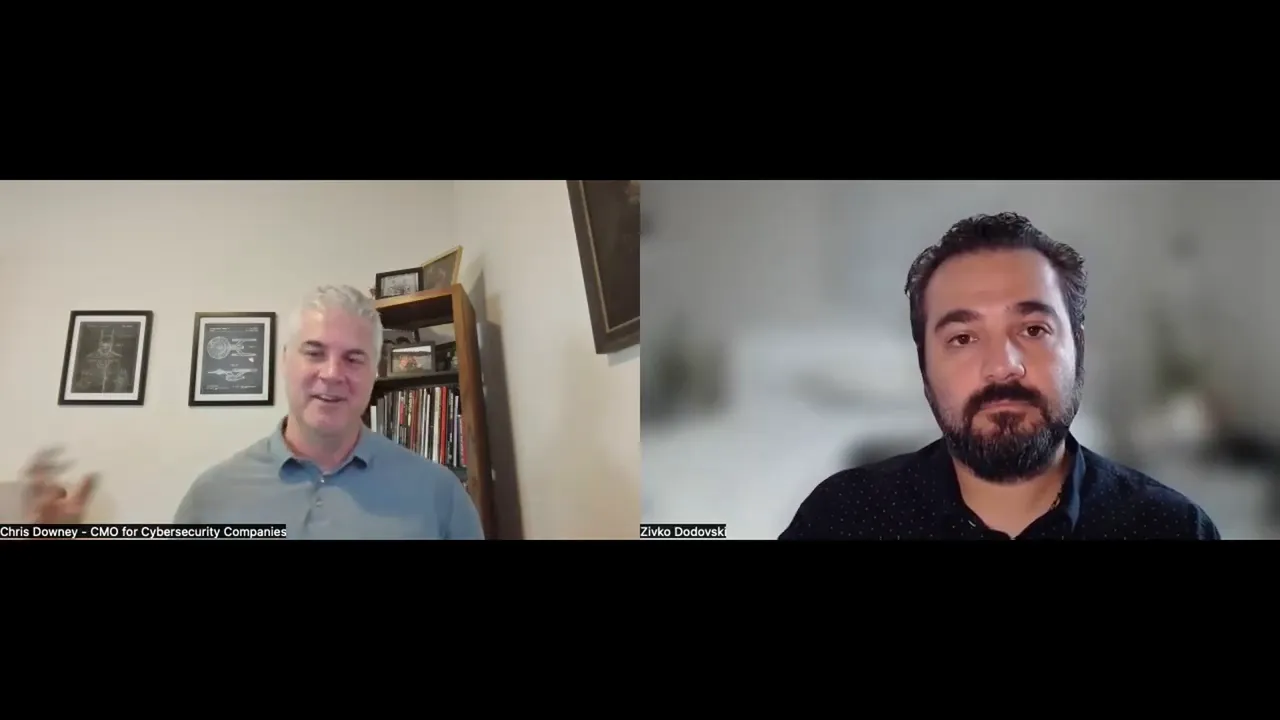
In a recent conversation on my channel DoneMaker, I sat down with Chris Downey, CEO of Reverb Strategic Marketing, to unpack a simple but powerful idea: how SaaS Founders can convert the trust they already have into real revenue. If you’re building a B2B product—especially in SaaS or cybersecurity, you probably face the same problem Chris and I talked about: a crowded market, limited advertising budget, and a product that looks like a dozen others on the surface.
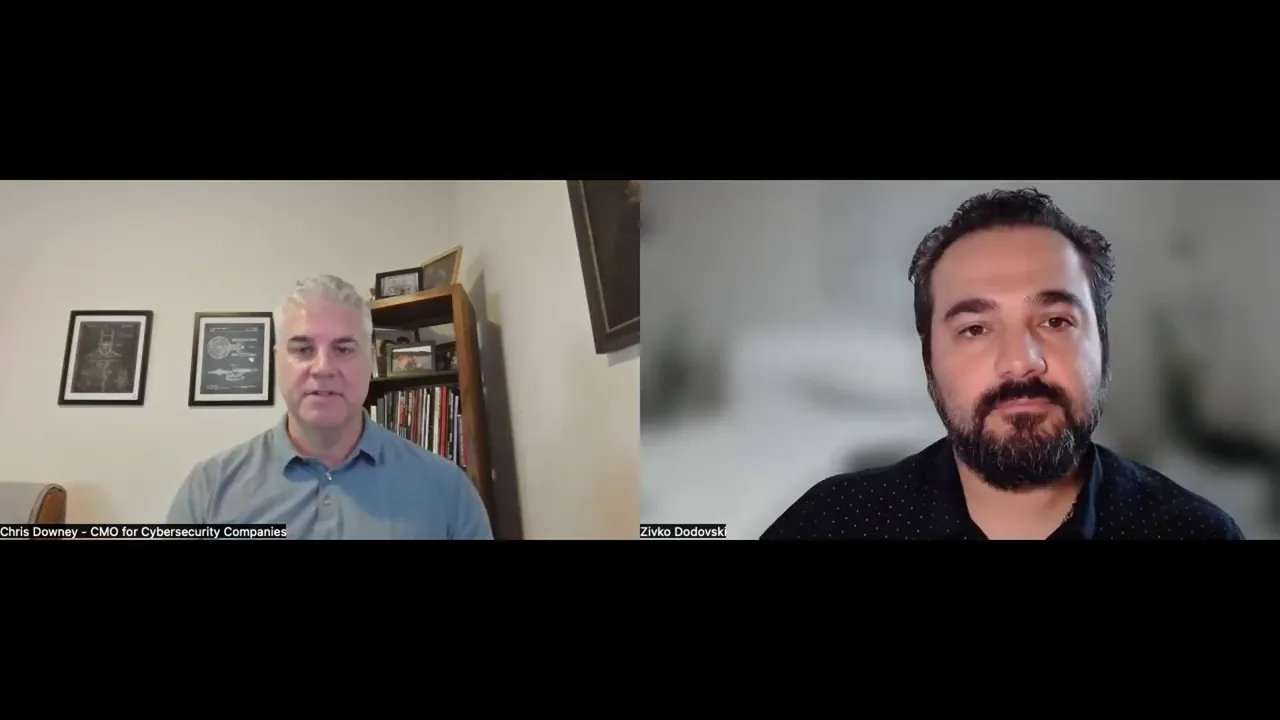
This article turns that conversation into an actionable, no-fluff list you can use starting today. I’ll walk you through the exact model we discussed, demand creation, demand capture, demand conversion, plus repeatable tactics for LinkedIn, content pillars, attribution, and how to make your sales handoff feel like taking an order instead of hunting for a lead. If you’re a SaaS Founders looking to be more visible, create credible demand, and close smarter, this is your playbook.
1. Why the Founder Matters More Than the Logo (and what SaaS Founders must do about it)
You don’t need me to tell you the market is noisy. Chris put it bluntly: when he walked the RSA conference floor, it was a “sea of sameness.” Design languages blend. “AI” is slapped on every product. Logos are clean, but faceless. What stands out in that crowd isn’t the brand treatment—it’s the founder.
“They are the person who had this brilliant idea. They’ve got the passion. They’ve built up the trust throughout their careers.”
Here’s the point you need to internalize as a SaaS Founders: your personal credibility and voice are often the single differentiator you can control without a huge ad budget. When you lead with the logo, you compete on advertising spend. When you lead with your voice, you compete on trust—and trust scales.
- Trust is portable: people buy from people they trust. When you publicly demonstrate expertise, your company benefits.
- Personal voice helps product-market fit: early feedback on your POV refines product and positioning faster than controlled lab tests.
- Founders attract early customers and talent: authentic leadership messaging signals culture and purpose—vital for hiring and early revenue.
If you are a SaaS Founders struggling to stand out, stop hoping the website will do the heavy lifting. Start amplifying the thing that advertising can’t buy: your credibility.
2. Demand Creation: How SaaS Founders Build an Always-On Voice
Demand creation is the part most startups ignore or overcomplicate. Chris breaks it down: it’s about getting your POV out there consistently and in the formats your audience expects. That doesn’t mean you need presence everywhere—just where your buyer is.
Here’s the core idea: purchasing isn’t a straight funnel anymore. Consumption happens in circles. People discover, follow, and make decisions months before they have an explicit need. As a SaaS Founders you must show up during that long, wandering discovery phase.
- Be visible where your buyers live: for most B2B SaaS Founders that’s LinkedIn first. It’s where you’ll get direct feedback and create credibility at scale.
- Be consistent: commit to a cadence—Chris recommends three text-only posts per week for founders who are starting out. Text-only lowers friction and forces clarity.
- Provide value: every post should be entertaining, educational, or directly useful (roadmaps, how-tos, frameworks). If it doesn’t help the reader do their job better, don’t post it.
- Use content to refine product-market fit: the feedback you get from hundreds or thousands of readers is far more actionable than six customer interviews.
One shocker Chris shared: he audited Series A CEOs recently and found only 17% had posted to LinkedIn in the past month, and only 1 out of 40 posted anything resembling thought leadership. If you’re a SaaS Founders and you aren’t posting, you’re leaving an enormous gap for competitors to own your narrative.

3. Demand Capture: Make It Frictionless for In-Market Buyers
Once your content creates demand, you must capture it without friction. Demand capture is the bridge between curiosity and purchase. For many startups, this is where the process breaks down.
Key principles for SaaS Founders:
- Design for an informed buyer: by the time someone lands on your website they may already have consumed months of content. Give them everything they need—pricing, case studies, references, technical integrations, and procurement-level answers—so the “how do we buy?” questions are handled instantly.
- Enable immediate action: allow in-page scheduling (calendar booking) or a quick way to request a demo. If someone is ready now, they won’t wait for your email drip. Chris recommends making scheduling available directly from your LinkedIn and site pages.
- Don’t gate everything: buyers don’t want to fill out a form to download a PDF. Long gated assets aren’t strong lead sources for enterprise deals. Use content to convert awareness, not to artificially inflate lead counts.
If you’re a SaaS Founders, audit your demand capture points: are you answering procurement questions? Is there a clear CTA to schedule? If not, you’re losing people who are already past the educational stage.
4. Demand Conversion: Hand Off Warm, Well-Informed Prospects
Conversion isn’t about turning unqualified traffic into MQLs. It’s about handing sales prospects who are already informed and eager. Chris makes the important distinction: in this model, conversion is more like taking an order than hunting a lead.
What does that mean practically?
- Focus on handoffs: your marketing should feed sales with opportunities that feel like a natural next step, not a worm on a hook. Demos should be tailored and procurement questions already anticipated.
- Record and reuse sales intelligence: capture sales call transcripts and use them to inform marketing content. Common questions become content topics; objections become FAQs and pricing clarity.
- Onboarding matters: conversion doesn’t stop at the contract. A smooth onboarding keeps the buyer feeling right about that original decision and turns them into a reference quickly.
SaaS Founders should push for a tighter loop between marketing and sales. When sales reports the same recurring questions, marketing should respond quickly with content that closes those gaps.
5. Master LinkedIn Before You Multiply Channels
Many founders get overwhelmed by the platform checklist: TikTok, X, Instagram, YouTube. Chris suggests a far simpler approach—master one channel first. For B2B SaaS Founders that channel is most often LinkedIn.
Why LinkedIn first?
- It’s where professional context already exists—titles, company, industry—so your content reaches a relevant audience quickly.
- It serves as a live focus group: comments are feedback you can act on in days, not months.
- You can offer frictionless conversion actions directly from your profile (book an appointment, message, etc.).
Chris’ pragmatic starter play: post three times a week, text-only, for a year. Map each post to one of three content pillars we’ll define in the next section. Track comments and engagement. After a few months you’ll know which pillars drive leads and which are noise.
6. Pick Pillars, Interview Yourself, and Scale with AI (the founder-led content engine)
Too many founders post randomly. Chris uses a repeatable intake to create a content engine that feels authentic and scales:
- Start with an hour-long recorded interview where you answer questions about your life, work, why you founded the company, and what problem you’re solving.
- Transcribe that interview and use AI to extract recurring themes and potential content pillars.
- Choose three pillars and commit: industry POV, product reasoning/why-you-built-this, and leadership/work philosophy are common and effective.
- Commit to a cadence and iterate: use comments to tell you what topics to double down on.
Why this works for SaaS Founders:
- It captures authentic voice—you are the author of your perspective, not a brand team writing in a vacuum.
- It scales—AI helps you repurpose a single interview into weeks of posts, carousels, and long-form pieces.
- It builds employer brand—your leadership philosophy becomes a magnet for talent and customers alike.
Two tactical notes:
- Start with text-only posts. They’re quick, easy to produce, and emphasize ideas over production quality.
- When you use AI, don’t paste and publish. Edit. Rephrase. Add messiness. That imperfection is what convinces readers it’s real.
7. Stop Chasing Attribution—Track Dark Social and Use an Open-Ended “How Did You Hear About Us”
Attribution is the holy grail until privacy changes render your model inaccurate. Chris calls the content circulation model “dark social”—buyers discover you across channels and only touch your site at the end. If you optimize solely for last-click analytics, you’ll misallocate spend.

Practical steps for SaaS Founders:
- Use an open field on lead forms: don’t force options. Ask “How did you hear about us?” and let prospects answer in their own words. Over time you’ll get a qualitative map of influence.
- Record sales calls: transcripts reveal channel influence and common objections better than any UTM tag.
- Don’t over-optimize last-click: if channel X looks cheap on paper but your open-field data shows channel Y is driving awareness, keep investing in Y.
Example: someone discovers you on TikTok, follows your LinkedIn, and finally clicks your site via Google. Your analytics might show Google as the winner, but the buyer’s journey was shaped by TikTok and LinkedIn. That’s dark social at work. Track it with simple qualitative inputs rather than expecting a perfect multi-touch model.
How AI Makes This Fun Again
Chris and I agreed on one unexpectedly positive thing: AI has taken the grunt work out of content iteration and given us back creativity. Use AI to analyze comments, find high-performing ideas, and repurpose content—but keep the human heart in the final edit. That’s what connects and converts.

As a SaaS Founders, you’ll find this part fun: you can run multiple models on the same prompt and get fresh angles you didn’t think of yourself. The results will surprise you—and that energy is what keeps consistent content sustainable.
FAQ — Fast Answers SaaS Founders Ask Most
1. How often should I post as a SaaS Founders?
Start with three text-only posts per week. Commit for at least three months to gather meaningful feedback, and one year to build consistent discovery. Use comments and lead flow to refine cadence.
2. Which platforms should I use?
Master one platform first—LinkedIn is the best default for most B2B SaaS Founders. Only expand to other platforms once you know LinkedIn is driving leads or clear value for you.
3. What should my three content pillars be?
Common effective pillars: (1) industry POV and analysis, (2) the reasoning behind your product and category thinking, (3) leadership/work culture and how you run the business. Pick the pillars that align with your authenticity and audience needs.
4. Should I gate content like white papers?
Not as lead magnets for enterprise deals. Gated assets may generate low-quality leads. Use free thought leadership to create trust and capture demand; reserve gated materials for very specific use cases where buyers expect research reports.
5. How do I handle attribution and dark social?
Use qualitative tracking (open-ended “How did you hear about us?” fields), record and analyze sales calls, and avoid over-relying on last-click metrics. Optimize for behaviors and qualitative signals, not just UTM-driven analytics.
6. What is demand capture in one sentence?
Make it instant and answer procurement-level questions—pricing, references, integrations—so in-market buyers can act immediately.
7. How do I get started if I’m camera shy?
Begin with text posts. They’re high-impact and low-friction. Use recorded interviews and AI to craft copy until you’re comfortable with audio or video.
Wrap-Up: A Simple Playbook for SaaS Founders to Convert Trust into Revenue
To recap, if you’re a SaaS Founders trying to stand out, focus on these actions in order:
- Own your voice—your founder story and POV are primary differentiators.
- Create demand consistently—start small, commit to a cadence, and post authentic text-first content.
- Capture demand with frictionless tools—clear pricing, scheduling, and procurement answers.
- Convert by handing off well-informed prospects—make sales a simple and confident step for the buyer.
- Track influence qualitatively—use open-ended fields and sales transcripts to map dark social.
When you stitch these together, you get a circular, founder-led demand system that’s both practical and scalable. You don’t need millions in ad spend. You need consistency, clarity, and an honest voice. For SaaS Founders who do this well, the sales cycles shorten, close rates improve, and the company grows with much less guesswork.
If you’re ready to try this, start with one interview with yourself. Record 45–60 minutes, transcribe it, and pull three pillars. Post three times next week. Measure comments and leads. Iterate. That first month will teach you more than any marketing plan you write in isolation.
Remember: the most expensive thing in your funnel is time wasted on channels that don’t build trust. As a SaaS Founders, your fastest route to growth is leaning into the one thing only you can supply—your voice.
If you’d like to continue the conversation, follow the work I publish and use your content to test ideas, gather feedback, and shape your product. Build the habit, and the market will start answering back.
Watch the full podcast here: The #1 Thing SaaS Founders Need to STAND OU