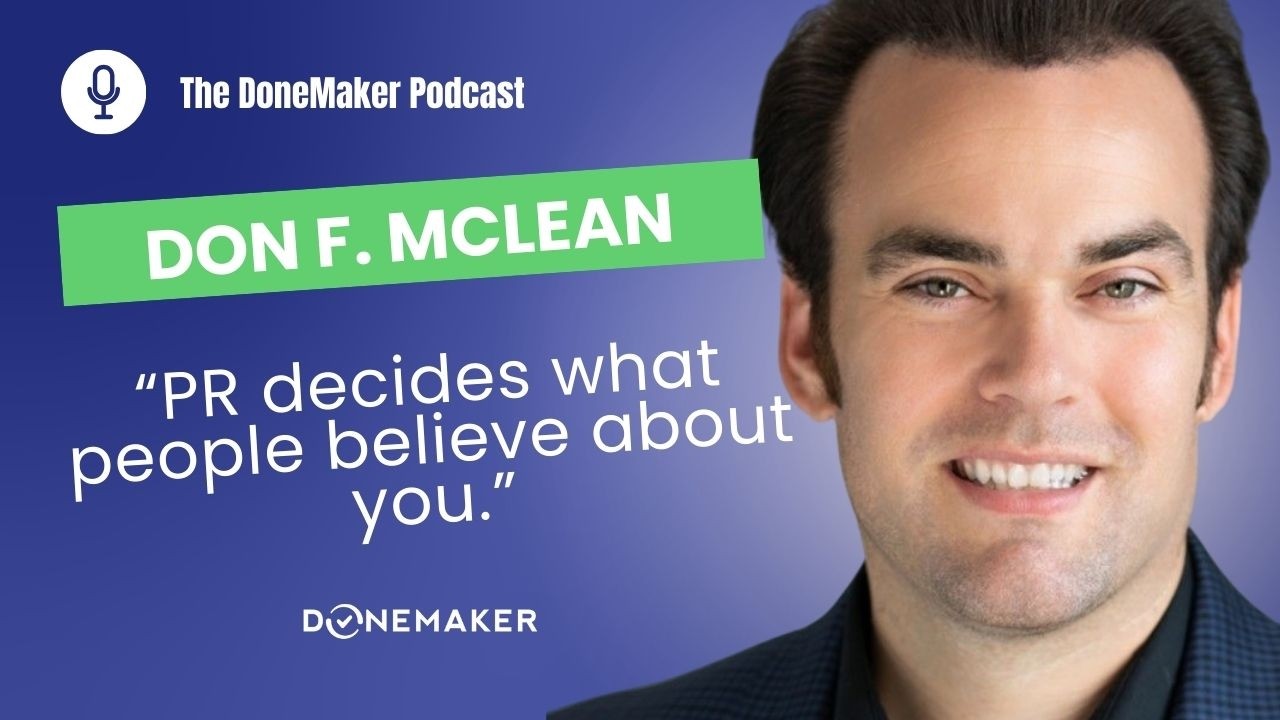
This article is adapted from a conversation with Don McLean, CEO of Plain Media and author of The In Crowd for LinkedIn Mastery. If you’re frustrated because your PR Strategy doesn’t deliver the headlines, leads, or credibility you expected, you’re in the right place. In the web of paid, earned, shared, and owned channels, the PESO model, your PR Strategy either ties everything together or becomes the weak link that wastes time and budget.
Below you’ll find a practical, step-by-step listicle you can use right now. Each item explains a common problem, shows actionable fixes, and gives real-world examples you can implement whether you’re a founder, an in-house marketer, or a solopreneur building authority on LinkedIn.

1. Start with goals: Why your PR Strategy fails when you don’t define outcomes
Your PR Strategy must begin with clear goals. If you jump straight to tactics—press releases, a media list, podcast outreach—you’ll spin your wheels. Ask yourself: do you want brand awareness, investor interest, regulatory credibility, sales leads, or thought leadership?
Why this matters: a PR Strategy without goals feels like shotgun firing. You’ll get noise rather than targeted impact. Set measurable outcomes such as “gain five qualified media interviews in niche trade outlets within 90 days,” or “secure two industry analyst mentions before our Series A close.”
How to fix it: map goals to the PESO framework. If you need credibility for fundraising, prioritize earned media and owned case studies. If you need demand for a new product, add paid amplification and shared social campaigns. Your PR Strategy should explicitly show how each PESO element contributes to your objective.
Tip: write those goals down on sticky notes and group them into pillars—three is a great number—and then build content and outreach aligned to each pillar.
2. Use the PESO model correctly: paid, earned, shared, owned
Most failing PR Strategy efforts focus on one channel and neglect the rest. The PESO model exists because each channel amplifies the others.
- Paid: targeted ads, sponsored placements, promoted posts or paid placements on industry sites to give lift.
- Earned: journalist coverage, analyst reports, product reviews—third-party validation that builds trust.
- Shared: social networks (LinkedIn, X, TikTok) where your audience engages and discussions happen.
- Owned: company blog, email list, white papers—content you control that supports earned coverage.
When you design your PR Strategy, map specific tactics to each PESO lane and specify the KPI for each. For example, a launch PR Strategy could include an embargoed earned media outreach (earned), a CEO op-ed and product demo (owned), a LinkedIn thought-leadership series (shared), and targeted sponsored posts to amplify the launch (paid).

3. Make press releases work: why most press releases don’t help your PR Strategy
There’s a myth that press releases equal PR. They often don’t. A press release is a tool, not a strategy. Many companies treat distribution as the whole plan: write a one-paragraph announcement, push it across wire services, and expect results. That rarely works.
What breaks a press release in your PR Strategy:
- No newsworthy angle. If the release is pure product marketing without a trend, data, or third-party validation, journalists will ignore it.
- No supporting assets. Journalists want data, imagery, spokespeople, and context. A plain release without a data point or expert quote has limited utility.
- Low editorial value. Wires publish things, but not everything is covered by high-value outlets. Generative AI models may index wires, but editorial weight matters.
How to write a press release that helps your PR Strategy:
- Lead with a metric or trend that quantifies a problem: “X% of companies in {vertical} are losing Y due to Z.”
- Offer an exclusive: give a trusted reporter early access under embargo so they can prepare in-depth reporting.
- Include a spokesperson and supporting assets: bios, headshots, product images, and one-pager facts.
- Make it searchable: use keywords and phrases that people and AI will use when researching your topic.
Remember: bad press releases are dead. Great press releases still matter—especially when your PR Strategy connects them to owned content and paid amplification.
4. Build media relations, don’t spam it: craft targeted outreach
Spray and pray is the fastest way to fail a PR Strategy. Journalists are human, overworked, and focused on very specific beats. There are more PR people than journalists in many beats, so relevancy wins.
Instead of mass emailing, use this targeted approach:
- Research beats and reporters. Know who covers your niche—trade, local, national business, science—and why they’ll care.
- Create unique angles for each reporter. Tie your news to what they’re writing now, or bring internal data that gives them a new story.
- Offer exclusives under embargo when appropriate. Reporters appreciate early access with a commitment to hold; it reduces their workload and gives them time to craft a stronger piece.
- Use multi-channel follow-up sparingly: an email, then a polite LinkedIn note, then an appropriate phone call for broadcast opportunities.
Pro tip for your PR Strategy: internal data is gold. If you can give a reporter a proprietary metric or trendline, that’s a story hook they can’t get elsewhere. If you can’t share specific data, pull a qualified insight—market observations, pilot program results, or customer anecdotes that signal a larger trend.
5. LinkedIn is not optional: use it as the backbone of your PR Strategy
If you underestimate LinkedIn, your PR Strategy will miss a huge opportunity. LinkedIn is where people follow people, not brands. Your CEO, founders, or head of R&D acting as visible thought leaders creates momentum for earned media, partner introductions, and deal flow.
How to use LinkedIn in your PR Strategy:
- Prioritize your profile. Make it a narrative asset—use the About section, publications, awards, and media links to tell a clear story.
- Design content pillars. Pick three content pillars (e.g., industry trends, case studies, personal reflections) and rotate through them so your audience sees a balanced, credible voice.
- Post consistently and strategically. You don’t have to post daily, but consistent visibility—engaging with peers and publishing original insights—builds trust.
- Use commenting and personal outreach. Follow target journalists or partners and leave meaningful comments that get you on their radar. Then send bespoke messages, not mass automation.
Messaging matters. Your PR Strategy should favor fewer, high-quality outreach messages over hundreds of automated ones. Why? Automation reads spammy. When you craft bespoke messages, response rates—and conversion—are higher.

6. Combine PR with smart outreach: turn visibility into deals
Visibility is only useful if it leads to warm outreach and relationships. Your PR Strategy must bridge earned visibility with structured outreach that converts attention into meetings and customers.
Practical steps:
- Identify top-influence targets (prospects, partners, journalists) and warm them with content and engagement before pitching.
- Use media placements as social proof in outreach. A well-placed article gives you credibility in a message: “You may have seen us in X—thought you’d find this useful for Y.”
- Combine PR wins with account-based outreach. When a PR placement lands, follow up with target accounts showing why your solution matters now.
- Track conversions by source. Add UTMs, track referral traffic from earned placements, and monitor which media mentions lead to demos or inbound leads.
Don’t let PR be vanity. Your PR Strategy should measure impact: leads created, meetings booked, partners engaged, or regulatory milestones reached.

7. Optimize for search and AI: make your PR Strategy future-proof
Generative AI models and search engines increasingly favor editorially vetted sources. That means high-quality press coverage carries disproportionate weight in discovery, both by people and AI systems. Your PR Strategy must be optimized so that content is discoverable by humans and machines.
How to optimize:
- Use clear, searchable language in press releases and owned content—keywords people would use when researching the topic.
- Ensure high-value pieces sit on authoritative sites when possible. AI models are trained on large editorial outlets, so presence on those sites increases visibility.
- Repurpose earned media into owned formats: summarize a press feature in your blog, create a short LinkedIn thread linking to the article, and add the coverage to spokesperson bios.
- Maintain an accurate, current online footprint for your spokespeople and product pages—AI looks at clustering of signals across sources.
Remember: the shrinking newsroom means fewer journalists, but not less demand for trustworthy content. If your PR Strategy prioritizes editorial validation and search optimization, you’ll be prioritized by both editors and AI-driven discovery.
8. Crisis communications: plan ahead so your PR Strategy doesn’t collapse
Crisis moments expose weak PR Strategy. If you don’t have a communications playbook, you risk delayed responses, contradictory messaging, and reputational damage.
What a crisis-ready PR Strategy includes:
- Pre-approved holding statements you can adapt quickly.
- A chain of command: who signs off, who speaks, and who notifies counsel.
- A media and social cadence: day-of statements, follow-up timelines, and channels for updates.
- A plan to be part of the story—not just watch it unfold.
Don’t leave crisis management to improvisation. When you plan ahead, you preserve credibility and reduce downstream damage—an essential element of any robust PR Strategy.
9. Metrics that matter: measuring success in your PR Strategy
Vanity metrics like impressions and clippings are nice, but your PR Strategy should focus on outcomes tied to business goals.
Measure these instead:
- Share of voice in key outlets that matter to your buyers or investors.
- Number of qualified inbound leads from earned placements.
- Percentage lift in demo requests or trial signups after a coverage wave.
- New partnerships, invitations to speak, or RFPs that originated from PR visibility.
- Long-term SEO signals: referral traffic, backlinks from authoritative sites, and SERP presence for your primary keywords.
Use a simple dashboard that ties PR outputs (articles, placements, LinkedIn reach) to tangible business inputs (leads, meetings, pipeline). If a placement isn’t contributing to the funnel, question its priority in your PR Strategy.
10. LinkedIn outreach blueprint: the no-automation approach that works with your PR Strategy
Automation feels tempting because it promises scale. But when you combine PR Strategy with automation-heavy LinkedIn outreach, you risk looking like spam and undermining credibility.
A better approach for your PR Strategy on LinkedIn:
- Optimize profiles to be assets: fill publications, awards, and media links—these serve as social proof for journalists and prospects.
- Follow and engage: track target journalists, partners, or prospects and leave thoughtful comments that start conversations.
- Send carefully crafted messages. Send fewer messages that are tailored to the recipient’s interests or recent work.
- Use earned media as a hook: “Saw you covered X—thought you’d find our recent piece in Y interesting.”
Pro tip: small visible tweaks in your name or profile make it easier to distinguish automated messages. And when you message, your PR Strategy is stronger if messages cite recent earned coverage or a mutual connection.

11. FAQ
Watch the full podcast here: The Surprising Reason Your PR Strategy Isn’t Getting Results