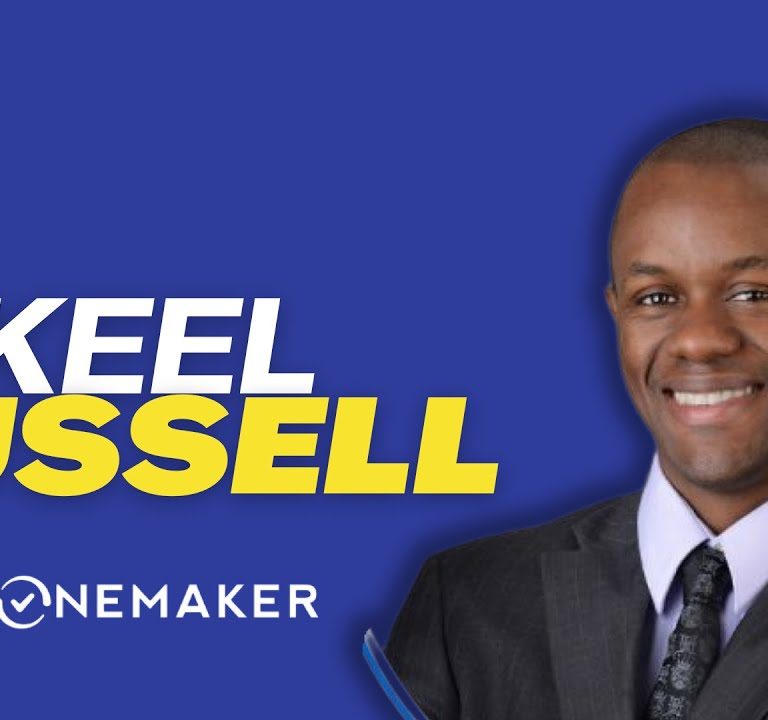
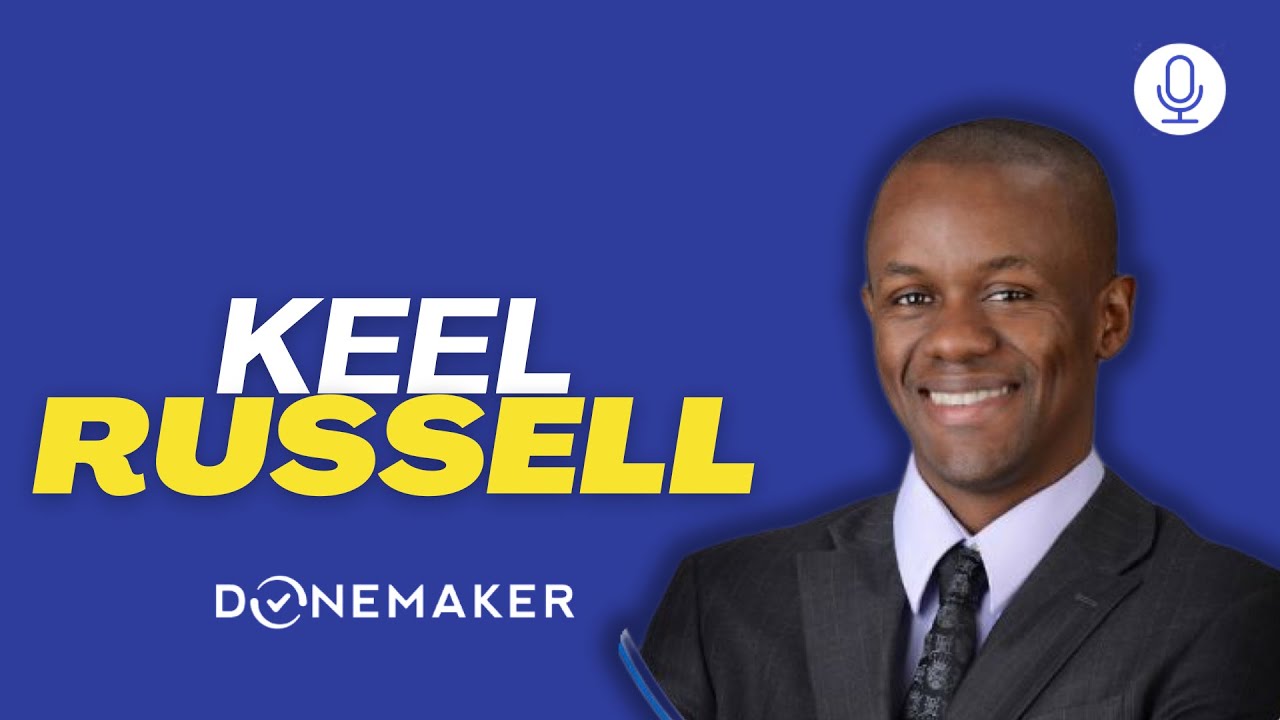
In the DoneMaker podcast episode featuring Keel Russell, you get a front-row seat to how a former soldier turned serial entrepreneur thinks about product, manufacturing, sales and scaling. If you want to find a Disruptive product that transforms how an industry operates (not just a small niche), this article lays out 10 practical rules Keel and I discussed, written so you can act on them today.
1. Start by scanning the industry, not the niche
Most founders search for a niche and then try to make it big. Keel’s first lesson flips that approach: look at an entire industry and ask where it’s been dormant. When you study the broad industry you can spot outdated segments that are ready for a Disruptive product, rather than inventing a product for a tiny audience that might never scale.
Example: Keel didn’t set out to make a new umbrella for the plus-size fashion market. He pivoted from lingerie to umbrellas because the umbrella industry had been “dormant” for decades, and that dormancy is a sign that a Disruptive product could get quick attention from retailers and customers.
2. Validate with trade shows and real conversations
You can read reports and browse forums, but nothing replaces live feedback. Keel tested his umbrella idea at trade shows. The instant reactions you get from retail buyers, wholesalers and other entrepreneurs reveal whether a concept is a potential Disruptive product or merely a novelty.
Trade shows do two things that you can’t easily replicate online: they force you to explain the product in 30–60 seconds, and they expose you to the kinds of decision-makers who decide whether to stock it. When enough people say, “this is cool,” you’ve moved from hypothesis to early validation.
3. Use manufacturing research as your classroom
If you want to build a Disruptive product, you must understand how things are made. Keel took two weeks and went to China to tour factories with zero experience and came back with a new perspective: observing assembly lines, material choices and quality processes. That direct immersion taught him what’s feasible and what costs are realistic.
When you personally visit factories or work closely with suppliers, you learn nuances that patents, spec sheets and emails won’t show. These insights help you design for manufacturability and, importantly, help you spot opportunities to make an existing product genuinely disruptive.
4. Accept the ugly truth: most manufacturing moved abroad, learn how to manage it
Keel points out a painful truth: manufacturing in the U.S. has shrunk over the last 20–30 years. If your Disruptive product needs physical production, odds are you’ll be sourcing overseas. That’s fine, but you must learn a different skillset: vetting suppliers, mitigating bait-and-switch risks, checking materials and being on-site when possible.
When you source abroad, relationships matter. If you visit a factory, suppliers take you more seriously; if you only email, you become a line item. Don’t be naive: cheaper production can hide cheaper materials. Build quality checks into your timeline and budget.
5. Pivot fast, but purposefully: let traction guide the pivot to a Disruptive product
Your first idea might be beautiful on paper but impractical in market. Keel started with a lingerie line for curvaceous women and pivoted multiple times (slippers, color-changing umbrellas, then marketing services). The durable lesson: you pivot toward buyers and distribution, not away from them.
When a product touches a real distribution channel, like Walmart, or when you’re getting repeated buyer feedback at trade shows, you should be ready to double down or pivot to adjacent categories where your skills and distribution channels work better. Keel used the umbrella business as a stepping stone that revealed a bigger recurring problem he could solve for businesses: vendor registration and procurement friction. That insight birthed Bizly.
6. Turn product work into service insights, then productize the pain point
When you dig into a market, you’ll often find a systemic pain that’s bigger than your original product. Keel’s umbrella trade show work led to a consistent question: “Who do we use for marketing?” His team did its own marketing in-house and kept hearing the same problem from other small businesses. That repeated pain became the kernel of a Disruptive product: a SaaS platform that streamlines vendor registration and procurement.
Always ask: what process did you just repeat for customers? If you perform the same service over and over, consider productizing it so other businesses can scale that workflow on their own. That’s how service-led insights evolve into Disruptive product opportunities.
7. Build relationships before you ask for money, procurement is slow but sticky
Procurement at large companies and government agencies is sticky by design. They’ll test you, vet you and start small. Keel’s agency registered with 750 corporate and government portals, won several federal contracts early, and converted slow corporate interest into large accounts over multiple years.
Key rule: register and do the paperwork first, it’s not the finish line, it’s the entry ticket. Then invest in sustained outreach to the buyers who matter. Your objective is to be known and trusted over time; a quick sale is nice, but a purchase order and a documented onboarding process is the currency that turns a transaction into a vendor relationship.
8. Know the tactical difference: card payment vs. purchase order
This one detail separates amateurs from pros. If a buyer swipes a credit card to pay you for a test job, you got revenue, but not vendor status. A credit card payment is a transaction. A purchase order (PO) triggers onboarding, contracts and an internal record. POs create “past performance” inside the buyer organization and make other internal stakeholders comfortable working with you.
Ask tactically: when a buyer is ready to test your work, request a purchase order even if you’ll accept longer payment terms (30–90 days). If you can’t wait and need cash, accept the card — but understand it won’t build the organizational credibility that a PO will. For a Disruptive product aimed at enterprise customers, prioritize the PO route whenever possible.
9. Be patient: relationships compound and revenue follows
Keel’s experience teaches a blunt truth: most success curves are long, bumpy, and non-linear. Year two can give false hope; year five is where compounding often begins. You need time, patience and a process to keep reaching out, pitching, following up, and delivering consistently.
Think of selling to large organizations like dating: the first few interactions determine whether you’ll ever get a chance to prove yourself. Once you’re given a test project and deliver, you’re in. From that point, growth becomes much easier because you have a documented case inside the buyer’s ecosystem.
“Underpromise and overdeliver.” — Keel Russell
10. Make the product about simplifying complexity: that’s where Disruptive products win
Procurement, vendor registration and finding the right buyer contacts are tedious and slow. Keel’s product, Bizly, aims to automate and streamline those steps. If your Disruptive product doesn’t remove complexity, you’re building marginal value. The biggest wins come from replacing time-consuming administrative work with predictable, automated workflows.
Ask yourself: what complex, manual process are you simplifying for others? If your answer reduces friction for large buyers or makes it easier for suppliers to scale, you’re on the right path to building a Disruptive product that matters.
How to apply these rules: an action checklist for you
- Map an industry, not a narrow niche. Identify the most dormant segments.
- Attend trade shows or market meetups and collect 50 buyer reactions in 30 days.
- If manufacturing is part of your plan, visit at least one supplier in person early.
- Document repetitive service work you do for customers — it might be your product.
- Register as a vendor with targeted buyers before asking for a sale.
- Ask for a purchase order on the first real job to get institutional credibility.
- Build a proactive outreach cadence: 30s email, follow-up, short call, pitch deck.
- Be ready to wait — treat year 1–3 as learning and year 4–6 as compounding.
- Automate the admin work; buyers love friction removal more than novelty.
- Keep your promise: underpromise, overdeliver, and you’ll get referred.
Why a Disruptive product starts with a problem you already live
One of the most practical lenses Keel used was empathy: he had lived the vendor nightmare himself. You don’t need a PhD to spot industry friction if you’ve been through the painful process. If you are repeatedly solving a pain for your own business or your customers, you’re sitting on the blueprint for a Disruptive product.
That’s why many founders build their best products out of personal necessity: you understand the process, the edge cases and the unspoken problems. Use that lived experience to design simple, repeatable solutions that scale beyond your single company.
Final notes: your sprint to building the Disruptive product
If you want to find a Disruptive product, do two things today:
- Scan the industry for dormancy, where are processes stale and ripe for automation?
- Talk to buyers, nobody cares about your idea until they feel it’ll make their job easier.
Keel’s path from selling umbrellas to building a SaaS solution for vendor onboarding shows that disruptive opportunities are often found where repetitive manual work and corporate friction meet: that’s the intersection you should be exploring right now.
Watch the full podcast here: Look for a disruptive product in an industry, not a niche | Keel Russell | DoneMaker Podcast