Employee Advocacy on LinkedIn: Turning Your Team into a Lead Generation Engine

Boost your B2B sales with employee advocacy on LinkedIn. Learn how to turn your team into brand ambassadors and drive lead generation through strategic engagement.

Table of Contents

Employee advocacy on LinkedIn unlocks vast potential by transforming employees into authentic brand ambassadors who expand reach and build trust. Companies like Visa, DLA Piper, and Unilever demonstrate dramatic results through well-designed programs supported by leadership, clear goals, and consistent training.

Sustained engagement and integration with social selling and lead generation amplify ROI. With ongoing recognition, fresh content, and clear measurement, your workforce becomes a credible and scalable lead generation engine. Learn more about Social Selling in Social Media here: https://donemaker.com/debunk-social-media-myths-2025-expert-insights/

Have you ever wondered how the most successful B2B companies turn their teams into powerful lead generation machines? In 2025, employee advocacy on LinkedIn has emerged as a key strategy to unlock this potential. More than just sharing company updates, it’s about empowering your employees to become authentic LinkedIn brand ambassadors who engage meaningfully with their professional networks.

This article will explore how to build and nurture LinkedIn employee engagement, develop effective team-based lead generation, and integrate these efforts into a winning B2B social selling strategy. Whether you’re new to employee advocacy or looking to sharpen your approach, this guide will provide clear, practical insights to help turn your team into a lead generation engine through LinkedIn.

Understanding Employee Advocacy on LinkedIn

Employee Advocacy Real Meaning

Employee advocacy means empowering your employees to share authentic company-related content through their personal LinkedIn profiles. This strategy amplifies your company’s reach exponentially because employees’ networks tend to be much larger than corporate followings. Content shared by employees earns twice the click-through rate and is perceived as three times more trustworthy compared to traditional brand posts.

For instance, Visa empowered its global workforce to share company initiatives, resulting in a sixfold increase in content shares and a quadrupled follower influence. Similarly, DLA Piper tripled its followers and increased shares sixfold through employee advocacy.

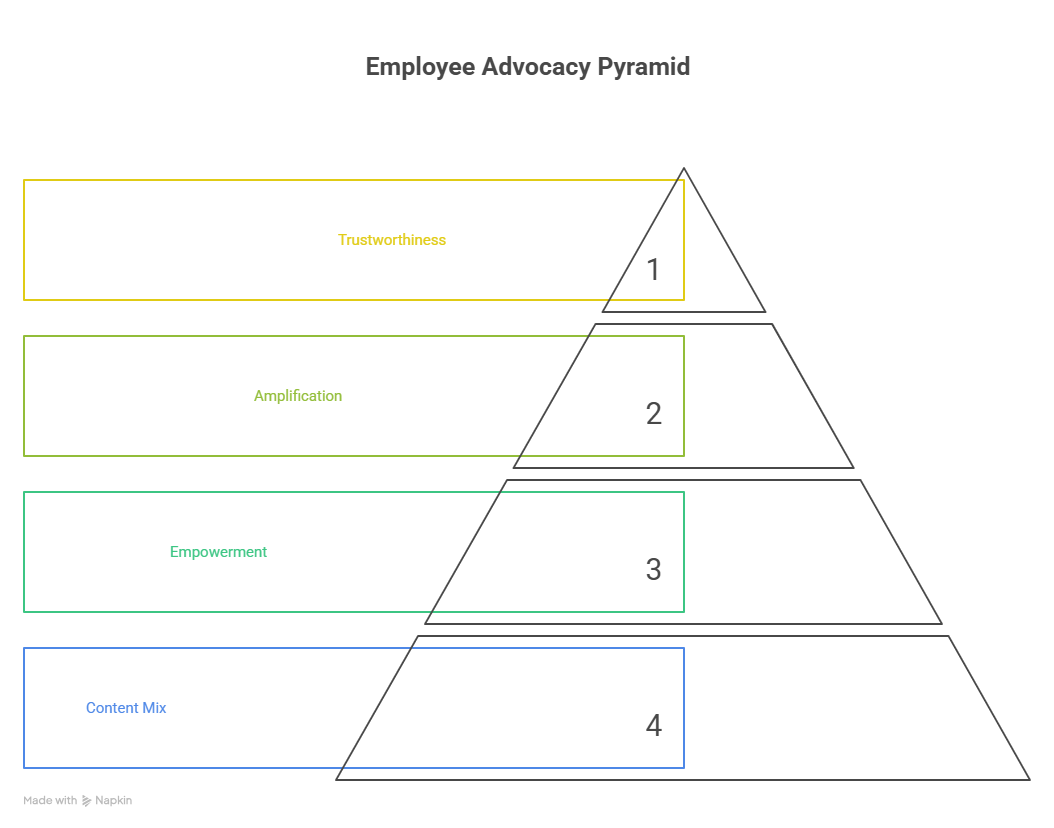
To build an effective advocacy program, provide your employees with a well-rounded content mix that includes industry insights, curated third-party articles, and company news to share. Using platforms like LinkedIn Elevate (now integrated into LinkedIn Pages) helps streamline content distribution and track impact.
Employee Advocacy

Practical Tips:Identify and prioritize your most socially active employees to lead early efforts.Provide easy, practical training on LinkedIn profile optimization and posting techniques.Maintain a content mix of roughly 75% industry or curated content and 25% company-centered content.Celebrate and reward top advocates to foster friendly competition and ongoing participation.

Building LinkedIn Brand Ambassadors from Within


Brand ambassadors are employees proud to represent their company authentically on LinkedIn. They gain professional benefits such as expanded networks, increased profile views, and enhanced reputations.


Companies like PTC have seen their sales teams share content seven times more after receiving dedicated training, resulting in a tripling of their profile views and connections.


Importantly, advocacy efforts should feel voluntary and natural, not forced. Leadership involvement sets the example and encourages broader participation. For leadership tactics and engagement techniques, see this LinkedIn post on brand ambassadors.

Actionable Strategies: Host workshops to optimize LinkedIn profiles and teach effective sharing.Share employee success stories from advocacy participation.Encourage executives and senior leaders to post and engage regularly.Develop clear social media guidelines to clarify expectations and reduce concerns.

LinkedIn Employee Engagement: The Foundation of Advocacy


Employee engagement powers a thriving advocacy culture. Organizations that publicly celebrate employee achievements and foster open internal communication tend to have higher rates of employee sharing. For example, Unilever increased employee sharing sixteenfold and boosted job views fivefold by focusing on culture and storytelling.

Engaged employees display better retention and productivity, as they feel connected and optimistic. For more, see LinkedIn’s employee engagement insights.


Boost Employee Engagement


  • Highlight employee milestones and accomplishments on LinkedIn.
  • Encourage leadership to actively engage and support employee posts.
  • Build internal communities or LinkedIn groups to foster connection.
  • Track engagement and adjust your program based on analytics.


Harnessing Team-Based Lead Generation Through LinkedIn


Team-based lead generation turns your workforce into a collective sales resource beyond traditional sales teams. Employees sharing valuable, relevant content open warm entry points for prospects. Salespeople active on social media are 45% more likely to exceed quotas, and companies with engaged employees see 57% more leads.


Integrating advocacy with CRM systems enables measuring pipeline impact and closing collaboration gaps between sales and marketing.


Tips for Lead Generation


  • Align shareable content with sales targets and buyer pain points.
  • Encourage employee collaboration via tagging and comments.
  • Share program and lead generation progress to keep motivation high.
  • Equip teams with social selling skills specific to LinkedIn.

B2B Lead Generation Benefits of LinkedIn Video

Developing a B2B Social Selling Strategy Incorporating Employee Advocacy

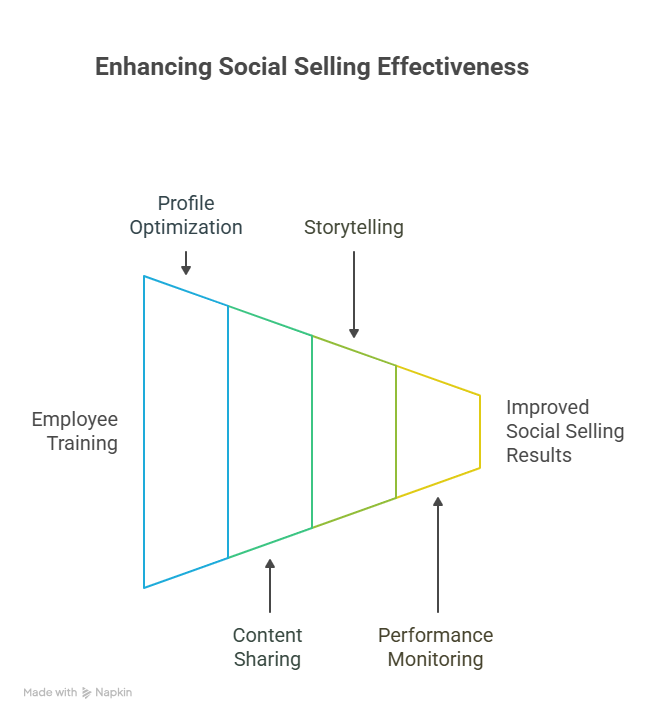
B2B social selling demands authentic relationship-building and content sharing. Optimized LinkedIn profiles, with professional photos and strong headlines, boost InMail responses by 40%. Relevant, helpful content positioning employees as trusted advisors builds long-term buyer trust.

Embedding advocacy within sales enablement helps employees become trusted advisors, speeding up deal cycles and improving lead quality. Use regular Social Selling Index scoring to track and encourage team growth.

Social Selling Best Practices

  • Train employees to craft optimized LinkedIn profiles.
  • Provide categorized, easy-to-share content repositories.
  • Encourage storytelling around customer challenges.
  • Monitor and encourage Social Selling Index improvements.
Deepening Employee Advocacy: Content Creation and Authenticity

Creating authentic content is key to successful employee advocacy on LinkedIn. While sharing company posts is valuable, encouraging employees to craft their own posts adds a personal touch and enhances credibility. Content that tells a real story or shares a genuine insight resonates with networks more effectively. You can learn more about this topic here: https://donemaker.com/build-social-media-advocacy-7-steps-authentic-exec-presence/

Encourage employees to share experiences such as attending events, professional learnings, or team achievements. Adobe’s “Adobe Life” program encourages employees to share workplace culture stories, strengthening both internal morale and external brand perception.

Authenticity also involves striking a balance between company messaging and personal voice, ensuring posts feel human and relatable rather than promotional.

Overcoming Challenges in Employee Advocacy Implementation

While employee advocacy is powerful, barriers exist. Some employees may feel hesitant due to uncertainty around what to share, privacy concerns, or lack of time. These challenges can be overcome with ongoing training, mentorship, and providing simple, varied content templates.

Sustaining engagement over time requires rotating content themes, gamifying participation, and publicly recognizing contributors. Keeping the program fresh and fun prevents burnout and builds a lasting advocacy culture.

Leveraging New LinkedIn Features for Advocacy in 2025

LinkedIn has introduced several new features that advocacy programs can leverage in 2025 to maximize impact. For instance, video posts and LinkedIn Stories are prioritized by the algorithm and garner higher engagement rates. Encouraging employees to create short, authentic videos sharing their experiences or insights can boost visibility.

Another feature, LinkedIn Live, enables employees or leadership to broadcast company events, interviews, or thought leadership sessions in real-time, increasing authentic interaction and excitement around the brand.

Using LinkedIn’s enhanced analytics tools, teams can better understand content reach and recipient demographics, refining strategies with data-driven insights.

Fostering a Culture of Continuous Learning and Feedback

Successful employee advocacy programs thrive on continuous learning and incorporation of employee feedback. Regular surveys and feedback sessions help identify what content resonates and areas where employees need more support.

Offering refresher training and new content resources aligned with current trends keeps the advocacy program relevant and exciting. Encouraging employee input in content creation fosters ownership and authenticity.

Combining learning with transparent sharing of program results helps motivate employees and highlights the tangible impact of their advocacy efforts.
Providing Practical Guidance and Mobilizing the Workforce

Employee advocacy mobilizes your workforce as authentic brand ambassadors, dramatically expanding reach and boosting qualified lead generation. Visa, DLA Piper, and Unilever exemplify the extraordinary impact advocacy programs can have. Effective programs blend leadership involvement, goal alignment, training, and recognition, fostering sustained engagement.

By integrating advocacy into team-based lead generation and broader social selling strategies, companies maximize their marketing and sales impact on LinkedIn. Continuous measurement and adaptation ensure the program remains relevant and impactful.

Final Recommendations

For best results, secure leadership buy-in to model behavior and promote advocacy. Define clear goals linked to business metrics and recruit motivated employees as program champions. Offer training, provide balanced and easy-to-share content, and maintain momentum with recognition. Use LinkedIn analytics and CRM integration to measure impact and optimize performance.

Create a culture that celebrates employees, their stories, and contributions. Embed advocacy practices within your wider social selling framework, transforming your workforce into an authentic, credible lead generation engine.

FAQ

It’s when employees share genuine company-related content on LinkedIn, expanding reach and building trust more effectively than branded posts, driving leads and talent attraction.

Secure leadership support, define clear objectives, identify enthusiastic employees, deliver training, curate easy-to-share content, and reward contributions.

Employees passionate about the brand who share authentic content, engage with their network, and view advocacy as professional growth.

Employees’ diverse networks provide warm connections; sharing relevant content sparks meaningful conversations that convert into leads.

Share This Post

Want to get clients from LinkedIn?

Let me show you what we could achieve together.

You need this NOW

The ultimate LinkedIn funnel checklist
Your step-by-step guide to generating leads that convert