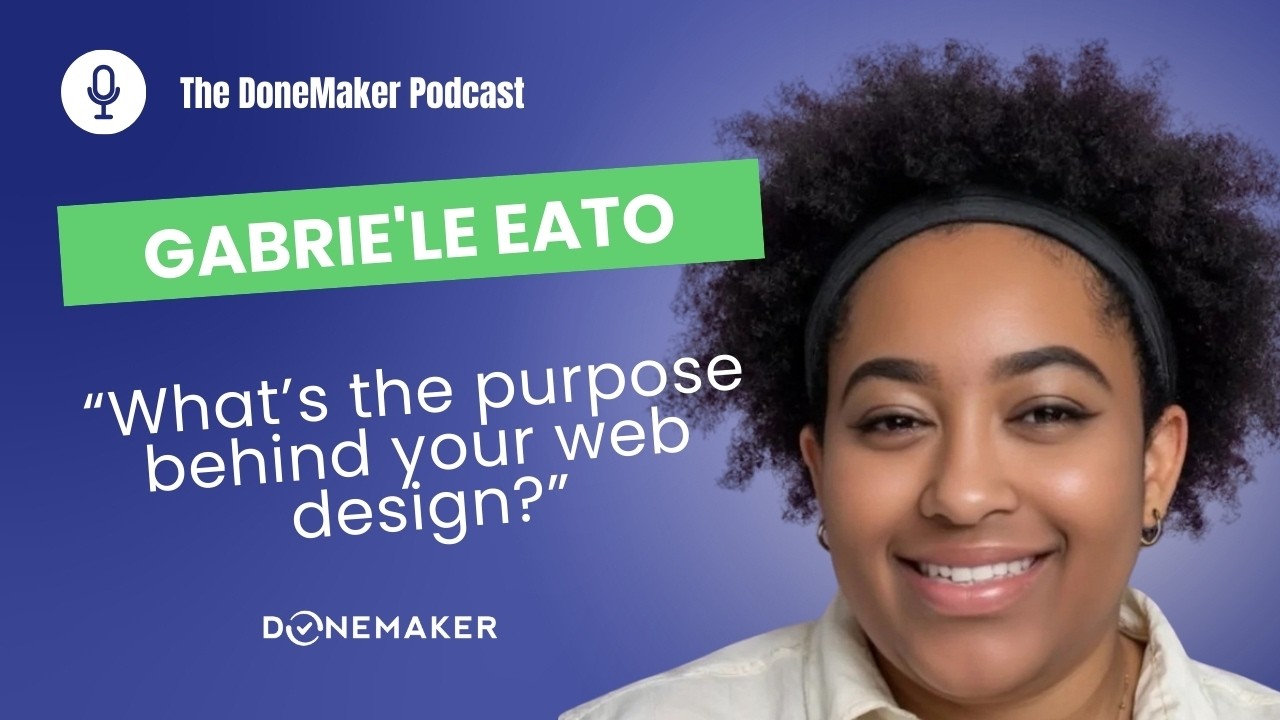
In the DoneMaker interview you watched, Gabrie’le Eato lays out a clear, human-forward argument for why Psychology and Design belong together. If you want a website that does more than look pretty, if you want one that actually reflects who you are, attracts the right people, and converts visitors into clients, this article walks you through the practical steps, mindset shifts, and tactical takeaways you can use right now.

1. Start with purpose: the mind map that changes everything
If you’re tempted to jump straight into color palettes, stock photos, or templates, stop. The single most important piece of advice is to begin with purpose. In the interview, Gabrie’le shares how every project begins with a free 30-minute mind map session. That session isn’t a shallow intake form—it’s a structured exploration where Psychology and Design start merging.
You don’t need to be philosophical to find purpose. You need curiosity and a process. During a mind map session you and your designer should:
- Identify what you value and why you started your business.
- Unpack who your ideal audience is and how they behave.
- Surface subconscious signals—recurrent metaphors, phrases, stories that matter to you.
- Clarify what “success” looks like beyond revenue—what feelings, reputation, and impact you want.
That process lets you translate intangible motivations into visible design choices. When you treat Psychology and Design as two halves of a single system, your website becomes a living canvas of your purpose, not just a brochure.
2. Use behavior as your brief: read the person, not just the words
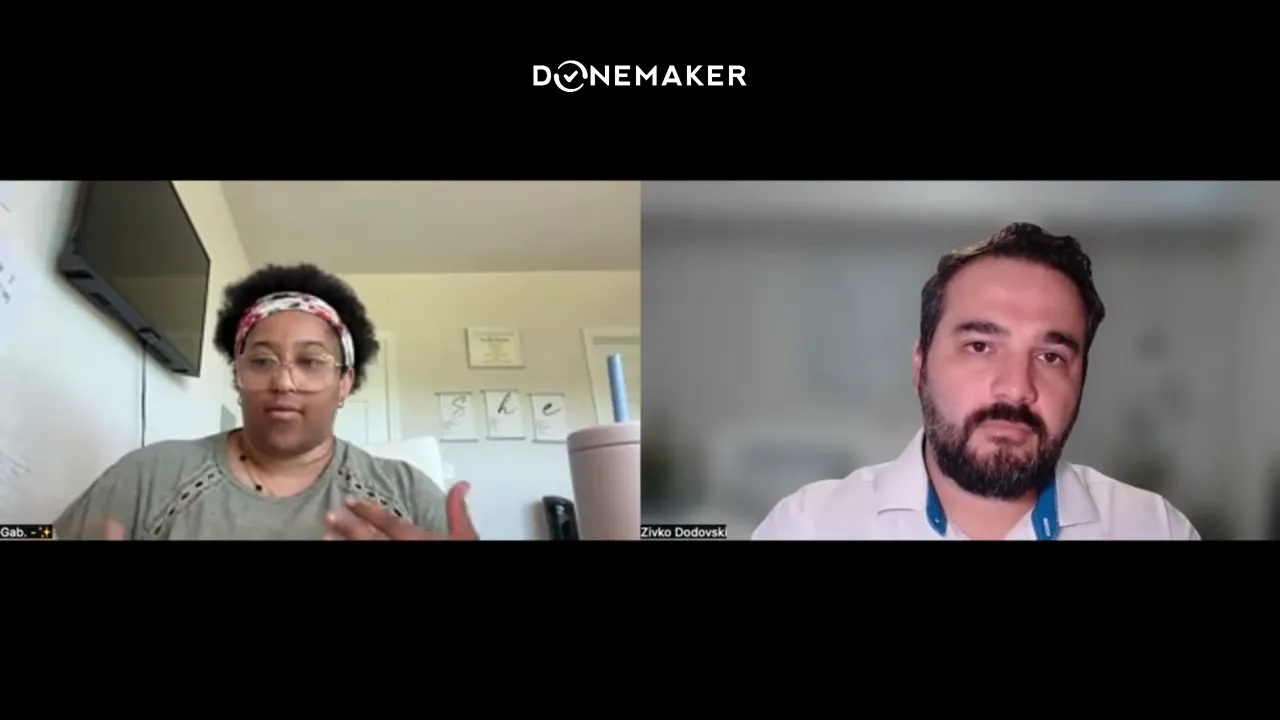
When you work with clients, the words they use are only part of the story. You should pay attention to behavior: how they answer questions, what they avoid, what excites them, and where they stumble. Gabrie’le explained she draws on her background in psychometrics and behavior analysis to spot patterns and contradictions—then designs with those insights in mind.
So for your own projects, make a practice of documenting behavioral signals during discovery: hesitation, repetition, emphatic language, and even non-verbal cues in video calls. Those cues tell you what to emphasize visually, what to simplify, and where to include trust signals.
That’s the essence of Psychology and Design: your design decisions aren’t random; they’re deliberate reactions to human cues.

3. Tell the story—not the template: adopt storytelling design
Storytelling design is the concept Gabrie’le is often credited for. Instead of shoehorning your content into pre-made blocks, you should aim to craft a narrative that unfolds as a visitor scrolls. If you do that well, you keep people on the page, increase engagement, and improve SEO metrics because readers stay longer.
To implement storytelling design, try these steps:
- Map the visitor journey—what should they feel and learn at each scroll depth?
- Create visual anchors that reinforce your core message—icons, personal photos, or unique illustrations.
- Use micro stories—short client snippets, anecdotes, or a founder moment—to humanize your brand.
- Design transitions that guide users emotionally, using pace, whitespace, and hierarchy.
Don’t copy another business simply because their layout looks polished. Even if two companies have the same service, their stories are different. Your site should reflect your particular story so visitors immediately recognize your voice.
4. Be authentic: stop imitating, start revealing
One of the most common mistakes you’ll make is mimicking competitors. As Gabrie’le bluntly points out, wanting your site to “look like that other bookkeeper” means you miss what makes you unique. Authenticity is the differentiator.
When you design from authenticity, you:
- Create trust faster because you show, instead of perform.
- Attract the right clients instead of everyone who might bounce.
- Decrease decision fatigue because your messaging is cohesive and consistent.
Authenticity is also a practical SEO advantage: unique content keeps people scrolling, increasing dwell time and signaling relevance to search engines. In short, authenticity makes your design a conversion engine.

5. Align or decline: why a designer should sign their work
A striking principle from the interview is how Gabrie’le signs every site she builds. That’s a bold move—and it forces alignment. If a designer is proud enough to sign their work, they need to be aligned with your purpose and messaging.
From your perspective, you should be equally rigorous. When you hire a designer:
- Expect a discovery process, not a one-off transaction.
- Look for designers who ask psychological questions and test assumptions.
- Be prepared to say no if the fit isn’t right—both parties lose when projects are misaligned.
Alignment prevents sloppy compromises that undermine brand credibility. If you feel pressure to “just get it done,” pause. The long-term value of a purpose-driven site far exceeds a rushed, templated solution.

6. Accept iteration: change is part of the design process
Design isn’t a one-and-done exercise. In the conversation, you heard that some sites needed to be redone multiple times—and that’s normal. What matters is honest communication and a willingness to iterate until the site fits who you are.
Here’s how to make iteration productive rather than frustrating:
- Set clear checkpoints in your timeline for feedback and testing.
- Use prototypes and low-fidelity mockups to test messages before you commit to visuals.
- Ask specific feedback questions: “Does this paragraph reflect our mission?” rather than “Do you like this?”
- Document changes and why they were made so the rationale stays visible.
When you approach iteration with curiosity instead of defensiveness, you use Psychology and Design to refine both message and form.
7. What works in 2025 web design—and what you can drop
The web design trends you adopt should be evaluated through a psychological lens. Gabrie’le argues that what matters most is not following every design trend but choosing elements that support your story and purpose.
Do this: keep these elements and consider dropping others.
Keep
- Storytelling frameworks that guide attention and emotion.
- Authentic photography or custom illustration that signals uniqueness.
- Clear calls to action tied to emotional outcomes (e.g., “Start feeling less overwhelmed” vs. “Schedule a call”).
- Performance-first practices that respect load times and accessibility.
Drop
- Heavy templated blocks that everyone uses—these kill recognition.
- Decorative elements that distract instead of clarifying.
- Over-optimized SEO fluff that reads like a keyword salad instead of adding value.
Use Psychology and Design to pick features that reduce friction, increase trust, and match the emotional rhythm of your audience.
8. Use AI wisely: refine, don’t outsource the soul
AI is a tool, not a substitute for human emotional intelligence. Gabrie’le’s approach is instructive: she handcrafts designs and uses AI to refine, not originate. That flips the common pattern of relying on AI as a creative starting point.
If you use AI in your design process, do it like this:
- Start with a human-first concept that captures purpose and voice.
- Ask AI to generate variations, microcopy, or optimization suggestions.
- Interpret and curate AI outputs—don’t publish them verbatim.
- Ensure every page feels personally authored so your audience senses authenticity.
AI can speed up workflow, but your site’s emotional intelligence still needs you. If the creative origin is a template or AI skeleton, you lose the deep connection that Psychology and Design creates.

9. Dream big—your size doesn’t limit your purpose
Whether you’re a solopreneur or a large enterprise, you should dream and design as if your work matters. Gabrie’le emphasizes that small businesses can create “Nike-level” branding when they design with purpose. The key is access to a mindset and process that scales your idea into a visual reality.
Actionable tips for small teams:
- Invest in a purpose map early—this amplifies limited budgets by focusing on what matters.
- Use unique storytelling elements that larger brands often lose to bureaucracy.
- Leverage community and partnerships for resources rather than mimicking big-company tactics.
Remember: big dreams are a strategy, not a privilege. With Psychology and Design working together, you can position your small business to punch above its weight.

10. Practical checklist: what to demand from your designer
If you’re hiring someone to craft your website, use this checklist so you don’t waste time or money:
- They conduct a purpose-driven intake (mind map or equivalent).
- They ask behavioral and psychological discovery questions, not just technical ones.
- They present a narrative structure for the site, not a single template snapshot.
- They sign or stand behind the final work—which signals care and ownership.
- They include iteration cycles in the scope without nickel-and-diming you for basic changes.
- They can show how design choices support conversion and retention metrics.
- They explain how they’ll use tools like AI only as refinement, not as the creative origin.
Demanding these things forces your project to be grounded in Psychology and Design, which is the difference between a surface-level site and a strategic brand asset.
11. Translate purpose into a living canvas (how the final site should feel)
Once purpose is defined, the website becomes an emotional canvas. It should feel like you—your pace, voice, and priorities. Here’s how to evaluate whether your final site truly reflects purpose:
- Does the home page answer “Who are you?” and “Who is this for?” within the first 5 seconds?
- Does the about page reveal human detail and a point of view, rather than a bland bio?
- Do your service pages explain outcomes in human terms rather than feature lists?
- Are trust signals placed where visitors naturally look—near pricing, contact forms, or calls-to-action?
- Is navigation intuitive, with a clear path to the action you want visitors to take?
If you answer yes to most of the above, your site has bridged purpose to design. That’s effective Psychology and Design in action.

12. FAQ: Your quick answers about Psychology and Design
Q: What exactly is the “mind map” and how long does it take?
A: The mind map is a discovery session that surfaces purpose, subconscious signals, and the behaviors that matter. It typically takes 30 minutes for an initial session, but follow-up mapping can continue as the project evolves.
Q: Do I need a professional psychologist to use Psychology and Design?
A: No. You need a designer who understands behavioral principles and applies them. You don’t need a degree—just a process that reads cues, tests assumptions, and prioritizes alignment.
Q: Will storytelling design hurt my SEO?
A: Quite the opposite. Storytelling design, when done with substance and clarity, can increase dwell time and reduce bounce. Structured storytelling combined with solid SEO basics improves discoverability and engagement.
Q: Is AI bad for creative work?
A: AI is not inherently bad, but it’s limited. Use AI to refine, accelerate, and A/B test ideas—don’t rely on it to originate the emotional backbone of your brand. Human-led concepts plus AI refinement strike the best balance for Psychology and Design.
Q: How many design revisions are normal?
A: Revisions vary, but expect at least two to three major rounds as you settle the narrative and visual voice. A designer grounded in purpose will budget for this and make the process part of the timeline.

Closing thoughts
You should walk away with an actionable belief: design is not decoration. If you want your website to do the heavy lifting for your business—build trust, convert visitors, and reflect your values—you need to combine Psychology and Design. Start with purpose, read the people behind the words, tell your story with authenticity, and iterate honestly. Treat AI as a helpful assistant, not the author, and dream as big as you can because your size doesn’t limit your potential.
Use the checklist, demand alignment, and remember that design signed by a human voice carries weight. When you design with psychological intent, your site stops being an online brochure and becomes the clearest representation of what you actually want to build in the world.
“You can take anything and make it beautiful—if you know your purpose and trust yourself.”
If you want to explore Psychology and Design in your next website, apply these principles and insist on discovering purpose first. When you do, your design will do more than look good—it will connect.
Watch the full podcast here: Why Good Design Needs Psychology