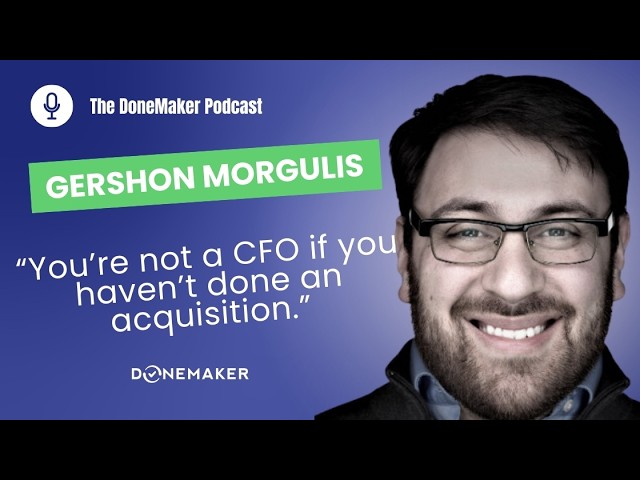
DoneMaker sat down with Gershon Morgulis, Founder and Chief Business Philosopher at Imperial Advisory CFOs, to unpack what a CFO really does and how you should think about Client adquisition and CFO roles in your company. If you want clarity on when to hire a CFO, how to set your business up for growth or exit, and what pitfalls to avoid, this listicle gives you the blunt, practical advice you need, no fluff, just direction.
In this article you’ll get nine actionable rules drawn from the conversation and expanded with practical next steps. You’ll also find screenshots to illustrate key moments and a FAQ that answers the most common, urgent questions about Client adquisition and CFO relationships. Read on, and treat this as a short field manual for making better financial decisions.
Table of Contents
- 1. The core job: allocate capital — not just count numbers
- 2. You (the owner) are the default CFO — decide if you want that job
- 3. Hire a CFO when complexity outgrows “table stakes” accounting
- 4. Give the CFO authority where it matters — and stay accountable
- 5. Distinguish bookkeeping from CFO strategy — both are necessary
- 6. Expect nuance: M&A experience helps, but it’s not the only mark of a real CFO
- 7. Startups need a different CFO playbook than established firms
- 8. Prepare to sell: build the business a buyer will buy
- 9. Beware simple answers — debt, toxic employees, and insurance require nuance
- 10. FAQ: Quick answers on Client adquisition and CFO
- Conclusion and next steps: how to act on Client adquisition and CFO advice
1. The core job: allocate capital — not just count numbers
The single clearest line you’ll internalize quickly is this: the job of a CFO is to allocate capital. That doesn’t mean only money. You allocate financial resources, human resources, operational capacity, production time and even organizational attention. Client adquisition and CFO responsibilities intersect when you have to decide where to spend your budget to find, convert, and keep clients.
When you think about who gets your next dollar—marketing, hiring, acquisition of a competitor, upgrading systems—that decision is strategic, and that’s the CFO’s wheelhouse. You can’t just throw more at marketing and hope it sticks. A CFO looks at the trade-offs: spend on lead generation now but run out of cash to deliver; buy a competitor and take on integration risk; or invest in a sales operations hire to lift conversion rates. Client adquisition and CFO should work together to create a capital allocation plan that supports sustainable growth, not vanity metrics.
“Where do you put your money? Where do you put your people? What’s the smartest and best use?”
2. You (the owner) are the default CFO — decide if you want that job
By the time a business reaches five to ten million dollars in revenue or 20–30 employees, you’re probably already acting as CFO. You have cash in your head, projections in your inbox, and the payroll spreadsheet in your head at 2 a.m. The question to ask yourself is simple: are you happy with that?
If you are, keep going. If you’re not, hire. It doesn’t have to be full-time. A fractional CFO can buy you time and expertise while you search for a permanent hire. Client adquisition and CFO functions cross over here: if you want to scale client acquisition efforts, and you’re the owner doing the finance, that fight for attention will limit both functions. Bringing in a CFO unhooks you, freeing you to focus on strategy, product and relationships while the CFO builds the financial scaffolding that supports growth.
3. Hire a CFO when complexity outgrows “table stakes” accounting
Basic bookkeeping, payroll, and cash collection are table stakes. You can’t be a real $10M business without some infrastructure to do those things. But when processes break, when forecasting becomes guesswork, or when you need capital decisions beyond “can we cover payroll?”, you need a CFO. Hiring at that inflection reduces risk and prepares you for scalable Client adquisition and CFO-driven campaigns.
Specific triggers to bring in a CFO:
- Your cash flow story is complex or inconsistent.
- Your owner decisions are slowing growth because you’re the gatekeeper for every financial choice.
- You need capital and want to evaluate debt vs equity with a real plan.
- Your leadership needs a financial thought partner to evaluate competing growth options (marketing vs M&A vs product investment).
4. Give the CFO authority where it matters — and stay accountable
Once you bring in a CFO, the owner has two critical roles: acknowledge the problem and hold the team accountable. A CFO can diagnose and recommend, but without owner-level buy-in and willingness to enforce change, nothing sticks. That might mean replacing a bookkeeper, implementing new systems, or realigning sales incentives.
When it comes to Client adquisition and CFO collaboration, the owner must allow the CFO to influence marketing budgets, hiring plans, and pricing decisions. If you resist because you don’t want to rock the boat with a long-tenured employee, you should expect slow or zero progress. Often the fastest path to sustainable client growth is fixing the data, the processes, and accountability structures so acquisition investment can be measured and scaled.
5. Distinguish bookkeeping from CFO strategy — both are necessary
Too many founders confuse the bookkeeper with the CFO. Bookkeepers record transactions; controllers ensure timely and accurate financial information; CFOs translate history into future decisions. If your books are a mess, a CFO will help fix them. But the highest-value part of a CFO’s work is forward-looking: pricing strategy, capital allocation, forecasting, channel analysis and capital strategy that supports client acquisition programs.
Client adquisition and CFO responsibilities sit at this junction: a marketing campaign might promise new customers, but the CFO asks how you’ll serve them, what the cash timing looks like, and whether the acquisition cost fits with churn and lifetime value. That full-stack understanding is why you want someone with strategic perspective, not just accounting chops.
6. Expect nuance: M&A experience helps, but it’s not the only mark of a real CFO
Gershon made a provocative quote—when Imperial hires, they ask whether the CFO has done acquisitions. That experience is valuable because M&A forces you to synthesize finance, operations, integration, and human factors under stress. But it isn’t an absolute requirement to be a good CFO. You can be a strong CFO focused on internal financial control, forecasting, and capital allocation without ever running an acquisition play.
Here’s the pragmatic rule: match CFO experience to your needs. If your plan includes acquisitions or exit preparation, prioritize M&A experience. If your immediate problems are cash flow, forecast accuracy, or operational finance, a different profile may fit better. For Client adquisition and CFO integration, an M&A background can help you assess whether buying growth (acquiring a company with customers) makes more sense than buying ads or building internal channels.
7. Startups need a different CFO playbook than established firms
Startups are experimentation engines. You don’t necessarily know what works. You need rapid iteration, product-market fit discovery, and a CFO who can justify the narrative to investors and manage fundraising processes. For early-stage companies, the CFO role often leans heavily into fundraising, building a credible pitch, and managing investor relations.
Established businesses need stewardship: better forecasting, operational controls, and scalable systems. If you increase client acquisition spend in a larger business, you must ensure operations can handle the volume. Client adquisition and CFO functions differ in each world: startups need a CFO who can tell a growth story and model scenarios for investors; mature companies need a CFO who can measure the impact of acquisition channels and align capital allocation to sustainable LTV/CAC mechanics.
8. Prepare to sell: build the business a buyer will buy
If you want to exit in 1–3 years, start fixing things now. Build the house you want to sell, and you’ll enjoy living in it. Buyers hate single-person-dependent businesses, messy books, and concentration risk (e.g., top 3 customers represent 50% of revenue). A CFO helps make your business legible, standardized, and repeatable—qualities buyers pay a premium for.
Practical steps to prepare your business for sale with Client adquisition and CFO alignment:
- Standardize processes so delivery and sales don’t depend on you.
- Clean your accounting and ensure books match tax returns and bank statements.
- Diversify revenue so customers are not concentrated.
- Implement policies and procedures so operations run without constant owner intervention.
- Let a CFO build forward-looking projections that are credible to buyers, not overly optimistic fantasies.
9. Beware simple answers — debt, toxic employees, and insurance require nuance
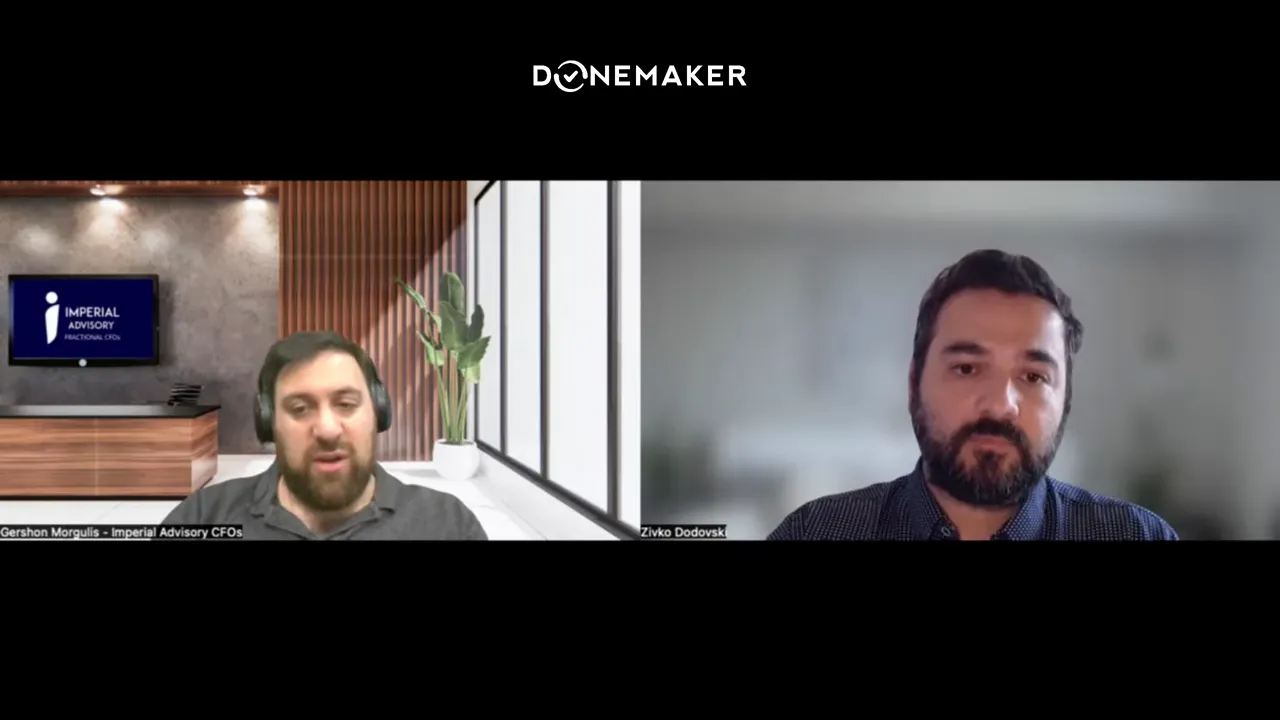
There are a few pervasive myths you should resist. First, debt is not a magic cure. Borrowing without a plan can sink an otherwise profitable business because cash flow ends up servicing loans, not operations. Second, the simplified advice to “fire toxic people” ignores context; sometimes a top salesperson causes friction but also owns a large portion of accounts. Your CFO will help you quantify the risk and develop mitigation plans—hire backups, create splits, or insulate the book of business before a termination.
Third, insurance is a tool—use it wisely. Not every risk should be transferred to an insurer. If an event is highly unlikely and insurance premiums over time exceed likely damages, self-insurance can be rational. A CFO calculates expected value and suggests when to buy insurance and when to self-insure. Client adquisition and CFO decisions should always be evaluated in totality: what acquisition channels increase risk, what insurance you need to protect the buyer story, and how debt affects your ability to scale acquisition spend.
“People assume you can borrow your way out of it. Not necessarily the case.” — Gershon Morgulis
10. FAQ: Quick answers on Client adquisition and CFO
Q: When should I hire a CFO versus a bookkeeper?
A: Hire a bookkeeper when you need accurate day-to-day records. Hire a CFO when you need forward-looking decision support, capital allocation, fundraising, or when complexity (people, cash timing, multiple revenue streams) outgrows your ability to manage the business centrally. For Client adquisition and CFO coordination, a CFO becomes indispensable when acquisition plans have material cash timing or capacity impacts.
Q: Is someone who hasn’t done M&A a real CFO?
A: M&A experience is valuable, but not mandatory. It depends on your needs. If you plan to grow through acquisitions or exit via a sale, prioritize M&A experience. Otherwise, look for a CFO who has the specific skills you need: operational finance, fundraising, forecasting, or system implementations. Client adquisition and CFO alignment might require fundraising or M&A skills if buying customers is part of your strategy.
Q: Can a CFO create revenue?
A: A CFO can directly influence revenue by structuring pricing, service agreements, or commercial models. More often, a CFO improves the economics of your acquisition channels by clarifying CAC, LTV, break-evens, and cash timing. They can recommend which channels to scale or pause. But a CFO is rarely the rainmaker; they’re the architect of sustainable growth.
Q: Do CFOs need accounting degrees?
A: Not necessarily. Many top CFOs come from finance, economics, or operating backgrounds. You do need someone who understands accounting well enough to read and trust the numbers. Match the CFO’s background to the role: fundraising-heavy roles may prioritize capital markets experience; operational roles may prefer an accounting or treasury background. When it comes to Client adquisition and CFO execution, you want someone who can model LTV/CAC and advise on funding the acquisition plan.
Q: What’s the first thing a CFO does when they join a struggling company?
A: Stop the bleeding. The priority is stabilizing cash flow and understanding where profit is going. Often the CFO needs better data before making recommendations. They’ll triage accounts receivable, inventory, margins, and expense leaks. Once stabilized, they build a plan to restore sustainable profitability and support any acquisition investments.
Q: How do I balance debt vs equity for Client adquisition and CFO plans?
A: Debt is cheaper but imposes fixed obligations and timing; equity is more expensive but flexible. Your CFO should run scenarios: what happens to cash flow if acquisition campaigns underperform; when will debt covenants limit growth; what dilution are you comfortable with. The right mix depends on runway needs, risk tolerance, and how predictable your acquisition economics are.
Q: How do we measure success of Client adquisition and CFO collaboration?
A: Define KPIs together: CAC, LTV, payback period, churn, gross margin, and cash runway. Set targets, run experiments at scale, and review results weekly or monthly. The CFO will translate acquisition experiments into cash models and ensure you can afford to scale winning channels.
Q: How can I contact Gershon or Imperial Advisory?
A: Gershon’s contact details are public: G-E-R-S-H-O-N at imperialgrp.com, website imperialgrp.com, phone 516-256-9478. If you want a conversation about Client adquisition and CFO alignment, start with a clear statement of your revenue, people, and how you currently fund acquisition.
Conclusion and next steps: how to act on Client adquisition and CFO advice
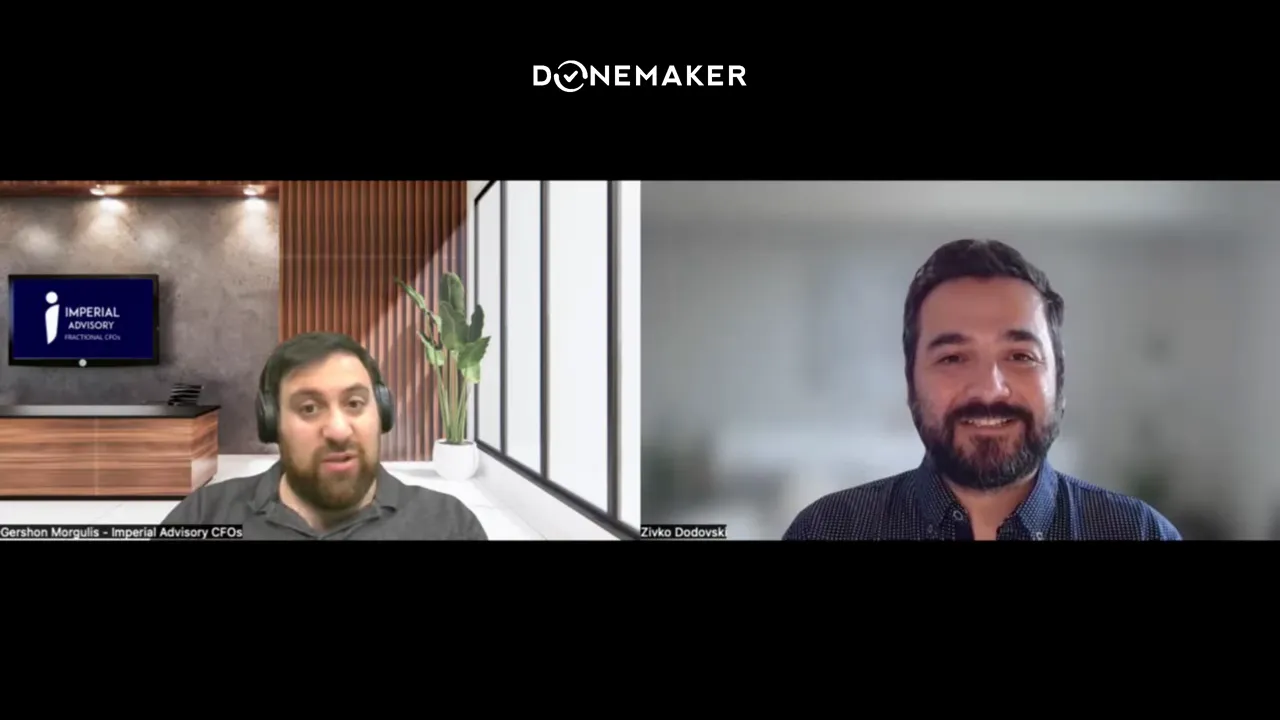
Client adquisition and CFO decisions aren’t theoretical exercises—they’re operational choices that determine whether you can grow and whether your growth is sustainable. Start by answering three owner-level questions:
- Am I happy being the CFO? If not, what would I rather spend my time on?
- Do my books and processes make the business legible to outsiders (bankers, investors, buyers)?
- If I scale client acquisition, can operations and cash flow support that growth?
If you can’t answer these clearly, hire a CFO—fractional, interim, or permanent—who will create clarity, quantify trade-offs, and help you allocate capital toward the highest-return channels. Remember: you’re not hiring someone to promise magical revenue; you’re hiring someone to show the right path, build the scenario that makes Client adquisition predictable, and ensure you don’t borrow your way into a fire.
Treat your CFO as your directional instrument—someone who tells you where to go and helps you choose the safest, smartest route to get there. If you act on the rules above, you’ll reduce surprises, create a scalable Client adquisition engine, and build a business that someone else would be willing to buy when the time comes.
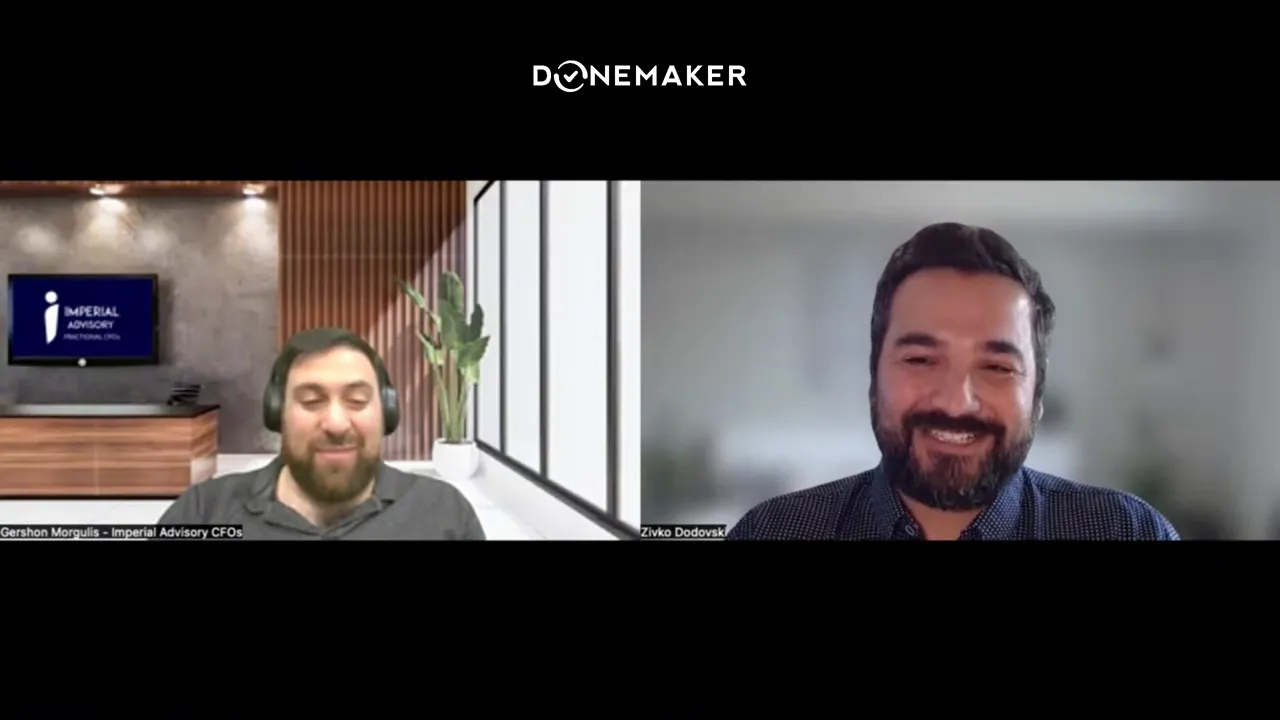
Watch the full podcast here: You’re not a CFO if you haven’t done an acquisition | Gershon Morgulis | DoneMaker Podcast