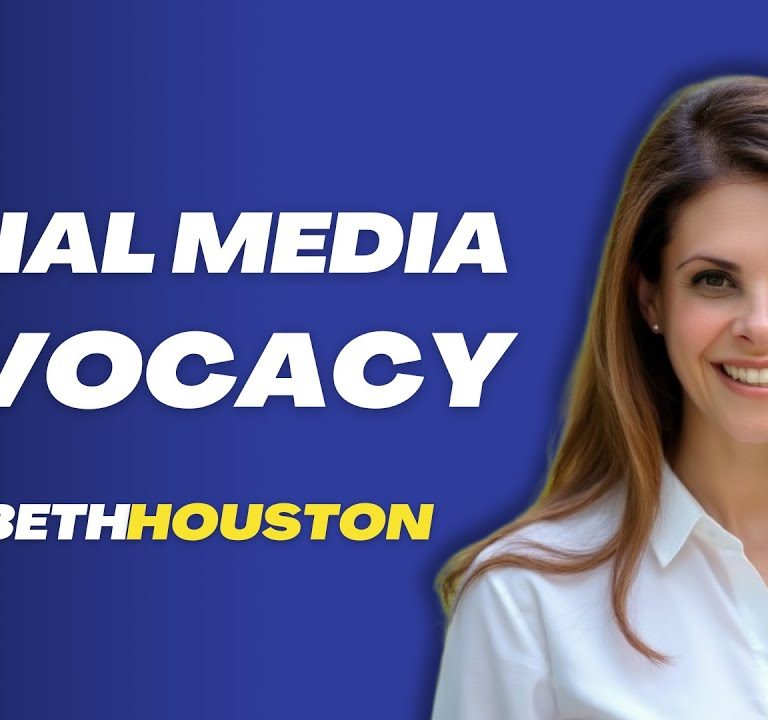
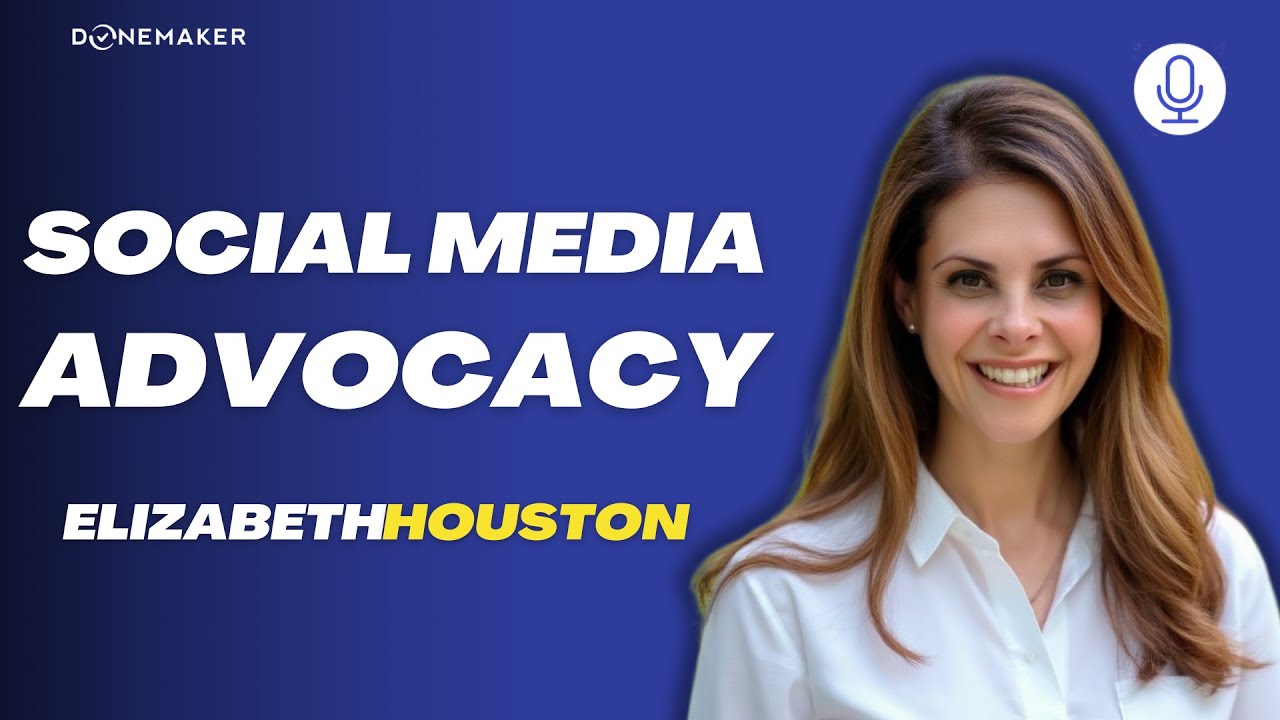
In this podcast episode produced by DoneMaker, I sat down with Elizabeth Houston to unpack how Social Media Advocacy can move beyond vanity metrics and actually deliver measurable business value. If you’re responsible for marketing, sales enablement, HR, or customer success, you’ll walk away with a realistic roadmap for launching a Social Media Advocacy program, coaching executives, and protecting your brand while staying authentic. Social Media Advocacy is not a tactic — it’s a mindset and a coordinated program. Below are seven practical steps to build it inside your organization, illustrated with examples, tools, and safeguards so you can start today.
1. Start with why: Treat Social Media Advocacy as strategy, not a tactic
Too many organizations treat social as a checklist: create a post, schedule it, and move on. Social Media Advocacy only works when it is embedded as a strategic channel that ties to company goals. You must answer the question: what do you want Social Media Advocacy to do for the business?
- Brand awareness: reach new audiences through employee networks.
- Demand generation: supplement paid and organic efforts with employee amplification.
- Sales enablement: give salespeople shareable content to surface in conversations.
- Customer success and support: use listening to mitigate issues and reduce support cost.
- Recruiting and employer brand: show what it’s like to work at your company through employee voices.
When you frame Social Media Advocacy as a strategy that supports these goals, you turn social from “marketing theater” into a measurable, cross-functional tool. At Cisco, for example, social and community work led to millions in savings by diverting issues from call centers into faster, cheaper social and community resolutions. That’s the difference between a tactic and a business-driving strategy.
2. Pilot before you scale: launch a focused Social Media Advocacy program
If you have 50 people or 500, don’t try to boil the ocean on Day One. Start small and deliberate. The easiest place to begin is with a pilot group—often sales—because they are already engaged in social selling and feel the ROI faster.
- Choose a small, motivated cohort (10–50 people).
- Create a short roster of shareable assets (3–10 items) tailored for social channels.
- Provide light training and a quick-start guide rather than heavy certification requirements.
- Track participation and impact—reach, engagements, clicks, and pipeline influence.
- Highlight early advocates and share wins internally to build momentum.
For many organizations the early success metric is simple: did those few advocates meaningfully extend reach and save ad dollars? One company Elizabeth worked with recorded roughly $3 million in ad savings from a few hundred advocates. That’s the kind of signal that wins executive buy-in and funds expansion.
3. Train, empower, and protect: policies, coaching, and playbooks
Pushback from employees often centers on comfort and fear: “I love my job, but I’m not comfortable posting on social.” Combat that with three things: clear policy, short training, and practical playbooks.
- Policy: Publish an accessible social media policy that explains legal, confidentiality, and brand guardrails.
- Training: Offer short, focused sessions on dos and don’ts plus platform best practices (LinkedIn vs. X vs. Instagram).
- Playbooks: Provide sample messages, graphics, and short how-to checklists employees can copy and customize.
Remember: Social Media Advocacy is not a takeover of personal social accounts. It’s providing branded assets and trusted guidance so employees can layer on their own voice. Lift up early advocates publicly—peer recognition is one of the best motivators. Studies and practitioner experience repeatedly show peer-shared messages outperform brand-only posts. When employees share authentically, reach and engagement increase exponentially.
4. Coach executives smartly: listening, practice, and authenticity-first
Executives are high-value advocates but often the most reluctant to participate. The right approach is patient: listen first, practice internally, then scale outward.
- Start with listening: have executives monitor conversations to understand tone, topics, and community questions before posting.
- Practice internally: use internal channels (Slack, intranet, team meetings) to record short videos or draft posts in a safe space.
- Peer models: show 5–10 executive examples they can borrow from—different tones, formats, and cadence.
- Assist—but don’t replace: offer ghostwriting and AI-assisted drafts only as a starting point and encourage executive edits.
Authenticity matters. In Elizabeth’s words, “Authenticity is everything.” If an executive reads like a bot or their voice differs dramatically in person, followers will notice. Use AI for research, fact-finding, or to generate bullet points, but prioritize the executive’s own voice. If they prefer, they can contribute short quotes, then have a communications professional craft the post with their review. That preserves both authenticity and scale.
5. Design the right tech stack: start simple, scale intentionally
Tools help but won’t fix a broken strategy. Choose platforms that match your maturity and goals:
- Small / early stage: Hootsuite or similar—simple publishing and improved listening are often enough for startups.
- Mid-market: Sprout Social or platforms that combine publishing with advocacy features—useful when you have multiple channels and users.
- Enterprise: Sprinklr, Brandwatch, or other robust suites for listening, routing, publishing, and deep analytics.
- Advocacy-focused: EveryoneSocial, ClearVoice, or other dedicated advocacy tools that are channel-agnostic and make it easy for employees to find and share approved content.
Other considerations:
- Agility: Avoid locking your team into a single platform that only supports one channel (e.g., LinkedIn-only solutions) unless that’s your sole focus.
- Listening: Invest in a listening platform early. Many incidents start outside your owned channels and escalate in niche communities.
- Attribution: Ensure tools integrate with analytics and CRM so you can trace social touches across the funnel.
- Brand assets: Invest in a custom link domain (shortener), approved graphics library, and simple templates for live video or webinars.
6. Balance authenticity and scale: the AI and ghostwriting dilemma
AI and ghostwriting can accelerate content output, but they create a tension with authenticity—especially for executives and high-trust roles. Use AI responsibly:
- Research use: Ask AI to gather statistics, draft outlines, or surface peer examples, then write from those findings in your own voice.
- Bullet-point drafts: Use AI to convert notes and bullet points into a first draft that an executive edits, not to generate fully polished ghost posts without review.
- Consistency matters: Authentic voices repeat similar themes and viewpoints. AI can produce inconsistency if used to generate posts without a strong voice guide.
- Human-first engagement: Avoid outsourcing comments and conversational replies to AI without review. Context and nuance are where humans still outperform machines.
Ultimately, the audience wants to connect with a real person, not a bot. If your Social Media Advocacy program replaces human-to-human conversations with automated responses, you erode trust and reduce long-term value. AI should be a productivity tool—not a mask.
7. Protect the brand: listening, scenarios, and practiced response plans
Even the best programs face hiccups. Your job is to anticipate and prepare. A mature Social Media Advocacy program includes:
- Social listening practice: monitor brand mentions, competitor chatter, and topic signals across channels and niche communities.
- Dedicated resources: an owner on the social team, backup staffing, and an agency partner for scale or 24/7 coverage.
- Response playbooks: clear, practiced plans for multiple scenarios—not just a single breach response. Consider rogue employee posts, product complaints, or regulatory missteps.
- Simulation: practice tabletop exercises so stakeholders know who to activate (legal, comms, product, HR) and what the first 24 hours look like.
- Community triage: know when to move a noisy issue from public social into a private community or support channel for resolution.
Consistency and preparedness are your best defenses. When a brand has maintained a steady, reasonable voice, audiences are more likely to give it the benefit of the doubt in a crisis. When a brand looks inconsistent, small complaints become magnified and momentum shifts away from trust.
Conclusion — Make Social Media Advocacy part of how you do business
Social Media Advocacy is a multi-dimensional program that touches marketing, sales, HR, support, and executive communications. It grows from a strategic decision to use employee and executive voices to expand reach, increase trust, and influence outcomes. Start small with targeted pilots, invest in training and listening, choose tools that match your maturity, and commit to authenticity. Use AI as an assistant, not a replacement. Practice crisis scenarios and make attribution a first-class citizen so you can demonstrate real business impact.
When you architect Social Media Advocacy this way—starting with strategy, emphasizing authenticity, and scaling with tools and coaching—you create a durable capability that drives measurable outcomes and protects the brand. If you take only one thing from this article, remember this: authenticity fuels engagement; systems and training produce consistency; and listening keeps you out of trouble. Build all three and you’ll see Social Media Advocacy move from “nice to have” to “must have.”
Watch the full podcast here: Social Media Advocacy, AI & Authenticity, Community VS Social – Elizabeth Houston -DoneMaker Podcast