Let’s be real: getting leads isn’t the problem anymore. If you’re using even the most basic lead-gen tool, your calendar probably sees a few form fills or demo requests a week. But how many of those actually turn into meaningful conversations? How many progress down the sales pipeline? If you’re seeing the same gap over and over — leads showing interest but not converting — your problem isn’t volume. It’s the process.
The way we handle sales development in 2025 has to change. Cold emails are still around, but prospects are smarter, busier, and more resistant than ever. Templates that worked two years ago now land in spam. Automated sequences without context feel robotic. And SDR teams that rely on quantity over quality are burning through leads faster than they can replace them. (You can read more about sales development strategies in this article)
If you’re tired of seeing potential deals slip through the cracks, it’s time to rethink how your SDRs work. This isn’t about adding more tools or sending more emails. It’s about building a smarter, tighter sales development strategy that respects your prospects’ time — and your team’s effort.
Rethinking Your Sales Development Strategy in 2025
The SDR process in many teams is still stuck in outdated routines. Reps are given a list, a sequence, and a quota — and are expected to make it work. But 2025 demands something more dynamic. Prospects aren’t just evaluating your offer; they’re judging how you approach them. Relevance matters more than reach.
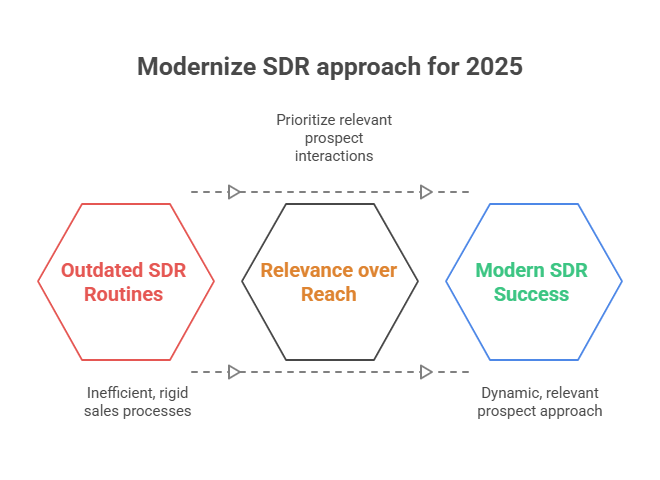
A solid sales development strategy now starts long before the first email is sent. It begins with understanding who you’re selling to on a deeper level. This doesn’t just mean job titles and company size — it means knowing what your prospects are going through right now.
For example, if you’re a business coach, you’re not just targeting every entrepreneur with a generic sales pitch. You need to understand whether the prospect is dealing with a burnout from trying to juggle too many clients, or if they are just starting their business and need foundational guidance. These insights allow you to personalize your outreach and speak to their immediate needs.
Similarly, if you’re a Marketing Director, rather than pitching your services to any business, understand whether your lead is trying to rebrand, restructure their funnel, or struggling with low conversion rates. This understanding leads to more thoughtful outreach and a higher likelihood of conversion.
Just as important is the connection between marketing and sales. Alignment isn’t just a buzzword — it’s the difference between receiving leads that make sense and wasting time on people who were never a fit. Marketing may be generating leads, but if sales development doesn’t know how to handle them — or if the messaging doesn’t match — you’ll lose them at the first touchpoint.
In 2025, building a working SDR process means thinking beyond campaigns and templates. You need real strategy behind how leads are captured, how they’re followed up, and how feedback from every stage flows back into the system.
Moving Past Tactics: What SDRs Should Actually Be Doing
A lot of SDR training still focuses on scripts, cadences, and objection handling. While those things are useful, they don’t fix the deeper issue: how reps are thinking about their outreach. Many SDRs are taught to work fast, not smart. But when the focus shifts from hitting numbers to creating real conversations, the quality of outreach changes.
For instance, if you’re working as an online business coach, your prospecting shouldn’t just be about numbers. Rather than blasting generic emails, start by researching your leads. Look at recent posts they’ve shared about their business growth, struggles with scaling, or even challenges with marketing automation tools. A well-crafted message that acknowledges their current struggles can go much further than a generic pitch about what you can offer.
Similarly, if you’re a Marketing Director, understand the specific challenges your lead might be facing based on their business type. For instance, a SaaS startup experiencing churn might need a targeted email campaign or better onboarding sequences. A personalized approach showing that you’ve taken the time to understand their situation will make your outreach feel less transactional and more valuable.
When SDRs reach out with something genuine, the tone of the conversation changes. Prospects aren’t immediately on the defensive. They’re more likely to read, consider, and respond — even if it’s just to ask a question. Over time, these conversations build trust, and trust is what drives pipeline.
And here’s the thing — it doesn’t take a fancy tool to make this work. What it takes is discipline, empathy, and the ability to balance automation with human attention. The best SDRs in 2025 aren’t the ones sending the most emails. They’re the ones starting the most real conversations.
Cold Outreach Isn’t Dead — It’s Just Smarter Now
There’s a growing myth that cold outreach is fading out. That’s not true. What’s fading is bad cold outreach — the kind that treats people like numbers and conversations like transactions. But good outreach? The kind that opens doors and starts relevant discussions? That’s very much alive.
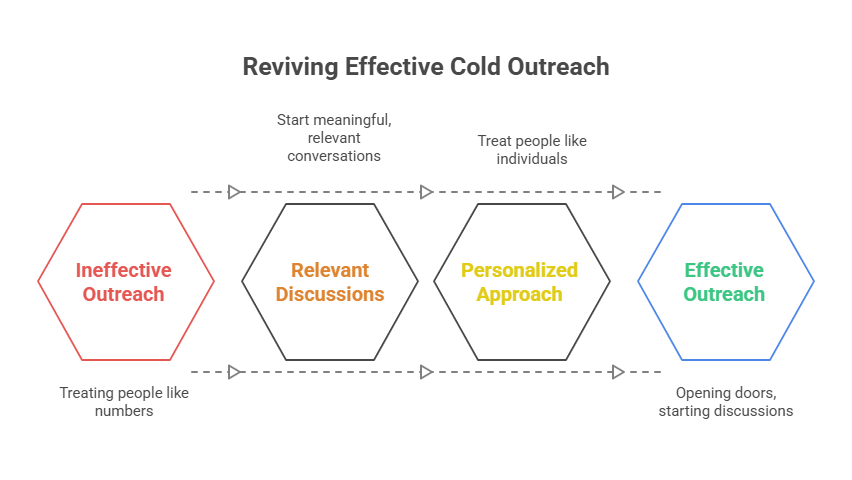
Take, for example, an executive coach working with leaders of mid-sized companies. A cold outreach email that opens with a relevant pain point such as “Are you struggling with team engagement during the shift to remote work?” might resonate far better than a pitch that says, “I can help you develop your leadership skills.”
Or consider a Marketing Director reaching out to a company that just raised a funding round. Instead of a generic message, offer strategic value: “Congrats on your Series A — here’s a framework to optimize brand awareness without blowing your paid ads budget.” This kind of outreach gets noticed.
Cold outreach isn’t about being clever or persuasive. It’s about being respectful, helpful, and real. And when done that way, it still works.
How B2B Lead Generation Has Evolved in 2025
There was a time when B2B lead generation meant mass campaigns, purchased lists, and constant follow-ups. That time is over. In 2025, quality is finally beating quantity. And that’s a good thing — for prospects and for SDRs.
Now, lead generation is about earning attention, not forcing it. Instead of buying access, companies are building it through content, events, and community. SDRs aren’t waiting for MQLs to drop in; they’re participating in micro-communities, joining webinars, and engaging with their target accounts in ways that don’t always feel like selling.
For instance, a business coach might host a webinar or a free workshop on a topic that resonates with a specific target group, such as “How to Scale Your Consulting Business in 2025”. This not only draws in the right people but also builds credibility and trust before any sales conversation happens.
Similarly, a Marketing Director might publish a guide like “10 Organic LinkedIn Strategies That Still Work in 2025,” which becomes a key piece of content in their outreach. This content serves as an entry point, helping to attract the right leads while offering value upfront. (You can read more about LinkedIn Organic strategies here)
And when leads do come in, the question isn’t just “how many?” It’s “how qualified?” A lead that shows up with intent — because they saw your team speak at a niche event or followed your CEO on LinkedIn — is more likely to convert. That’s where B2B is headed: toward relevance, timing, and value, not volume.
SDRs are also becoming more resourceful. They’re using content not as a follow-up tool, but as a conversation starter. A case study. A short video. Even a short LinkedIn post. These assets make outreach more engaging — and help reps stand out in crowded inboxes.
Why Most Sales Pipelines Still Leak — and How to Fix Yours
Let’s say your SDR team is doing everything right. They’re booking meetings, having solid conversations, and qualifying leads. But somehow, deals still fall through. That’s where pipeline management comes in — and where most teams quietly struggle.
The problem often starts with lead handoff. A rep qualifies a lead and passes it to an AE, but the AE is already overwhelmed or unsure if the lead is ready. No follow-up happens. The lead goes cold. Multiply that by a few dozen times a month, and you’re looking at a pipeline full of ghost deals.
For example, a Marketing Director might qualify a lead showing intent to revamp their go-to-market strategy. If this lead is passed along but the AE doesn’t follow up in time or align the messaging, the momentum is lost — and the deal fades out.
To fix this, you need clear criteria for what makes a lead “ready” — and a process that enforces it. Maybe it’s a specific level of intent, like attending a demo or asking a pricing question. Maybe it’s a fit score, based on job title, company size, and industry. Whatever it is, it needs to be documented and shared across the team. (You can learn more about how to move leads through your sales pipeline here)
Why We Use SDRs and LinkedIn Outreach at DoneMaker
At DoneMaker, we focus on Sales Development for B2B consultants, coaches, and service-based businesses, and we’ve found that manual, organic outreach on LinkedIn is still one of the most effective ways to start high-quality sales conversations.
Instead of relying on automation or cold mass messaging, we’ve built a system where real people reach out to real people, using personalized messages that are tailored to each prospect. Our SDRs don’t just send messages — they identify ideal targets, engage them in real conversations, qualify them, and book the sales calls directly into our clients’ calendars.
This hands-on approach is core to our strategy, because what works for consultants and coaches isn’t volume — it’s relevance, trust, and timing. And that’s exactly what thoughtful SDR work on LinkedIn can deliver when done right. (You can learn more about our LinkedIn Organic Outreach services here)

Final Recommendations
Sales development in 2025 isn’t about hustle — it’s about intention. It’s about doing fewer things, better. About treating prospects like people, not targets. And about building a process that your team can trust, not just tolerate.
If you want to stop losing leads, start by tightening every part of the SDR flow: know who you’re targeting, reach out with something real, qualify leads carefully, and manage your pipeline like it matters — because it does.
You don’t need more tools. You need more clarity, better alignment, and a team that’s focused on conversations, not just conversions.