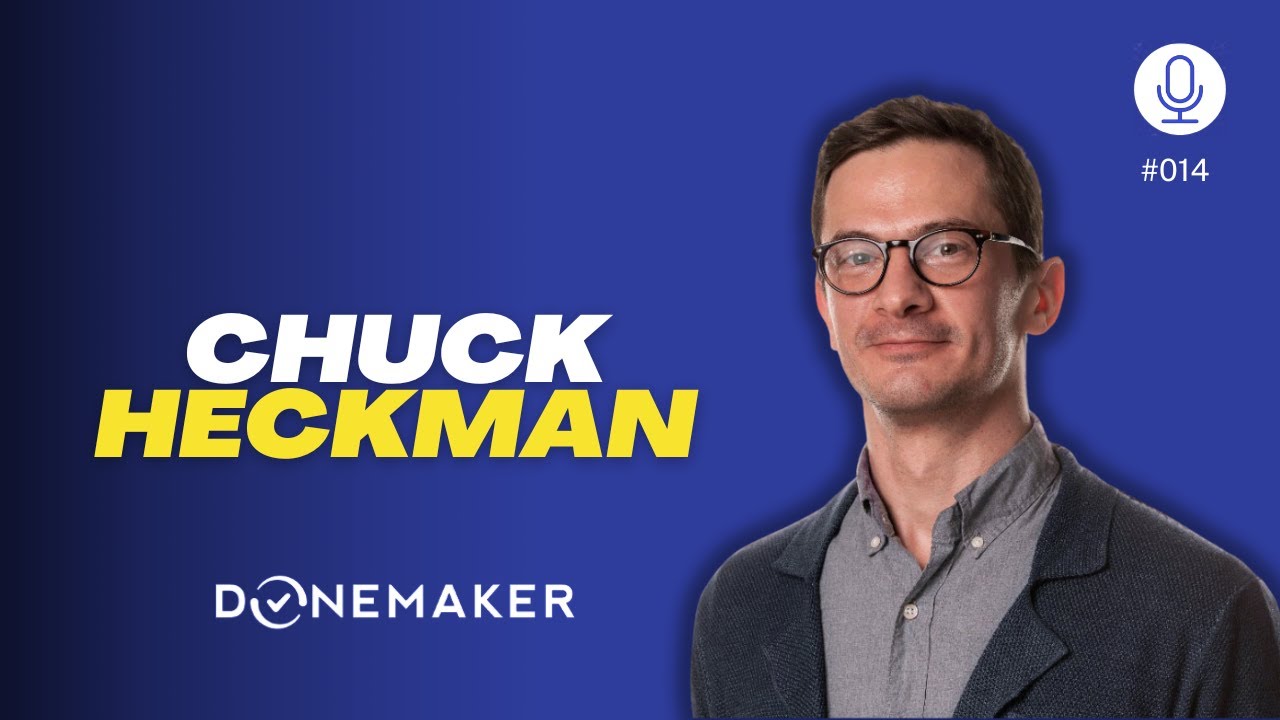
If you’ve ever wondered whether to hyper-focus your marketing on a tiny niche or to aim for broader reach, you’re not alone. This is a hot topic in marketing circles, and it’s exactly what Chuck Heckman, co-founder of OneBillion! Agency and a veteran brand strategist, dives into with insightful clarity. With over two decades of experience leading brand campaigns for giants like Verizon, Procter & Gamble, and Heineken, Chuck brings a unique blend of creativity, technology, and strategic thinking to the table.
In this article, you’ll discover why marketing effectiveness, focusing on broad reach and emotional resonance, often outperforms the popular strategy of niching down. We’ll explore Chuck’s journey from coding and sustainable fashion startups to global brand campaigns, unpack the importance of authentic branding, and even touch on how AI is shaping the future of marketing strategy.
Ready to rethink your marketing approach? Let’s dive into the 7 key reasons why marketing effectiveness should be your go-to strategy.
1. Marketing Effectiveness Prioritizes Broad Reach Over Hyper-Niching
One of the most counterintuitive yet powerful lessons Chuck shares is that widening your target audience often leads to better growth than narrowing it down to an ultra-specific niche. While many marketers preach “niching down” relentlessly, Chuck points to research from marketing heavyweights like Les Binet, Peter Field, and Byron Sharp, who emphasize the value of broad reach coupled with emotional messaging.
Why? Because you can’t always predict exactly who will buy your product. When you hyper-target on platforms like Meta or Google Ads, you might be missing out on potential customers who fall outside your narrow criteria. This limitation causes rising customer acquisition costs (CAC) and shrinking return on ad spend (ROAS).
“If you aren’t gaining new customers, your brand is shrinking,” Chuck says. Retention matters, but it can’t be the cornerstone of your marketing strategy. Instead, your focus should be on new customer acquisition through mass reach and compelling storytelling.
Consider brands like Nike, Adidas, Ford, or Tesla, they don’t obsessively target sub-niches. They tell emotionally resonant stories to broad audiences and build their brand equity over time. This approach drives consistent growth and market share expansion.
2. Consistency Over Time is the Cornerstone of Strong Branding
Branding isn’t just about logos or color palettes. It’s about the story you tell and the consistent experience you deliver to your audience over time. Chuck stresses that “one of the cornerstones of branding is consistency over time.” Jumping on every new idea or trend without alignment can confuse or alienate your customers.
This principle explains why some brands face backlash when they stray too far from their core identity. For example, Chuck references a controversial Bud Light campaign that faced huge consumer pushback. Despite internal warnings, millions were spent on a campaign that didn’t align authentically with their audience’s values.
“If you’re not consistent over time, if you’re changing things up just because there’s a great idea, you’re actually probably not serving the brand properly,” he warns.
On the flip side, brands like Ben & Jerry’s consistently stand for social causes, doubling down on their values even when it’s controversial. That authenticity builds trust and loyalty, showing the power of consistent brand messaging.
3. Authenticity is Non-Negotiable in Influencer Marketing
Finding the right influencer or brand ambassador is a delicate dance. Chuck highlights that authenticity is the dividing line between success and failure in influencer partnerships. When a brand aligns with influencers who genuinely share their values, the audience senses the authenticity, and the message resonates.
In contrast, campaigns that feel like cash grabs or mismatched endorsements, like Tom Brady’s promotion of FTX before its collapse, undermine trust and damage brand reputation.
Chuck explains two ways to approach influencer marketing:
- Borrowed authenticity: A lighter touch where influencers mention or link to your brand, leveraging their credibility.
- Research-intensive casting: A rigorous process where you identify influencers whose values deeply align with your brand, creating a long-term partnership.
For brands serious about authenticity, the latter approach is crucial. It requires deep understanding of your brand values and a commitment to partnering with influencers who truly embody them.
4. PR and Organic Outreach are Essential for Small Brands Before Paid Ads
For small brands or startups, Chuck advises against immediately diving into paid advertising on platforms like Instagram or Google. Instead, the first step is to build organic awareness through public relations (PR), micro-influencers, and affiliate programs.
Why? Because paid ads can quickly become a money pit without a strong foundation. PR professionals bring invaluable relationships with niche publications and influencers, helping you craft and distribute authentic stories that build credibility.
“What you’re paying for in PR is the relationship base that that professional has created,” Chuck says. This network and trust with editors and writers can get your story the attention it deserves.
Chuck recommends working with highly niched PR agencies tailored to your industry. These smaller firms often provide more targeted, impactful outreach than large generalist agencies.
5. Beware of Over-Reliance on Performance Marketing
Performance marketing, focused on direct response and immediate ROI, has been a dominant force, especially for direct-to-consumer brands. However, Chuck points out that its effectiveness is waning:
- Inventory and targeting options are running dry.
- Data transparency is declining, making it harder to know who you’re reaching.
- Customer acquisition costs are rising, and ROAS is shrinking.
“Performance marketing is basically direct mail,” Chuck explains. It drives transactions but doesn’t build long-term brand equity or emotional connections.
Instead, Chuck advocates for a balanced marketing mix where:
- Mass reach and emotional brand messaging drive growth.
- Performance and retention tactics support but don’t dominate the strategy.
This balanced approach creates sustainable growth and brand health over time.
6. AI Applications in Marketing Are Promising but Require Caution
Chuck is deeply involved in developing custom AI applications for marketing but urges caution. While large language models (LLMs) like GPT-4 can generate content, hallucination (inaccurate outputs) remains a challenge. He stresses the importance of:
- Using agent frameworks that combine prompt engineering with large context windows to reduce errors.
- Embedding proprietary data to improve accuracy.
- Applying rigorous QA processes to AI-generated workflows.
Chuck also highlights interesting AI workflows like ResearchGPT, which automates research paper generation to inform content creation.
However, he remains concerned about ethical and legal issues, especially regarding intellectual property and unauthorized use of likenesses. Until these are resolved, Chuck advises marketers to use AI as a tool—rather than a replacement—and maintain human oversight.
7. Building Your Brand Story Requires Deep Internal Conversations, Not Just AI
Many small businesses try to shortcut brand development by using AI tools like ChatGPT to generate brand guides and tone of voice documents. While this can provide a starting point, Chuck emphasizes that authentic branding requires deep, internal conversations with key stakeholders across your organization:
- CEO and leadership
- Sales and finance teams
- Marketing and customer service
- Frontline employees who interact with customers
“They have a much more visceral sense of what a company’s story is,” Chuck explains. This collective insight forms the foundation of authentic brand narratives that AI alone cannot replicate.
He shares his own experiments with AI-generated brand content, noting that outputs often miss the mark and require heavy editing. Tools like Sonnet show promise but still fall short of capturing the full nuance and authenticity needed.
Final recommendation
Chuck Heckman’s insights offer a refreshing perspective on marketing strategy, especially for those caught between the allure of niching down and the promise of broad appeal. His advice centers on the timeless principles of marketing effectiveness: broad reach, authentic storytelling, consistency, and thoughtful use of technology.
By focusing on gaining new customers through wide targeting and emotionally effective messaging, brands can achieve sustainable growth and resilience in an ever-changing market. Whether you’re a startup or an established company, investing in authentic PR, careful influencer partnerships, and balanced marketing mixes will pay off more than chasing the latest narrow targeting fad.
As AI continues to evolve, it will undoubtedly play a bigger role in marketing, but Chuck reminds us that authenticity, ethics, and human creativity will always be at the heart of effective branding and marketing.
If you want to explore these ideas further or need help crafting an effective, authentic marketing strategy, consider reaching out to experts who specialize in marketing effectiveness and brand storytelling. Your brand’s story deserves to be told right.
For more insights from thought leaders like Chuck Heckman, stay connected with the DoneMaker community and keep learning how to grow your business with purpose and impact.
Watch the full podcast here: Is Marketing Effectiveness better than Niching Down? | Chuck Heckman | The DoneMaker Podcast