In 2025, the key to successful sales development lies in understanding B2B buyer psychology. Unlike B2C, B2B purchasing decisions are complex, involving multiple stakeholders, longer sales cycles, and a focus on return on investment (ROI).
By diving into the psychology behind B2B buyer behavior, you can craft sales strategies that resonate with your audience, build trust, and close deals faster. Understanding what drives decision-makers, how they interact with vendors, and what factors influence their final choice will set you apart from the competition.
In this article, we’ll explore how to leverage B2B buyer psychology to improve your sales strategies and stay ahead in 2025.
Why B2B Buyer Psychology Matters for Sales Development
1. B2B Buyers Are Driven by Logic and Emotion
One of the biggest misconceptions about B2B sales is that purchasing decisions are purely logical. While it’s true that data, performance metrics, and cost-effectiveness are critical, emotions also play a significant role.
A CFO evaluating software might focus on cost savings (logic), but they also want to feel confident in their choice and avoid career-damaging mistakes (emotion).
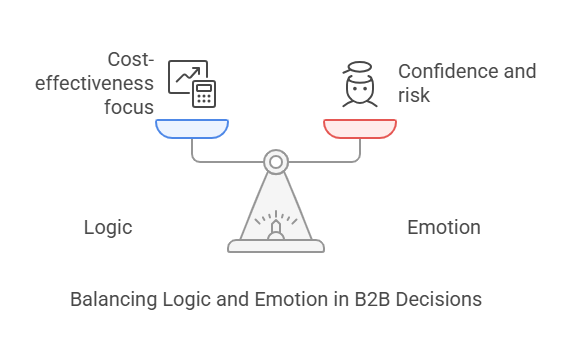
Some common emotions influencing B2B buyers include:
- Fear of risk: Will this decision lead to financial loss or reputational damage?
- Trust and confidence: Does this vendor understand our business needs?
- Sense of urgency: Will delaying the purchase put us at a disadvantage?
Recognizing these emotional drivers allows sales teams to craft messages that address both logical concerns and emotional reassurance.
2. The Role of Stakeholders in B2B Buyer Psychology
Unlike B2C sales, where a single consumer makes the purchase, B2B transactions involve multiple stakeholders. Each has different priorities, pain points, and decision-making power.
For example, purchasing a new enterprise software solution may involve:
- CIO (Chief Information Officer): Concerned about system compatibility and integration.
- CFO (Chief Financial Officer): Focused on cost, budget allocation, and ROI.
- CMO (Chief Marketing Officer): Interested in features that enhance customer engagement.
- End Users: Want a user-friendly and efficient tool to improve workflow.
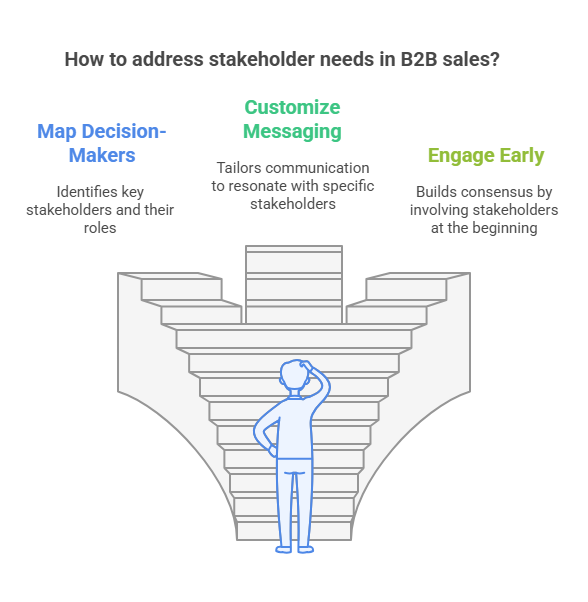
Failing to address each stakeholder’s needs can result in objections and stalled deals. To navigate this, sales professionals should:
- Map out decision-makers within the organization.
- Customize messaging for different roles.
- Engage stakeholders early to build consensus.
3. The Importance of Trust in B2B Strategies
Trust is the foundation of any successful B2B relationship. Unlike impulse-driven B2C purchases, B2B buyers conduct extensive research, comparing vendors and evaluating case studies before committing.
Key factors that build trust in B2B sales include:
- Transparency: Clearly communicate pricing, features, and limitations.
- Reliability: Offer proof of performance through testimonials and case studies.
- Industry authority: Establish credibility through thought leadership and expert insights.
Companies that consistently provide value, honor commitments, and foster open communication are more likely to convert leads into long-term customers.
How to Leverage B2B Buyer Psychology in 2025
1. Personalize Your Sales Strategies
Today’s buyers expect highly personalized experiences. A generic pitch will no longer suffice—buyers want solutions tailored to their specific business challenges.
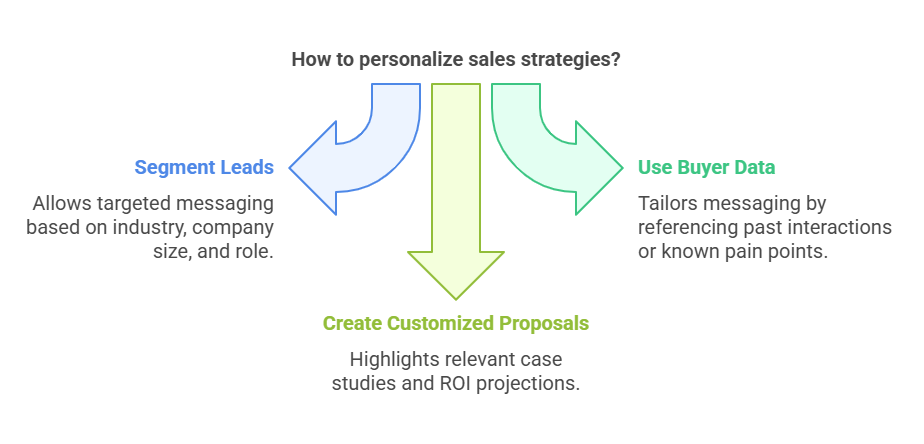
Ways to personalize sales strategies:
- Segment leads based on industry, company size, and role.
- Use buyer data to tailor messaging (e.g., referencing past interactions or known pain points).
- Create customized proposals that highlight relevant case studies and ROI projections.
According to HubSpot, personalized emails improve click-through rates by 14% and conversion rates by 10%.
Moreover, AI-driven sales platforms now allow hyper-personalization, analyzing data to recommend the most relevant content for each prospect.
2. Focus on Building Relationships, Not Just Closing Deals
Modern B2B buyers don’t want to feel like they’re being sold to—they want to collaborate with vendors who genuinely understand their business goals.
To build strong relationships:
- Listen actively to buyer concerns and needs.
- Educate rather than push by providing valuable content and insights.
- Stay engaged post-sale to foster long-term partnerships.
By positioning yourself as a strategic partner rather than just a seller, you increase customer lifetime value (CLV) and encourage repeat business.
3. Use Social Proof to Build Credibility
Social proof plays a crucial role in reducing buyer hesitation. When prospects see that other businesses have succeeded with your solution, they are more likely to trust you.
Types of social proof that influence B2B buyers:
- Case studies: Showcasing real-world results from similar companies.
- Testimonials: Quotes from satisfied clients.
- Industry awards and certifications: Demonstrating credibility and expertise.
A well-crafted case study can shorten the sales cycle significantly by addressing concerns before they arise.

4. Simplify the Decision-Making Process
B2B buyers often struggle with decision fatigue due to the complexity of purchasing high-stakes products.
To make the process easier:
- Provide clear comparisons between your solution and competitors.
- Offer decision-making frameworks like ROI calculators.
- Ensure smooth onboarding by offering free trials or step-by-step guides.
Companies that streamline the buying journey reduce friction and increase conversion rates.
The Role of Consumer Behavior in B2B Strategies
1. Understanding the Buyer’s Journey
The B2B buyer’s journey consists of multiple stages:
- Awareness: Recognizing a problem and seeking information.
- Consideration: Evaluating different solutions.
- Decision: Selecting a vendor and finalizing the purchase.
Unlike B2C, the B2B journey is often non-linear. Buyers may revisit earlier stages multiple times before making a decision.
2. The Impact of Digital Transformation on B2B Buyer Psychology
Digital transformation has reshaped how B2B buyers interact with vendors. Key trends include:
- Self-service research: 80% of B2B buyers prefer digital channels over direct sales interactions.
- Omnichannel experiences: Buyers expect seamless transitions between online and offline touchpoints.
- AI-driven insights: Predictive analytics help identify high-intent leads.
Adapting to these trends is crucial for staying competitive in 2025.
3. The Growing Importance of Data-Driven Insights
Leveraging data analytics enables businesses to:
- Track buyer behavior and optimize sales outreach.
- Predict customer needs and personalize recommendations.
- Measure sales performance and refine strategies.
Tools like Google Analytics, LinkedIn Sales Navigator, and CRM platforms provide valuable insights for enhancing sales development.
Real-World Examples: How Companies Are Leveraging B2B Buyer Psychology
1. Salesforce: Personalization at Scale
Salesforce, a leader in CRM software, uses AI-driven insights to personalize its outreach. By analyzing customer data, Salesforce tailors its messaging to address specific pain points, such as improving sales efficiency or enhancing customer engagement.
For example, when targeting a retail company, Salesforce might highlight features like inventory management and customer segmentation, while for a financial services firm, they might focus on compliance and data security.
This personalized approach has helped Salesforce maintain its position as a market leader and build long-term relationships with clients.
2. HubSpot: Building Trust Through Content
HubSpot, a pioneer in inbound marketing, uses educational content to build trust and establish authority. Their blog, webinars, and free tools provide value to potential customers long before they make a purchase decision.
For instance, HubSpot’s Marketing Hub offers free resources like templates, guides, and certifications that help businesses improve their marketing strategies. By providing value upfront, HubSpot positions itself as a trusted partner rather than just a vendor.
3. Slack: Simplifying the Buying Process
Slack, a popular collaboration tool, simplifies the decision-making process by offering a free trial and clear pricing tiers. Their website provides a straightforward comparison of features, making it easy for buyers to evaluate their options.
Additionally, Slack uses social proof effectively by showcasing testimonials from well-known companies like Airbnb and Spotify. This reassures potential buyers that Slack is a reliable and proven solution.
4. Zoom: Leveraging Social Proof and Urgency
During the COVID-19 pandemic, Zoom capitalized on the sense of urgency and social proof to drive adoption. By highlighting how other businesses were successfully using their platform for remote work, Zoom positioned itself as the go-to solution for virtual communication.
Their case studies and testimonials from companies like Uber and Dropbox helped build credibility and trust, leading to rapid growth in their user base.
Final Recommendations
To succeed in 2025, your sales strategies must be rooted in B2B buyer psychology. Here are concise, actionable recommendations:
- Personalize with Data: Use buyer data and AI tools to tailor messaging and solutions to specific needs, creating hyper-personalized experiences.
- Build Trust Through Relationships: Focus on becoming a trusted partner, not just a vendor. Provide ongoing support, valuable content, and regular engagement to foster loyalty.
- Leverage Social Proof: Showcase case studies, testimonials, and industry awards to build credibility and reassure buyers.
- Simplify Decision-Making: Offer clear comparisons, ROI calculators, and free trials to reduce friction and help buyers evaluate your solution easily.
- Adapt to Digital Trends: Embrace digital channels and omnichannel experiences. Use tools like LinkedIn Sales Navigator and CRM platforms to optimize outreach and track buyer behavior.
- Educate Your Buyers: Provide valuable content like webinars, whitepapers, and free tools to address pain points and position your brand as a thought leader.
- Address Emotional and Logical Needs: Balance data-driven ROI arguments with emotional reassurance to build confidence and reduce fear of risk.
- Engage All Stakeholders: Customize messaging for each decision-maker, addressing their unique priorities and pain points.
- Stay Agile: Continuously adapt to changes in buyer behavior and market trends to keep your strategies relevant.
- Measure and Optimize: Use analytics to track performance metrics like conversion rates and customer lifetime value, refining your approach for better results.
By implementing these strategies, you can create sales approaches that resonate with B2B buyers, drive growth, and build lasting partnerships in 2025.
Frequently Asked Questions (FAQ’s)