Struggling to turn outreach into paid clients? That exact challenge is what pushed a career and life coach to change the way she approaches lead generation—and the result was a steady flow of qualified calls and real revenue. This article breaks down the core lessons behind that success, shows practical steps you can take right now, and gives a repeatable playbook for coaches, consultants, and service owners who want dependable client generation without the burnout.
Table of Contents
- What happened—and why it matters
- Why appointment setting beats DIY outreach for many coaches
- How to evaluate any appointment-setting partner
- Core elements that made the difference (and how to implement them)
- How to measure success: the metrics that matter
- Practical outreach playbook you can implement this week
- Script examples that convert
- Common pitfalls and how to avoid them
- How to scale beyond the first 16 calls
- Real outcomes people look for
- Why brainstormed solutions beat cookie-cutter playbooks
- Case study in miniature: from 16 calls to three clients
- Checklist: Ready-to-apply client generation setup
- Scaling mindset: how to think about costs vs. benefits
- When to keep doing it yourself and when to hire help
- Key takeaways: what to act on today
- FAQ
- Final encouragement
What happened—and why it matters
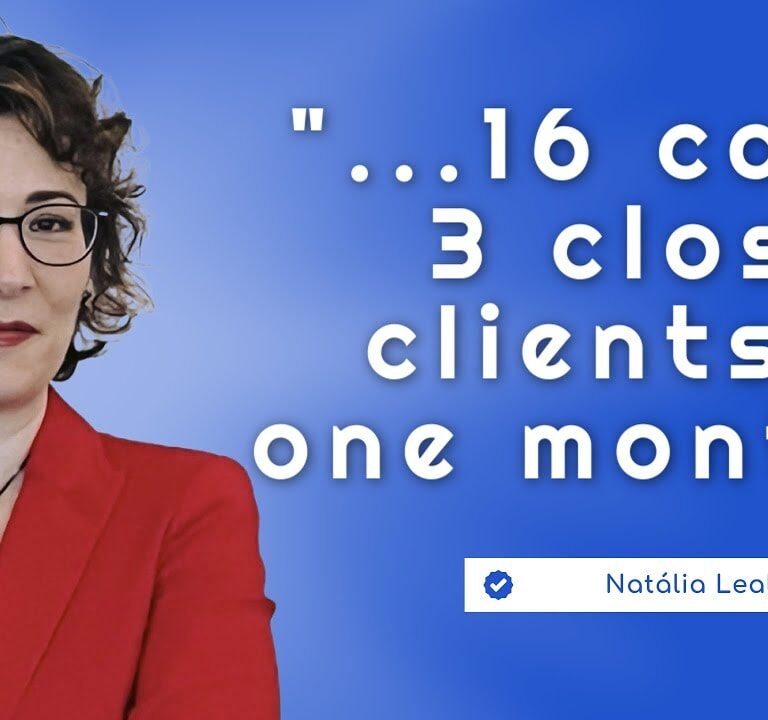
A coach who supports international leaders wanted more consistent, qualified discovery calls. After partnering with a professional appointment setting team, she recorded a clear conversion signal: 16 booked calls in a single month and three of those calls turning into paying clients. Those numbers are simple but powerful because they show two things at once:
- Volume + quality are both achievable. Getting many calls is useless if they do not convert. Conversely, a few excellent clients won’t scale. The sweet spot is a steady stream of qualified conversations.
- Outsourced appointment setting can deliver measurable ROI fast. The work focused on booking real conversations, not vanity metrics.
Why appointment setting beats DIY outreach for many coaches
Trying to do everything alone is tempting, but outreach and appointment setting demand time, systems, and testing. Here’s why delegating that work to a specialized team often produces faster wins:
- Dedicated expertise: Professional appointment setters live in the rhythm of outreach—copy testing, sequencing, timing, objection handling, and calendar management.
- Repeatable frameworks: Agencies build and reuse approaches that work across industries: lead lists, qualification filters, outreach templates, and follow-up flows.
- Faster iteration: With more volume, you can spot what converts quickly and double down on it.
- Less distraction: Business owners get to focus on conversion and service delivery while specialists fill the top of the funnel.
How to evaluate any appointment-setting partner
Not all providers are equal. When assessing a partner, use these criteria to separate hype from impact:
- Clear deliverables and timeline. Are they promising booked calls, qualified prospects, or vague “leads”? Ask for specific numbers and timeframes.
- Qualification standards. Understand how they define a qualified lead. Do they screen for budget, decision-making ability, pain, and timeline?
- Customization and collaboration. Can they adapt messaging to your niche or will you get a one-size-fits-all script?
- Proof of results. Request case studies or references with similar business models and price points.
- Data transparency. Will they share outreach metrics—response rate, meeting show rate, conversion to client?
- Alignment on follow-up and nurture. Does their handoff to you include scripts, notes, and next-step guidance?
Core elements that made the difference (and how to implement them)
Turning outreach into paying clients is an assembly of small systems. Here are the key elements behind consistent bookings and conversions, with practical steps to apply them immediately.
1. Define a strict qualification rubric
A strict definition of “qualified” protects your time and increases conversion rates. Use a short rubric that is applied by the appointment setter before a call is booked. The rubric should include:
- Role and seniority: Is this person a decision-maker or influencer? For career coaching with international leaders, seniority matters.
- Budget range: If you charge premium fees, ensure prospects can invest.
- Primary pain or outcome: Are they seeking career transition, leadership development, or relocation support?
- Timeline: Are they ready to start in the next 1-3 months?
Train your appointment setters to ask two or three short qualifying questions that map to the rubric. If a prospect fails the rubric, add them to a nurture stream rather than wasting a discovery slot.
2. Script with flexibility—not rigidity
Scripts should exist to support human conversations, not replace them. Build templates for opening messages, follow-ups, and calendar asks, but give appointment setters room to personalize. Key parts of a strong script:
- Value-led opening: State a concise benefit tied to the prospect’s role or pain.
- Micro-commitments: Use questions that invite a small yes, such as “Is leadership development a top priority this quarter?”
- Clear ask: Ask for a 20–30 minute discovery call and offer specific times.
- Objection handling bullets: Short lines to address scheduling, cost curiosity, or relevance concerns.
3. Optimize calendar friction
Booking is often lost to friction. Reduce friction with these tactics:
- Short initial meetings: 20–30 minutes lowers the barrier to scheduling.
- Multiple time options: Always provide two or three concrete time slots rather than asking when they are free.
- Embed calendar links selectively: Use smart scheduling tools, but control availability to avoid no-shows and to create perceived scarcity.
- Confirmation and reminders: Send a confirmation immediately and automated reminders at 48, 24, and 2 hours prior.
4. Turn every booked conversation into a conversion opportunity
A discovery call is a chance to diagnose and position, not to pitch blindly. Convert more calls by following a repeatable call flow:
- Set the agenda: Spend 2 minutes setting expectations: time, goals, and what success looks like.
- Diagnose deeply: Ask open questions about current situation, roadblocks, and desired outcomes.
- Frame transformation: Connect their problems to a clear path to transformation and show evidence.
- Close for next steps: Propose clear options (engagement tier, timeline) and secure a commitment—signature, deposit, or trial session.
Provide appointment setters with a call-status template so every prospect handed to you comes with context: what was discussed, their top pain, and suggested next steps. That increases close rate dramatically.
How to measure success: the metrics that matter
Reporting should focus on outcomes, not micro-metrics. Track these KPIs weekly and monthly:
- Booked calls per month—the raw top-of-funnel volume.
- Show rate—percent of booked calls that occur. If show rate drops, fix reminders and discovery value messaging.
- Conversion rate—percent of calls that become paying clients.
- Cost per booked call and cost per client—use this to evaluate ROI of the appointment set spend versus revenue.
- Average deal value and time to close—understand revenue velocity.
Example: with 16 booked calls and 3 conversions, the conversion rate is 18.75 percent. If average client revenue is $3,000, that is $9,000 from 16 booked calls in one month. Those simple calculations let you determine cost-effectiveness quickly.
Practical outreach playbook you can implement this week
Here is a step-by-step playbook to emulate the success described earlier. These moves are focused on speed and efficiency so small teams can scale quickly.
- Clarify your target persona. Write a two-sentence description: role, geography, problem, and desired outcome.
- Create a qualification script. Three questions that determine budget, authority, and timeline.
- Draft three outreach templates. Opening message, short follow-up, and final follow-up. Keep each under 80 words and end with a clear ask.
- Set up a 20–30 minute discovery slot. Block time in your calendar for calls and provide two or three options to prospects.
- Automate confirmations and reminders. Use calendar automations or simple email sequences with confirmations and a 24-hour reminder that includes what they should prepare.
- Hand-off checklist. For every booked call provide a short brief that includes pain summary, current status, and suggested next steps.
- Measure weekly and adjust. If show rate is low, tweak reminders and scheduling windows. If conversion rate is low, audit call flow and qualification filters.
Script examples that convert
Use these concise scripts as a starting point. Personalize with the prospect’s name, company, or role to improve response rates.
- Initial outreach
Hi [Name], I help senior professionals accelerate moves and leadership transitions internationally. Would you be open to a 20-minute conversation to explore a clear action plan for your next career step? I have Tuesday at 10am or Thursday at 3pm—what suits you?
- Short follow-up
Checking in—would either Tuesday 10am or Thursday 3pm work for a quick planning call? If not, share a time and I will accommodate.
- Final follow-up
Last quick note—if this isn’t a fit now I understand. If it is, I can free up 20 minutes next week to share three immediate steps you can take to move forward.
Common pitfalls and how to avoid them
Even with strong systems, mistakes happen. Watch for these traps and correct them fast:
- Too broad of a target market: If outreach is unfocused, response quality drops. Narrow personas win.
- Poor handoff procedures: If the appointment setter just drops a calendar event without context, the coach wastes time on unprepared leads. Use a one-page brief for each call.
- No feedback loop: Agencies improve when they get call outcomes. Provide regular feedback to refine messaging and qualification over time.
- Not measuring cost per acquisition: Without tracking CPA you cannot know whether booked calls are sustainable investments.
How to scale beyond the first 16 calls
Once you validate the funnel by converting a handful of clients, scale responsibly:
- Standardize what worked: Convert effective call flows, scripts, and qualification rules into standard operating procedures.
- Increase outreach volume gradually: Double the volume if conversion and show rates remain stable. Avoid sudden spikes that reduce quality.
- Invest in content for nurture: Use short articles, case studies, and client stories to warm prospects who were not ready to buy.
- Hire or train additional sellers: Add team members when consistent conversion makes the economics attractive.
Real outcomes people look for
Growing your business is not just about activity. The outcomes that signal real success:
- Predictable monthly revenue: Being able to forecast revenue with reasonable confidence.
- Higher close rate per conversation: More clients out of fewer, better-quality calls.
- Lower acquisition cost: Getting clients for less money and time, increasing profitability.
- Time freed up for impact work: Less admin and more coaching, product improvement, or content creation.
Why brainstormed solutions beat cookie-cutter playbooks
Every service, price point, and audience is slightly different. Cookie-cutter templates sometimes produce hollow wins: numbers might look good but revenue and client fit suffer. The teams that pair systemized outreach with active brainstorming produce better outcomes because they:
- Tailor messaging for cultural and professional nuances.
- Adjust qualification to the specific selling motion of the coach.
- Iterate quickly with feedback loops between outreach and sales.
What active brainstorming looks like in practice
- Review a sample of outreach replies and call notes weekly.
- Identify three hypotheses to test (subject line, call length, qualification language).
- Run a two-week split test with measured outcomes.
- Deploy the winning variant and document the change in the SOP.
Case study in miniature: from 16 calls to three clients
This outcome demonstrates the compound effect of consistent process, clear qualification, and rapid iteration. Key elements that led to conversions:
- Focused targeting: Conversations were with international professionals and leaders—people with clear decision power and need.
- Short and specific discovery structure: Initial meetings were positioned as tactical planning sessions initially, which reduced resistance.
- Strong handoff and follow-up: Each booked call came with context and a follow-up sequence for prospects who needed more time.
These are repeatable tactics. If you implement them with discipline, you move from random opportunity to predictable pipeline.
Checklist: Ready-to-apply client generation setup
Use this checklist to confirm you have the essential elements in place.
- Defined target persona
- Qualification rubric with 3–4 questions
- Three outreach templates
- 20–30 minute discovery slot in the calendar
- Automated confirmations and reminders
- Handoff notes template
- Weekly metrics tracking
- Regular feedback loop with outreach team
Scaling mindset: how to think about costs vs. benefits
Numbers decide resource allocation. Think in terms of cost per client and lifetime value. If an appointment-setting service delivers clients at a cost below their lifetime value, you have a scalable engine. Aim to understand three financial levers:
- Reduce cost per booked call: Improve targeting and messaging so outreach costs less per booking.
- Increase conversion rate: Improve call flow, qualification, and follow-up to turn more conversations into paying clients.
- Raise average client value: Offer higher-value packages or retainers to increase revenue per client.
When to keep doing it yourself and when to hire help
Consider outsourcing when:
- Outreach is taking time away from higher-value work for weeks on end.
- You have a clear offer and need steady top-of-funnel volume to scale.
- You are comfortable with the idea of a collaborative partnership and can provide feedback.
Keep it in-house when:
- You are still discovering your ideal persona and offer.
- You have very low ticket offers where outsourcing raises cost per acquisition above profitability.
- You prefer to own every conversation for quality reasons during the earliest stages.
Key takeaways: what to act on today
- Define qualification. Protect your time by ensuring booked calls meet minimum standards.
- Focus on show rate and conversion, not vanity metrics. More booked calls only matter if they convert.
- Use short discovery calls. Lower friction increases booking and show rates.
- Systemize handoffs. Every booked call should arrive with context to maximize conversion chance.
- Measure ROI weekly. Know your cost per client so you can scale with confidence.
“I think there were 16 calls booked with DoneMaker or via them and out of those three actually became my client.”
FAQ
How many calls should I expect when I start working with an appointment-setting team?
Expect variation based on budget, target market, and offer. Start by setting a clear target—for example, 10–20 booked calls per month—and measure show and conversion rates. Use early results to calibrate budgets and outreach volume.
What does a “qualified” prospect look like for premium coaching offers?
A qualified prospect typically has decision-making authority or direct access to it, the budget to invest in premium coaching, a pressing problem or transition, and willingness to engage within a defined timeline (for example, next 1–3 months).
Should I use calendar links or propose times manually?
Both work, but manual offers of two or three concrete time slots can increase conversion because they reduce choice paralysis. Use calendar links for ongoing scheduling efficiency once you maintain stable show rates.
How long until I see results from outsourced appointment setting?
Initial results often appear within weeks, but meaningful scale and repeatability usually take two to three months of iteration. Expect early wins and then refine qualification and messaging to improve conversion.
What should an agency share in its reporting?
The essentials are booked calls, show rate, response rate, conversion to client, and cost per booked call. Also request qualitative notes from conversations to help improve call performance.
How do I keep prospects who are not ready now?
Add them to a nurture sequence with value-based content: short articles, client wins, invitations to free group webinars, or occasional check-ins. Keep communications helpful and infrequent enough to avoid fatigue.
Final encouragement
Generating clients consistently is a combination of clarity, process, and persistence. When outreach is done with clear qualification, thoughtful messaging, and a reliable handoff to conversion, the result is not just more meetings but more clients and more predictable revenue. Whether you keep it in-house or partner with a specialist, apply the systems above, measure the right metrics, and iterate fast.
Use the checklist, run the playbook this week, and measure results. With the right structure in place, the path from outreach to client becomes repeatable and scalable—turning occasional wins into dependable growth.
Additional resources to link
To make this guide even more actionable, consider adding links to key resources in the sections above. Suggested link targets and anchor text (1–3 words) you can add where relevant:
- appointment setters — vendor pages or service descriptions for professional appointment-setting teams
- scheduling tools — smart calendar and reminder tools that reduce friction
- rubric template — a downloadable qualification rubric coaches can copy
- outreach templates — example message templates and follow-up sequences
- case studies — proof of results from similar coaching or consulting engagements
Place each link on the suggested anchor text within relevant paragraphs (for example, link “appointment setters” in the “Why appointment setting beats DIY outreach” section). These small, contextual links will give readers direct access to tools and examples that help them implement the playbook faster.