
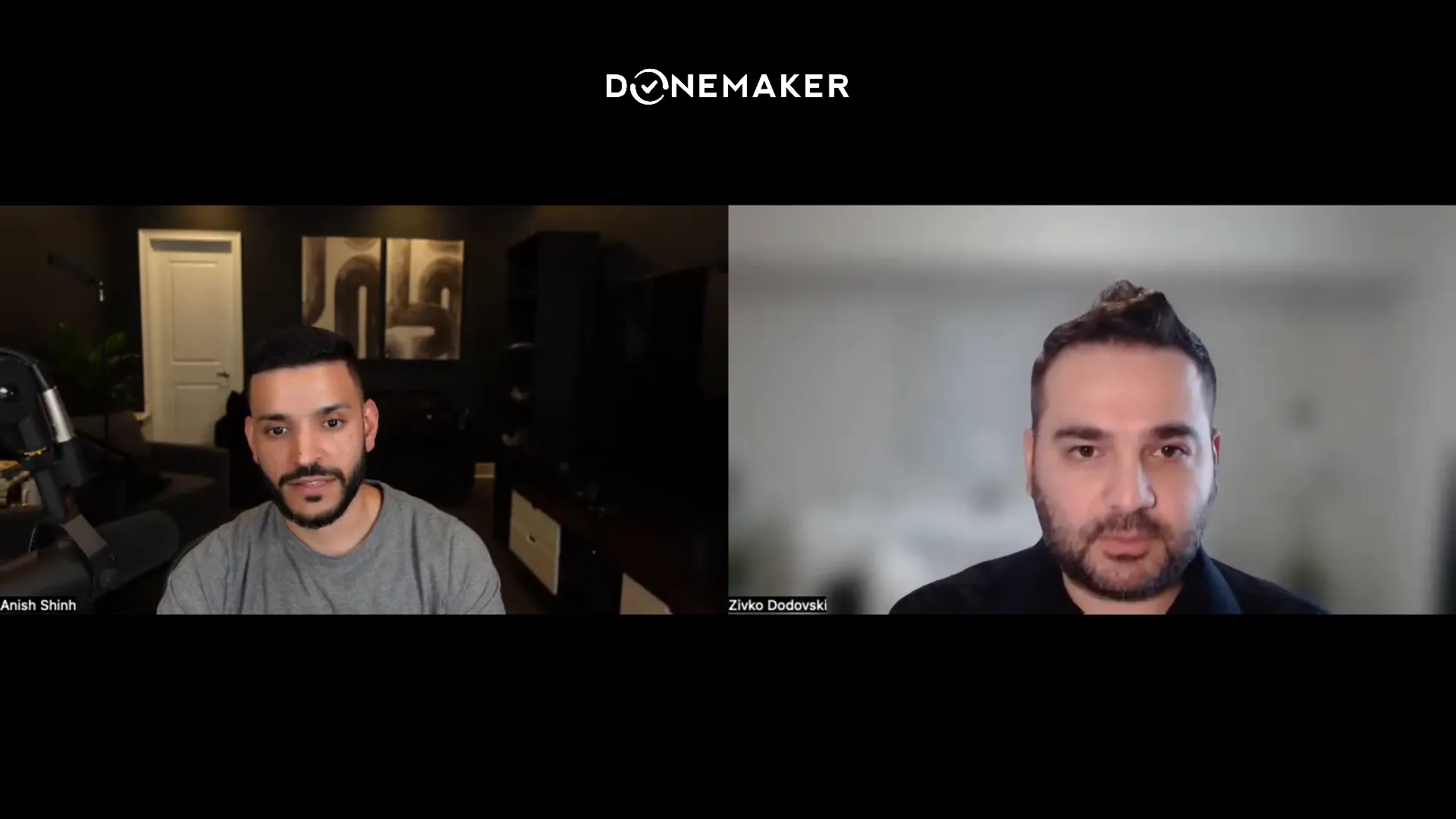
If you watched the DoneMaker conversation with Anish Shinh (founder and CEO of Prospect Digital), you already know the value of a measured approach. In this practical guide I’ve written for you, I’ll walk you through how to properly market your business based on real-world lessons: auditing first, improving conversions, choosing the right channels (Google, Meta, TikTok) for the right reasons, spotting red flags in “marketing gurus,” and using AI where it genuinely helps.
Below are nine actionable steps presented as a listicle so you can implement them immediately. This is written in the conversational, straightforward tone you heard in that interview—direct, practical, and focused on results. Throughout, I’ll give examples, share small experiments that moved the needle, and help you avoid common traps so you can actually scale profitably.
Table of Contents
- 1. Start with an audit — before you touch Meta, Google, or TikTok
- 2. Fix conversion (CRO) — the highest leverage thing you can do
- 3. Choose channels based on customer intent — Google for intent, Meta for top-of-mind, TikTok for scale
- 4. Spot fake marketers — the red flags that cost you time and money
- 5. Know when to hire an agency vs build in-house
- 6. Vet agencies rigorously — ask for data and references, then test
- 7. Set realistic budgets and expectations — don’t treat advertising like a lottery
- 8. Use AI where it helps, not as a shortcut for core work
- 9. Adopt a long-term, data-driven mindset — marketing is not a sprint
1. Start with an audit — before you touch Meta, Google, or TikTok
If you want to know how to properly market your business, the first thing you do is not launch ads. You audit. You map your customer journey. You understand who your customers are, what problem they have, and whether your product or service actually solves that problem.
Here’s what a proper audit covers:
- Define your primary goal: more leads, more revenue, higher average order value, or better retention.
- Identify your most valuable customers and the path they take—from initial touch to purchase and repeat.
- Measure current conversion rates on the exact pages where people land, view products, and checkout.
- List bottlenecks: slow pages, unclear messaging, high drop-off in checkout, bad imagery, or missing social proof.
Why this matters: you can pour money into ads, but if your website converts at 1–3%, you are wasting ad spend. If you instead move that to 8–12% with CRO (conversion rate optimization), you dramatically increase the ROI of every ad dollar.
2. Fix conversion (CRO) — the highest leverage thing you can do
Once you audit, you’ll likely find the largest wins exist in conversion rate optimization. This is where small changes produce outsized returns. If you only remember one point about how to properly market your business, make it this: improve your conversion rates before ramping ad budgets.
Concrete CRO moves to prioritize:
- Hero section clarity: make the first screen (above the fold) instantly answer “what do you offer?” and “why should I care?”
- Landing pages per offer: for service providers, create a unique landing page per service (e.g., kitchen renovation vs home addition).
- Product page focus: for e-commerce, optimize product pages with social proof, shipping policy, and clear benefits.
- Checkout flow streamlining: reduce steps, show trust badges, and test text/CTA placement.
- Microcopy and price presentation: test font size and visibility of price.
Example experiment: We had a product priced at $3,500. When the price was displayed large and front-and-center, purchase rates dropped. Reducing the font size of the price increased purchases by about 14%—no other changes. Small design or messaging adjustments like this compound fast.
3. Choose channels based on customer intent — Google for intent, Meta for top-of-mind, TikTok for scale
There isn’t a universal rule like “start with Meta” or “start with TikTok.” If you want to properly market your business, choose channels by the intent of your buyer and the nature of your product.
Quick channel guide:
- Google (Search): Use when buyer intent is high. People searching “general contractor Mississauga” want service now—this is classic intent-based buying.
- Meta (Facebook & Instagram): Use for visual, trust-building, and top-of-mind advertising. Great for construction portfolios, home renovations, spas, and local offers.
- TikTok: Powerful, but a beast. Best for brands that can create native, entertaining, or highly shareable content and have the budget to iterate. It’s less reliable for immediate local intent without careful strategy.
Budget reality: you need a meaningful ad budget to test properly. In today’s market, campaigns under $1,500 per month are tough to scale—many agencies won’t touch them. For local Google Ads, $3,000+ a month is often the minimum for meaningful testing. If you’re trying to buy expensive keywords (legal, litigation, personal injury), clicks can be $150–$250 each—understand the math before you start.
4. Spot fake marketers — the red flags that cost you time and money
Fake marketers are everywhere. If you want to properly market your business, you must learn to spot them fast. Here are the red flags that should trigger caution:
- Grand guarantees without context. Promises like “we’ll get you X revenue in 6 months” without auditing your business or explaining assumptions are a warning sign. Guarantees often hide strict caveats (attendance, closing rates, territory, etc.).
- Over-the-top lifestyle marketing. Flashy cars and influencer-style posts can be signals of someone selling a course or lifestyle rather than sustainable client results.
- High-ticket courses promising unrealistic outcomes. A $10,000 course that promises $2M revenue in six months and requires you to have an 80% closing rate is unrealistic. Check reviews, Trustpilot, and past client results.
- One-call close pressure tactics. If you’re being forced into a yes on the first call, expect a high rate of buyer’s remorse and low retention.
- Cherry-picked case studies without contactable references. Ask for a list of clients you can call. Agencies that provide a direct list and let you choose build real trust.
5. Know when to hire an agency vs build in-house
Deciding whether to hire an agency or bring roles in-house depends on scale and cost. If you want to properly market your business, you must do the math.
Simple rule of thumb:
- If you’re under ~$5M revenue and have fewer than ~20 employees, agencies often win. Hiring specialists (SEO, Google Ads, FB ads, copywriter, designer) is expensive and slow to coordinate.
- At ~20+ employees or $5M+ revenue, bringing work in-house becomes more viable—but only if you can hire and retain specialized talent and have strong data systems.
Example: Hiring four specialists at an average salary of $60k = $240k per year. An agency can deliver a cross-functional team for less than that, plus the benefit of experience across verticals. But remember: with larger accounts, relationships matter—high-revenue clients often hire based on who they know.
6. Vet agencies rigorously — ask for data and references, then test
When you’re considering external help, don’t be shy—push for data. If you want to properly market your business, treat agency selection like any serious purchase.
Vetting checklist:
- Ask for specific case studies with metrics and context (CPA, CPL, CVR, ROAS, timeline).
- Request contact details for past/current clients and actually call them—ask what worked, what didn’t, and how the agency handled setbacks.
- Avoid long lock-in contracts without performance milestones. Start with a short test and clear KPIs.
- For small businesses, ask the agency to provide a list of clients you can choose to speak with—this levels the playing field and builds trust.
7. Set realistic budgets and expectations — don’t treat advertising like a lottery
One of the biggest mistakes people make is thinking ads will instantly make them rich. If you want to properly market your business, you must match budget to goals, and be realistic about timelines.
Key points to set expectations:
- Start with an ad budget that allows real testing. For many small businesses, that’s $1,500–$3,000 as a starting point, but most agencies prefer $1,500+ minimum. Be prepared to scale up if tests show positive ROI.
- Understand industry CPC/CPL. Some verticals (e.g., legal) have extremely high CPCs but also high payouts; others require scale and lower costs.
- Measure ROI, not vanity metrics. Focus on leads, cost per acquisition, and lifetime value—not impressions or likes alone.
- If your sales cycle is long, be patient. High-ticket B2B or manufacturing customers may take months to convert—yet a single win may justify long-term investment.
8. Use AI where it helps, not as a shortcut for core work
AI is useful—but it’s not a one-stop solution for high-quality strategy or copy. If you want to properly market your business, treat AI as a tool for efficiency, not a replacement for critical thinking and human nuance.
Where AI helps:
- Data analysis: summarize campaign performance, detect trends, and generate reports faster.
- Creative brainstorming: generate ideas for hooks, subject lines, and variants to test.
- Image generation: produce interim visuals or mockups for testing (but validate with real creatives later).
- Automated appointment setting: some AI agents can handle initial qualification and scheduling at scale.
Where AI falls short (today):
- Long-form SEO-optimized articles often read robotic and need a human editor for voice and nuance.
- Mission-critical messaging (brand voice, legal disclaimers, and strategic positioning) should be human-crafted.
- Don’t rely solely on AI-generated trust-building content or customer interactions without human review.
9. Adopt a long-term, data-driven mindset — marketing is not a sprint
Finally, if you want to properly market your business, you must adopt patience and persistence. Real growth usually isn’t overnight. It’s iterative testing, learning, and compounding small wins.
Long-term playbook:
- Audit, then fix conversion before scaling ad spend.
- Test one channel well (based on intent) before adding more channels.
- Measure results in dollars and customer lifetime value, not clicks or followers.
- Document learnings, replicate wins, and kill losers quickly.
- Treat vendor relationships as partnerships; share data and align incentives.
One last practical reminder: put systems in place to quantify everything. “What you don’t track, you’re not marketing, you’re gambling.” That’s not motivational fluff—that’s operational discipline. If you can measure it, you can improve it.
Watch the full podcast here: Fake Marketers, Red Flags and how to properly market your business – Anish Shinh – DoneMaker Podcast