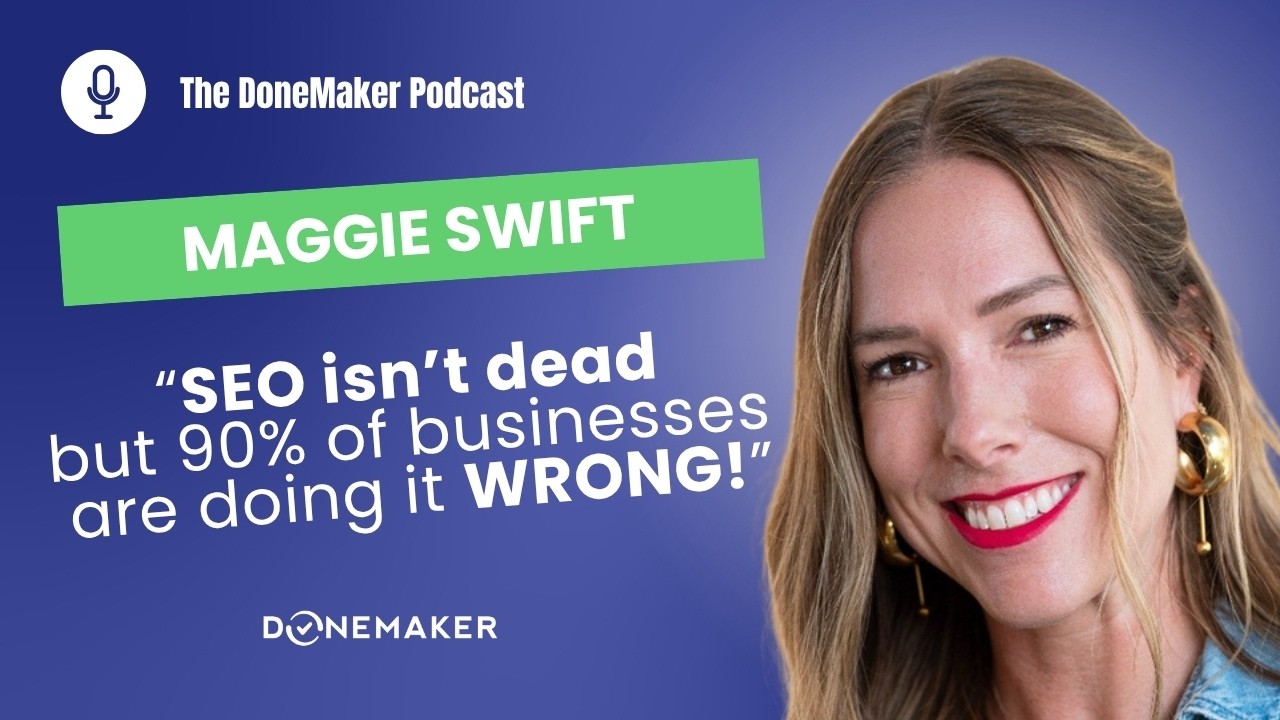
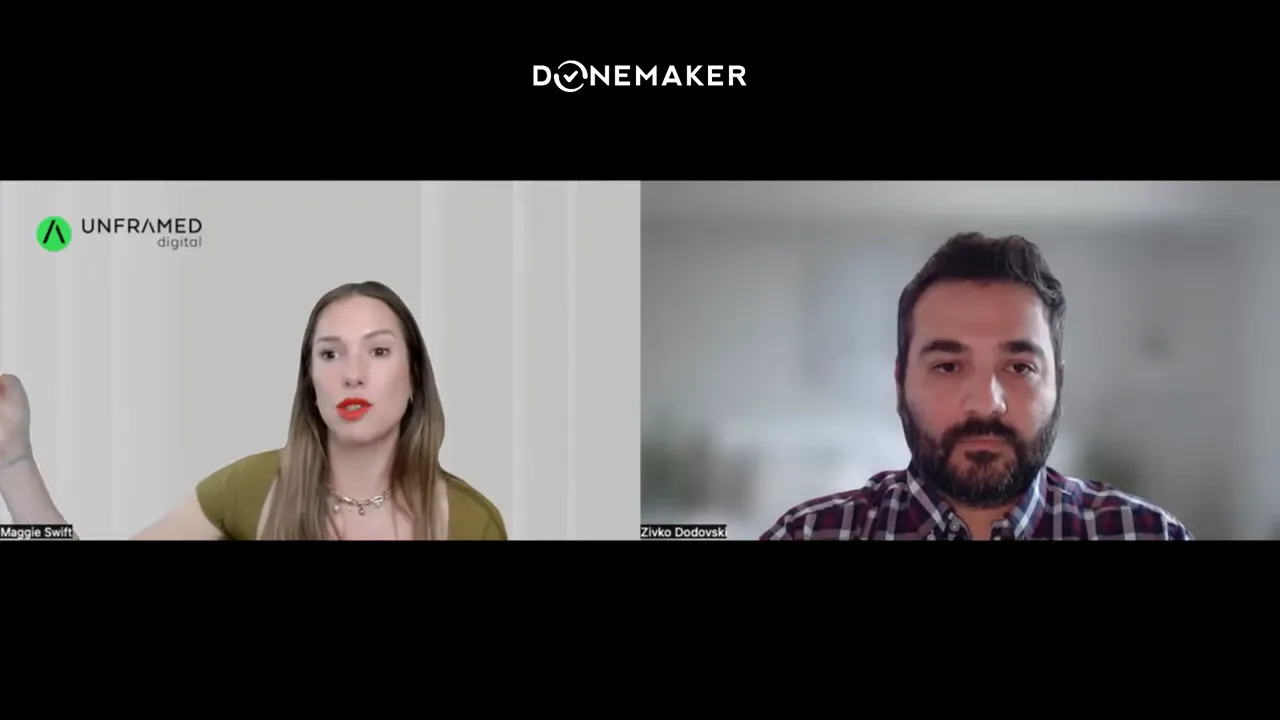
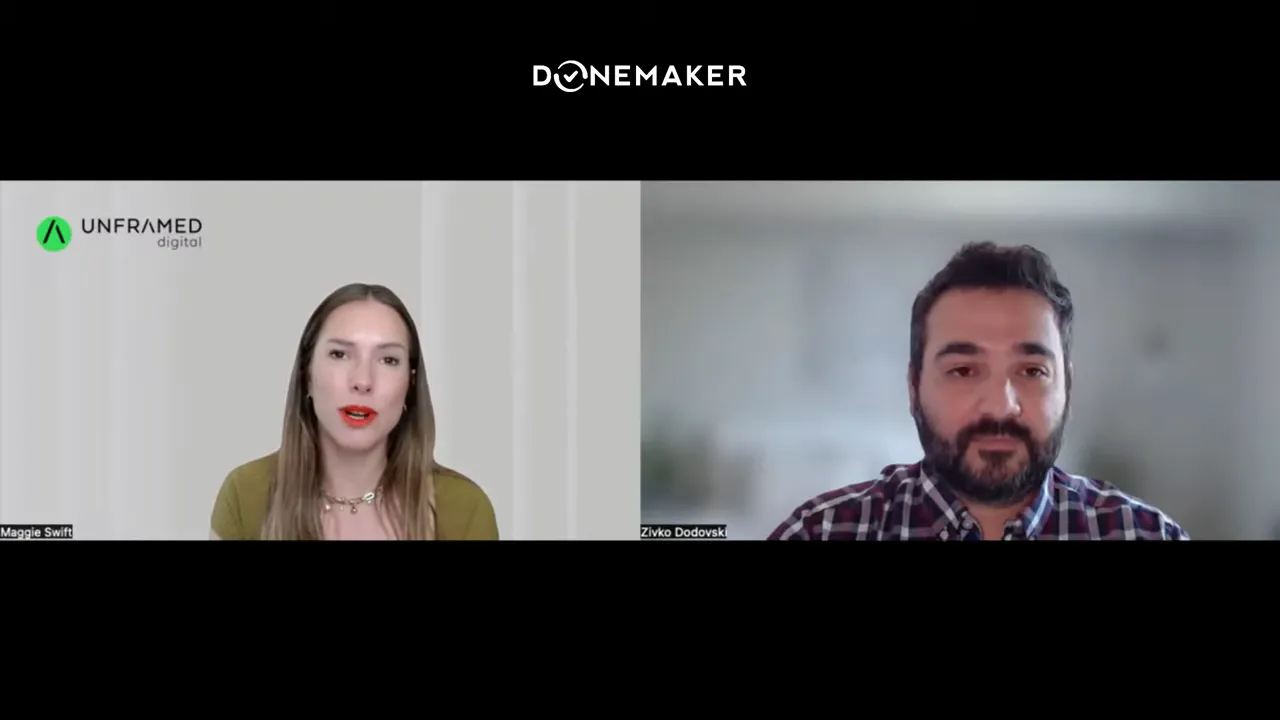
If you want to stop throwing money at paid channels and start building durable, profitable marketing, this guide is for you. In a recent conversation with DoneMaker, Maggie Swift, CEO and co‑founder of Unframed Digital, walked through the practical, data‑first approach that turned our agency into a team managing over $3 million in SEO value for niche brands. This article distills those insights into a step‑by‑step list you can use to rethink how SEO fits into your growth stack.
1. SEO is usually the most cost‑efficient marketing channel — here’s why
Let’s get blunt: 99% of the time, SEO becomes the most cost‑efficient marketing channel for a business. That’s because SEO is inherently scalable in a way paid media isn’t. When you run ads, you pay for every click; the moment you stop, that traffic stops. With SEO, your organic presence compounds. You invest in creating technical foundations, content, and authority, and over time that investment can “snowball” into sustained traffic and sales without increasing your monthly spend proportionally.
That makes SEO a pure profit lever: lower acquisition cost, higher margins, and long‑term trust. Search engines are still one of the most trusted sources of information available, and being visible there reduces friction for buyers who are researching your product or service.
Why this matters to you
- You can scale traffic without scaling ad spend.
- SEO supports brand trust, users perceive organic results as more credible.
- Higher lifetime value and lower acquisition cost make SEO a better long‑term investment for profitability.
2. The biggest reason people doubt SEO: complexity and poor reporting
Despite the upside, many leaders are skeptical. Why? Two main reasons: SEO is technically complex, and the industry has a reputation problem. Executives who approve budgets often don’t fully understand SEO. That fuels impatience and unrealistic expectations.
On the agency side, transparency and reporting are the most common gaps. SEO is roughly 70% data analysis, but many providers sell packaged services (e.g., “X blogs per month”) without tying actions to measurable outcomes. If you don’t know what an agency is doing and why, you’ll assume it’s not working.
Questions to ask before hiring an SEO partner
- What will you audit in the first 30–60 days?
- How will you map keywords to pages and prioritize efforts?
- What metrics will you report on each month, and how will you link them to business outcomes?
- Do you have case studies that show ROI and explain attribution methods?
3. SEO is 70% data analysis: spend the time planning before you publish
If you want honest advice: don’t start by cranking out content. Take at least a month to audit. That sounds slow, but the setup period is when you gather the data that drives results. A proper audit looks at:
- Technical SEO (indexing, site speed, schema, canonicalization)
- On‑page structure (H1s, H2s, meta tags, internal linking)
- Keyword research and keyword mapping
- Competitor analysis (what their top pages are, why they perform well, and where gaps exist)
- User behavior and conversion bottlenecks
From there, you prioritize the moves that will “move the needle” most efficiently. Continual testing is built on this foundation: you change something, observe ranking and behavioral metrics, then iterate.
How data analysis changes day‑to‑day SEO work
- Audit and map — establish a baseline.
- Prioritize tactics that address high‑impact technical and on‑page issues.
- Publish with intent — every page is mapped to a keyword cluster and a funnel stage.
- Measure, learn, and iterate — treat negative data as a learning signal.
“Unless we’re looking at the bad data, reporting on the negative data, we’re never going to have that ability to consciously say, ‘This didn’t quite work; what can we do to make it better?'”
4. Prepare for algorithm updates: build test sites and join the community
Algorithms are a black box. Google updates happen without a schedule and often without clear guidance. How do you respond? Two practical moves that keep you ahead:
- Maintain indexed test sites. These allow you to test new approaches safely and observe how the algorithm reacts before you touch client or production sites.
- Invest in continued education. That doesn’t mean taking every course; it means being part of the global SEO community, attending conferences, sharing findings, and learning from other experts.
When an update lands, drop into “research mode”: run controlled tests, analyze which page types or signals were affected, and update strategy accordingly. This is why experienced teams travel to conferences and maintain a culture of testing, it reduces reaction time and improves hypotheses.
Practical checklist when an algorithm update hits
- Check ranking fluctuations across core landing pages and keyword clusters.
- Run tests on the test domain to replicate changes.
- Prioritize defensive patches for pages that lost visibility.
- Update content and technical signals with hypotheses validated by test sites.
5. Measure SEO success across the full funnel: not just last‑click
One of the biggest mistakes people make is expecting top‑of‑funnel content to directly convert into sales. SEO contributes across the entire buying journey, and you must measure it that way. Use funnel‑aware KPIs:
- Top of funnel: traffic growth, engagement (time on page, scroll depth), and the performance of blog landing pages.
- Middle of funnel: engagement on product and service pages, downloads, newsletter signups.
- Bottom of funnel: leads, sales, conversion rate by channel, and lead quality.
Beyond channel metrics, you should track business metrics: customer acquisition cost (CAC), customer lifetime value (LTV), and profit margins. Share these with your marketing team where possible, visibility helps teams optimize toward real business outcomes.
Important metric nuance
Track conversion rate, not just conversion volume. A page that generates more leads but has a falling conversion rate could signal a traffic quality issue, or a UX issue that needs fixing.
6. Combine SEO with conversion rate optimization (CRO): human first, Google second
Traffic without conversion is wasted. If you’re driving more visitors to a site that doesn’t convert, you’re handing money to acquisition channels for nothing. That’s why you should pair SEO with CRO. Here’s how we do it:
- Audit UX and design as part of onboarding, if essential structural elements are missing (like H1/H2), fix them without compromising brand messaging.
- Use behavior tracking tools, Microsoft Clarity, Hotjar, to understand how real users navigate pages.
- Iterate monthly: account managers propose at least one new improvement each month to improve engagement or conversion.
Being “human first” means you prioritize the user experience and then signal that to search engines. Clean design, clear messaging, and tested micro‑interactions all improve both conversions and SEO outcomes.
7. Tailor your SEO approach by business model: e‑commerce ≠ B2B
SEO workflows differ depending on your model. E‑commerce sites deal with thousands of SKUs and product pages; professional services or B2B sites often have fewer pages but more complex conversion paths. Tactics that work for one won’t always apply to another. Some practical differences:
- E‑commerce: emphasize product page optimization, structured data, category taxonomy, and schema for product inventory and reviews.
- B2B/professional services: focus on content that builds EEAT (expertise, experience, authority, trust), long‑form service pages, case studies, and gated content for lead capture.
- Both: internal linking, site architecture, and fast, mobile‑first experiences are critical.
Creative crossover idea: authorship on product pages
Authorship boxes used to be a content strategy for EEAT. You can repurpose that for e‑commerce: include expert commentary, manufacturer notes, or stylist suggestions by named contributors on product pages. It adds authority and helpful context that benefits users and search engines.
8. Backlinks still matter: but quality and relationships cost money
Backlinks remain one of the most important ranking signals. Google’s original algorithm was built on link authority, and while signals have evolved, links still act as a trust and authority indicator. But the landscape has changed:
- Publishers know link inventory is valuable, so link placements have become more expensive.
- Buying links without quality checks used to be common; that created a backlash and left many brands wary.
- Good link acquisition is strategic, relationship‑driven, and data‑informed.
That means you should analyze any potential link by reputation, traffic quality, topical relevance, and domain metrics. And if you’re working with an agency, part of what you pay for is their relationships, they’ve often spent years building lists of trustworthy publishers and webmasters.
Three rules for modern backlink strategy
- Prioritize relevance and referral traffic over raw domain metrics alone.
- Avoid large, unverified lists of cheap links — they’re often low quality and risky.
- Invest in relationships: targeted outreach and partnerships win better placements over time.
9. AI is a tool, not a replacement: use it to speed work and free humans for strategy
We’ve been using AI internally long before ChatGPT viralized the market. The right mindset: use AI to automate mundane tasks and accelerate research, not to replace senior strategic thinking. The impact of AI on search has been real:
- AI summarization and assistants can reduce long‑tail informational traffic by up to ~40% in some cases, especially for “how‑to” and purely informational queries.
- However, bottom‑of‑funnel queries (like “near me” or buyer intent queries) hold up better, and direct/homepage traffic may even increase as users use AI to discover brands.
Your actions now should be twofold: optimize your site for AI visibility where possible, and adopt AI to free up human time for high‑impact analysis. Prompt engineering is critical — once you learn how to prompt one model, you can transfer that skill across platforms.
Practical AI adoption steps
- Start small: pick one internal task to automate with AI (e.g., meta tag suggestions, content briefs).
- Use AI for drafts and data processing, but keep human oversight for creativity and factual accuracy.
- Ask the model what additional information it needs to improve output — it will guide you on how to prompt it better.
10. Tools, transparency, and the right partner: how to get started
There are countless SEO tools. The right toolkit depends on your business priorities, but a solid starter stack includes:
- Semrush — robust keyword research and competitor analysis
- Ahrefs — excellent backlink and competitor insights
- SurferSEO — on‑page content optimization and content brief generation
- Screaming Frog — deep technical crawling
- Microsoft Clarity or Hotjar — behavior analytics for conversion optimization
When choosing an agency or in‑house strategy, look for transparency: clear audit findings, a roadmap of prioritized fixes, and frequent, honest reporting. Beware of low‑cost packages that promise X blogs per month without a data plan behind them.
How to assess an agency quickly
- Do they provide an initial audit and roadmap?
- Can they explain how their work will impact CAC, LTV, and margins?
- Do they run tests on their own test sites?
- Are they willing to admit uncertainty and highlight risks?
Final checklist: 8 actions to implement this week
- Run a quick health scan (Screaming Frog or site audit tool) and list the top 5 technical fixes.
- Map 10 high‑value keywords to existing pages and identify content gaps.
- Install a user behavior tool (Microsoft Clarity is free) to capture heatmaps and session replays.
- Identify one bottom‑of‑funnel keyword cluster and optimize a landing page for conversions.
- Start a backlink quality audit: list your top link sources and measure relevance and referral traffic.
- Pick one SEO task to automate with AI (meta descriptions, content outlines) and test the workflow.
- Set a reporting cadence with clear funnel KPIs: traffic, engagement, conversion rate, CAC.
- Ask your prospective agency: Do you have test sites? Show me a past experiment that informed a client pivot.
If you commit to a strategic, data‑first approach and pair SEO with CRO, you’ll stop treating organic search as a campaign and start treating it as an engine. That’s when SEO becomes not just a channel, but a strategic asset for sustainable growth.
If you want to learn more about the approach I’ve described here, check out DoneMaker’s conversation where we go deeper into these tactics — and if you’re curious about working together, visit unframeddigital.com or find me on LinkedIn as Maggie Swift.
Watch the full podcast here: SEO isn’t dead, but 90% of businesses are doing it WRONG | Maggie Swift | The DoneMaker Podcast