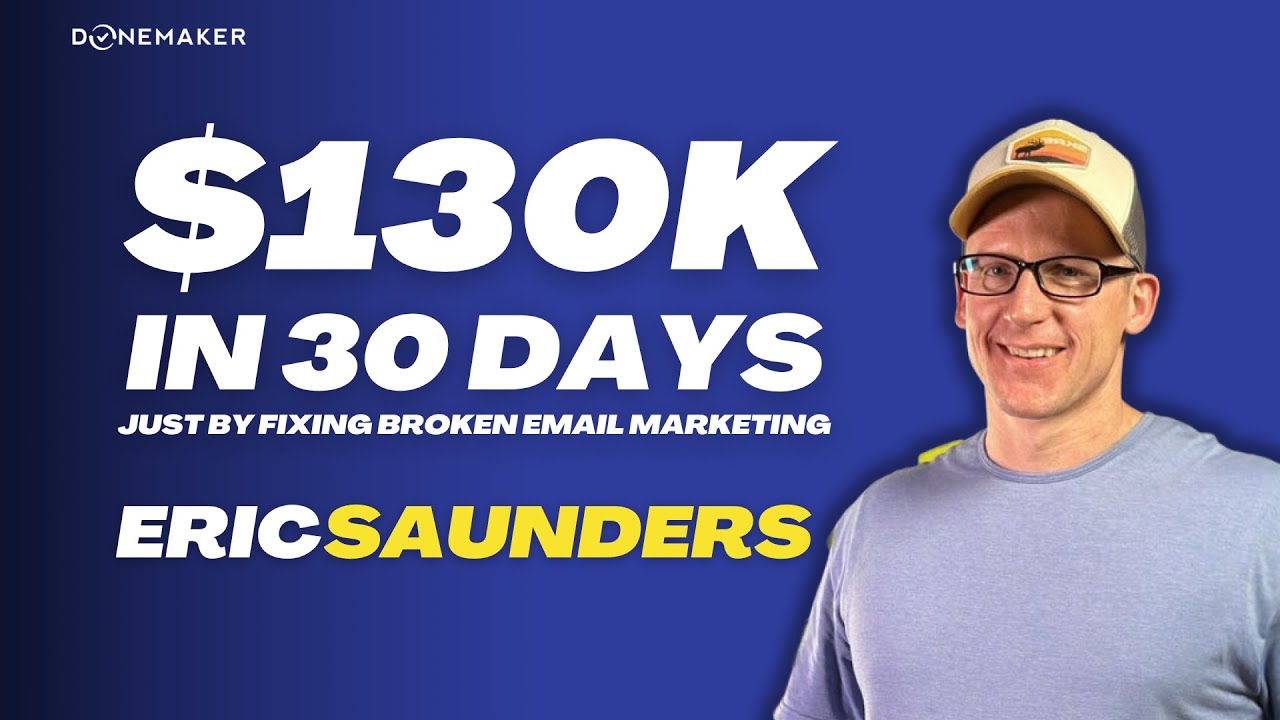
This post is based on a conversation between DoneMaker and EJ Saunders, CEO of Blaze Digital Solutions. In the original video, EJ explains how a proper email marketing overhaul turned an underused list into $130,000 in 30 days and outlines a scoring system to help you determine if your business can double in 90 days. If you want clear, tactical steps to repair broken email marketing, create predictable revenue for seasonal businesses, and build a real growth plan, this listicle is for you.
Outline
- 1. Audit the fundamentals before you spend another dollar
- 2. Build lead magnets that actually solve a problem (not what you love)
- 3. Automations are non-negotiable, flows, not blasts
- 4. Combine email marketing with SMS and AI for better reach
- 5. Use anti-seasonal strategies: giveaways, collaborations, and pre-launch funnels
- 6. Understand the real economics of e-commerce, the “million-dollar illusion”
- 7. Use a scoring system to know what to fix first and whether you can double in 90 days
- FAQ: answers to the questions you’ll ask next
why you should care about email marketing right now
If you’ve ever thought “email marketing is dead” or “I tried email and it didn’t work”, you’re not alone — but that assumption is costing you money. As EJ said during our talk: “We generated over $130,000 within the first 30 days.” That wasn’t luck — it was the result of fixing fundamentals and applying a disciplined strategy.
You need to approach email marketing like a core business system, not a spam machine. When you do, it becomes a revenue engine you can rely on. This post walks you through the seven changes you can make today to fix broken email marketing, convert your audience faster, and put yourself on the path to double growth, with real examples and practical steps you can implement.
1. Audit the fundamentals before you spend another dollar
Before you launch a new ad or hire another agency, you must know what already works and what doesn’t. EJ’s first move with clients is always an assessment. You should do the same.
What to audit right now:
- List health and segmentation — who is on your list and how were they acquired?
- Deliverability and sender reputation — are your emails reaching inboxes or landing in spam?
- Existing automations and flows — abandoned cart, welcome series, post-purchase, re-engagement.
- Messaging consistency — does your social, web, paid and email messaging match?
- Offer clarity — is your offer solving a clearly defined problem for a defined customer?
Why this matters: you can spend thousands on traffic and still get garbage results if your email system is broken. EJ found clients with 20,000 people on Klaviyo who were sending one email every month or two. That list represented tens of thousands of dollars of missed opportunity. Fixing fundamentals first gives you leverage on every other marketing dollar you spend.
2. Build lead magnets that actually solve a problem (not what you love)
Too many people build lead magnets based on what they want to give away, not what the prospect needs. The best lead magnets are specific, instantly useful, and directly aligned with your core product.
How to create a high-converting lead magnet:
- Identify a single, urgent problem your ideal customer has.
- Create a friction-free solution that can be consumed quickly (PDF, checklist, short video, discount).
- Ensure the lead magnet is a natural next step toward your product offering.
- Keep the perceived value high but the delivery simple — “solve quickly” beats “overwhelm.”
Example from the field: EJ worked with an outdoor brand that sold hunting camo. Instead of a generic “about us” PDF, they created a tactical guide titled “How to Kill a Monster Buck”. The guide solved a clear problem for their audience and was a perfect lead-in to buying camo. That alignment pulled people through faster and increased conversion from opt-in to purchase.
3. Automations are non-negotiable: flows, not blasts
You cannot rely on one-off broadcasts alone. A modern email marketing program is built on automations (aka flows) that run continuously. Automations capture intent and turn it into revenue.
Essential automations you should have live:
- Welcome series — convert new subscribers immediately.
- Cart abandonment — recover lost sales with timely reminders.
- Browse abandonment or product view reminders.
- Post-purchase sequences — reduce returns and increase LTV.
- Re-engagement flows — win back cold subscribers or prune them.
How to use broadcasts smartly: broadcasts are excellent for sending promotions and content updates, but they should feed automations. EJ described the sequence well: set up the flows first, then use broadcast emails to send people into those flows. When they did that for one client, the combined effect generated over $130,000 in the first 30 days.
4. Combine email marketing with SMS and AI: don’t keep them separate
Two truths you must accept: people consume messages across channels, and AI plus SMS integration is changing the conversion game. Treat email marketing as part of a multi-channel conversation.
Why add SMS:
- Higher open rates and immediacy when timing matters (launches, cart recovery, limited offers).
- Short reminders that complement email sequences and increase response rates.
How AI improves email marketing:
- Personalization at scale — faster subject line testing, smarter content suggestions, segmentation insights.
- Copy generation and optimization for subject lines, preview text, and CTAs.
Integration tip: connect your email platform to SMS and leverage both inside your automations. If an email isn’t opened after X hours, send a concise SMS reminder. Combine behavioral triggers (product viewed, abandoned cart) with cross-channel touchpoints for best results.
5. Use anti-seasonal strategies: giveaways, collaborations, and pre-launch funnels
If your business is seasonal you don’t have to accept the off-season slump. EJ’s anti-seasonal framework uses collaborative giveaways, education, and pre-launch funnels to keep cash flowing when demand typically dips.
How collaborative giveaways work:
- Partner with complementary brands to create an attractive prize bundle.
- Make entry simple and make purchase entries possible (turn entries into sales).
- Use each partner’s email list and social audience to amplify reach quickly.
- Collect warm audiences for retargeting and build custom audiences to use in future ads.
Why this is powerful: you increase reach, gather high-intent contacts, and convert cold seasons into engagement-driving campaigns. EJ gave hunting examples: bundles that include camo sets, scopes, guided hunts — prizes that create real purchase intent even in off-season months.
Real result example: a product launch run as a pre-release via a giveaway returned 2100% ROAS and sold out before the product arrived at port. That’s the kind of offseason hack you can replicate with the right partners and an irresistible bundle.
6. Understand the real economics: the million-dollar illusion and Shopify reality
Here’s the cold truth you need: revenue is not the same as profit. A big revenue number can hide supply chain costs, reorder requirements, minimum order quantities, ad spends, agency fees, and app subscriptions.
Realistic planning for e-commerce:
- Build a budget for marketing, operations, and reorders before you celebrate the first sale.
- Expect variable months, $50k one month doesn’t promise $50k next month.
- Plan for a 3–5 year runway where your store reaches profitability, many stores don’t become truly profitable immediately.
- Understand that drop shipping reduces control and IP ownership and often compresses margins as competitors copy your product.
EJ used blunt examples: clients who thought a Shopify store would make them rich overnight often underestimated monthly bills. An effective launch often requires tens of thousands per month in ad spend plus agency fees and operational costs. If you’re building a store, be honest about the investment required or consider alternative strategies like private label, exclusive products, or strong brand differentiation that give you pricing power.
7. Use a scoring system to know what to fix first and whether you can double in 90 days
Guesswork kills momentum. EJ borrowed a questionnaire-based scoring system from Digital Marketer to create a prioritized roadmap that tells you whether your business has the fundamentals to scale fast.
How the scoring system helps you:
- It evaluates growth pillars and identifies gaps: offer, traffic, conversion, operations, and profitability.
- It gives you an objective score and a prioritized list of fixes, so you don’t waste time on the wrong projects.
- It helps you know if a partner or agency engagement is the right next move based on where you actually are.
Where to start: take the assessment (EJ points to growwithblaze.com). The assessment gives you a clear score and recommended actions. If you’re a do-it-yourselfer, use the prioritized list to tackle high-impact items first. If you want help, use the scorecard to structure the first conversation with any agency so both sides are aligned.

Practical 30-, 60-, and 90-day checklist for fixing broken email marketing
Use this timeline to organize your execution. Each item maps back to the seven points above.
First 30 days — quick wins
- Audit list health and basic deliverability.
- Implement a welcome series and cart abandon flow if you don’t have them.
- Create a targeted lead magnet that solves one immediate problem.
- Send 2–4 broadcast emails per month to your segmented lists (not one massive blast to everyone).
30–60 days: build momentum
- Introduce SMS integration for high-intent sequences (cart recovery, flash sale reminders).
- Launch a collaborative giveaway with at least 2–4 partners to build your list and drive pre-launch interest.
- Start using simple AI tools to test subject lines and personalization.
60–90 days: scale and measure
- Optimize automations with A/B tests and refine content based on open/click behavior.
- Use the scoring system to adjust the roadmap and decide whether to invest further in ads.
- Plan a product launch or promotional push leveraging the audiences built via giveaways and automations.

Final thoughts: start with clarity and treat email marketing like a system
If you walk away with one idea, let it be this: email marketing is not about sending more emails — it’s about sending the right emails to the right people at the right time. Fix the fundamentals, align your lead magnets with your product, establish automations, integrate SMS and AI, and use creative anti-seasonal plays like collaborative giveaways to keep revenue consistent year-round.
It’s possible to create dramatic short-term results — as EJ put it, “We generated over $130,000 within the first 30 days” — but that outcome came from methodical fixes, not magic. Use the scoring system to know what to prioritize and build your execution plan around those priorities.
If you want to take the next step, go through an honest assessment, fix the foundational pieces, and treat your email marketing as a revenue-driving system. Do that and you’ll change the game for your business.
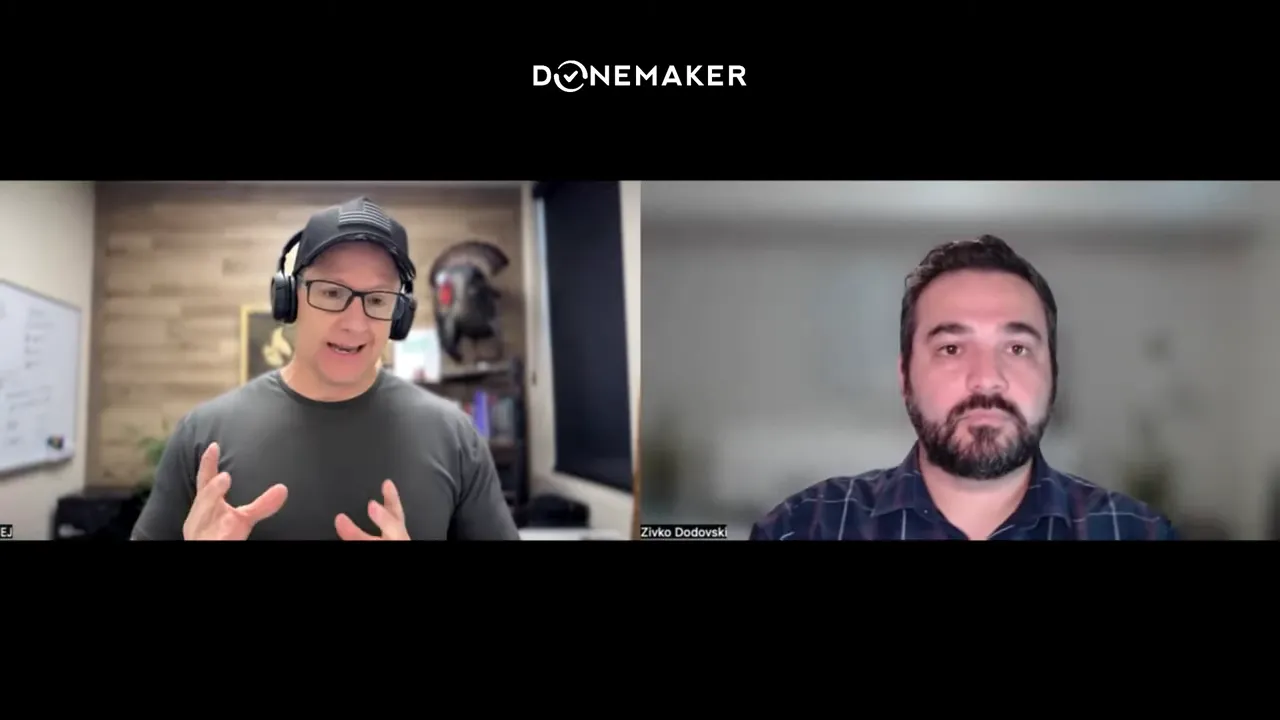
Watch the full podcast here: Generated $130K in 30 days just by fixing broken email marketing | EJ Saunders | DoneMaker Podcast