LinkedIn has become one of the most powerful tools for B2B lead generation, but many companies struggle when it comes to measuring the true return on investment (ROI) from their LinkedIn activities. While likes, comments, and shares can feel satisfying, they don’t always translate into tangible business results. The real question isn’t how many people engage with your posts, but how many of those engagements turn into qualified leads, booked meetings, and, ultimately, closed sales.
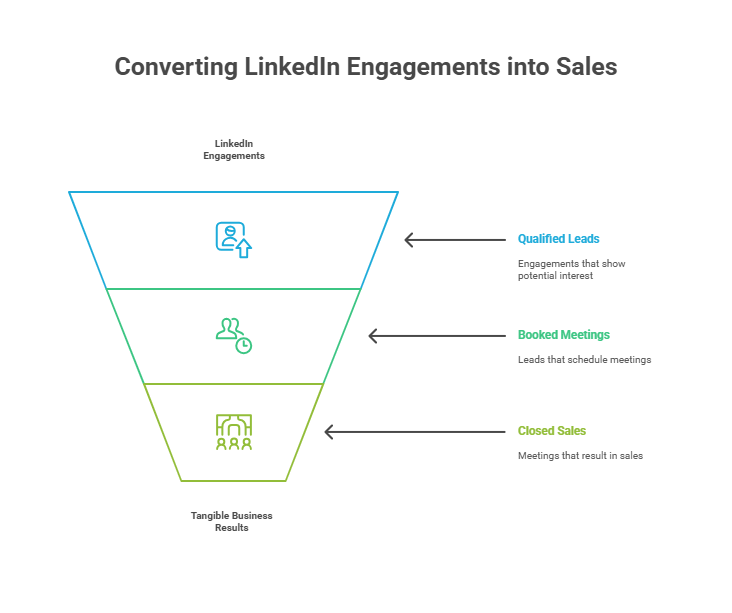
To measure LinkedIn ROI effectively, businesses need to take a more strategic approach, focusing on metrics that directly impact revenue growth. It’s about going beyond vanity metrics and ensuring that each LinkedIn connection, message, and post serves a purpose in your larger sales strategy. In this guide, we’ll walk you through a step-by-step process to help you understand how LinkedIn can work for your B2B sales development efforts and how to track real results.
Step 1: Start With the Right Goals That Actually Impact Revenue
The foundation of any LinkedIn strategy is having clear and measurable goals. Many companies make the mistake of focusing solely on metrics like engagement rates or connection requests sent. While these are helpful to track, they don’t necessarily indicate success. What truly matters is how those interactions contribute to your business goals—like lead generation, sales pipeline growth, and sales conversions.
Let’s break it down with an example. Imagine you’re a software company offering a B2B tool for project management. Your goal might be to generate 20 qualified leads per month from LinkedIn. That’s a specific, measurable target that directly ties into your sales pipeline. To make this goal actionable, you can map out the entire process: how many connection requests you need to send, how many responses you need to get, and how many of those conversations should result in meetings or demos.
Moreover, your goals should be tied to revenue. For instance, let’s say your average deal size is $15,000 and your conversion rate is 10%. To generate $60,000 in sales per quarter, you’d need 40 leads in the pipeline each month. Setting goals like this gives you something tangible to measure—helping you track how LinkedIn activities are moving the needle on your bottom line.
Step 2: Optimize Your LinkedIn Profile to Convert Viewers Into Leads
Your LinkedIn profile is more than just an online resume; it’s your opportunity to make a first impression and convert casual viewers into potential leads. A well-optimized profile acts as a powerful tool in driving qualified traffic and engaging prospects. If your profile isn’t compelling, you may be missing out on valuable opportunities.
Start by optimizing your headline. Instead of just listing your job title, use it as a space to convey the value you offer. For instance, instead of saying “Marketing Director,” try something more impactful like “Helping B2B Tech Companies Boost Revenue Through Data-Driven Marketing.” This headline communicates exactly what you do and who you help, which can make your profile more attractive to your target audience.
In your About section, take the opportunity to share your expertise and experience, but keep it client-focused. For example: “With over 10 years of experience in B2B sales and marketing, I help tech companies generate qualified leads and close more deals. My goal is to bring data-driven strategies to your sales funnel so you can increase conversions and drive sustainable growth.”
Don’t forget to include a professional photo and a background banner that visually represents your business or industry. A clean, professional image helps build trust, while a relevant background banner reinforces your messaging.
Having an optimized profile ensures that when potential leads land on your page, they can quickly understand what you offer and how you can help them solve their problems. Your profile acts as a magnet, pulling in leads and turning profile visitors into valuable connections.
Step 3: Create Valuable Content That Supports Your Sales Strategy
Content marketing is a powerful way to engage your LinkedIn audience, but to measure its ROI, you need to ensure your content is aligned with your sales strategy. Creating content just for the sake of posting isn’t enough; it needs to speak directly to the pain points and interests of your target audience.
For instance, let’s say you sell a SaaS product that streamlines HR processes for mid-sized businesses. Instead of just posting general updates or company news, focus on topics that resonate with your audience. You could write about the challenges HR departments face when scaling their teams, offer tips for improving employee retention, or share insights on how automation can save time and reduce errors.

The key is to position yourself as a thought leader and provide content that answers questions your prospects are actively searching for. This approach not only builds trust but also encourages engagement. When people like, comment, or share your posts, it’s a sign that your content is resonating. And every time someone interacts with your content, you’re one step closer to moving them through your sales funnel.
Don’t forget to use different types of content to keep things engaging. Share articles, but also try videos, polls, and infographics. Mix up the formats to cater to different preferences and increase the chances of reaching a broader audience. Consistent, valuable content can make all the difference when it comes to building relationships and nurturing leads.
Step 4: Use Organic Outreach to Build Real Pipeline
While organic outreach takes time and effort, it’s one of the most effective ways to build genuine relationships with potential clients. Unlike cold emailing or direct sales pitches, LinkedIn outreach can be highly personalized, creating more opportunities for meaningful conversations.
Start by using LinkedIn’s advanced search filters to identify your ideal clients. Look for prospects in specific industries, job titles, and geographic locations that match your target audience.
Once you have your list of potential leads, send them a personalized connection request. Avoid generic messages like “I’d like to add you to my network.” Instead, mention something specific that shows you’ve done your research, such as a shared interest or a recent post they published.
After they accept your connection, initiate a conversation by asking thoughtful questions that relate to their challenges. Don’t push your product right away. Focus on building rapport and providing value first. For example, if someone mentions that they’re struggling with team communication, you could share an article on improving collaboration or ask if they’d be interested in a short call to discuss solutions.
The beauty of organic outreach lies in its ability to create relationships. You’re not just collecting connections—you’re building a pipeline of qualified leads who are genuinely interested in what you have to offer. To track your LinkedIn ROI, monitor the responses you get, the number of meetings you schedule, and the eventual conversions into paying clients.
Step 5: Build a Repeatable System for B2B Lead Generation
Consistency is key to long-term success in LinkedIn lead generation. To scale your efforts and improve your ROI, you need a repeatable system that you can rely on. This system should include defined actions, goals, and tracking to ensure that you’re always moving forward.
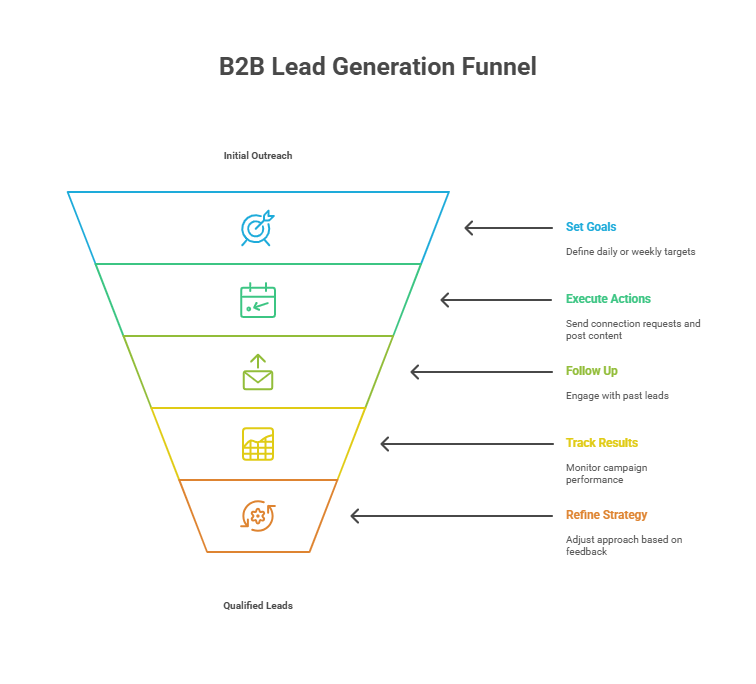
Start by setting daily or weekly goals. For example, you could aim to send 20 personalized connection requests every day, post content three times a week, and follow up with leads from the past month. Establish a clear process for every stage of outreach: from identifying leads to reaching out, following up, and closing deals.
It’s also helpful to build in a feedback loop. Track the results of each outreach campaign and identify what’s working—and what’s not. Are certain types of posts getting more engagement? Are specific industries more responsive to your outreach? Use these insights to refine your strategy and optimize your workflow.
By creating a structured system for B2B lead generation, you can scale your efforts and ensure that LinkedIn becomes a reliable source of qualified leads for your business.
Step 6: Measure Everything and Adjust Based on Results
The final step in measuring LinkedIn ROI is to track and analyze your efforts at every stage. This is where the magic happens because you can identify exactly what’s working and make adjustments as needed.
Start by tracking key metrics like connection acceptance rates, message response rates, meeting bookings, and sales conversions. If you’re using a CRM, integrate LinkedIn data to track your leads from connection to close. Look at the entire process—don’t just focus on one part. The key is to measure everything, from the first touchpoint to the final sale.
For example, if you notice that your messages aren’t getting responses, try experimenting with different messaging strategies. Maybe your pitch is too salesy, or your value proposition isn’t clear. Likewise, if your posts aren’t getting the engagement you’d like, adjust your content strategy. Test different formats, topics, and posting times to find what resonates best with your audience.
Final Recommendations
If you’re serious about using LinkedIn to drive real business results, it’s time to stop treating it as a passive platform. LinkedIn should be an active part of your B2B sales pipeline, from content creation to lead nurturing and conversion.
To succeed, focus on clarity and consistency. Set clear, measurable goals and optimize every aspect of your LinkedIn profile and outreach. Build a repeatable system for generating and nurturing leads. And most importantly, track everything. When you measure your LinkedIn ROI effectively, you’ll not only improve your performance but turn LinkedIn into a true B2B sales engine.
Frequently Asked Questions (FAQ’s)