Are your LinkedIn outreach efforts falling flat, leaving your sales pipeline dry and your B2B leads out of reach? If you’ve ever wondered why your messages go unanswered or your connections rarely turn into real opportunities, you’re not alone. Many professionals make LinkedIn outreach mistakes that quietly sabotage their results and stall their growth.
In this article, we’ll break down the five most common LinkedIn outreach mistakes killing your sales pipeline, explore the impact of each misstep, and provide actionable strategies to help you boost your LinkedIn organic outreach, improve your cold outreach, and generate high-quality B2B LinkedIn leads. Let’s uncover what’s holding your pipeline back, and how to fix it for good.
5 LinkedIn Outreach Mistakes Killing Your Sales Pipeline
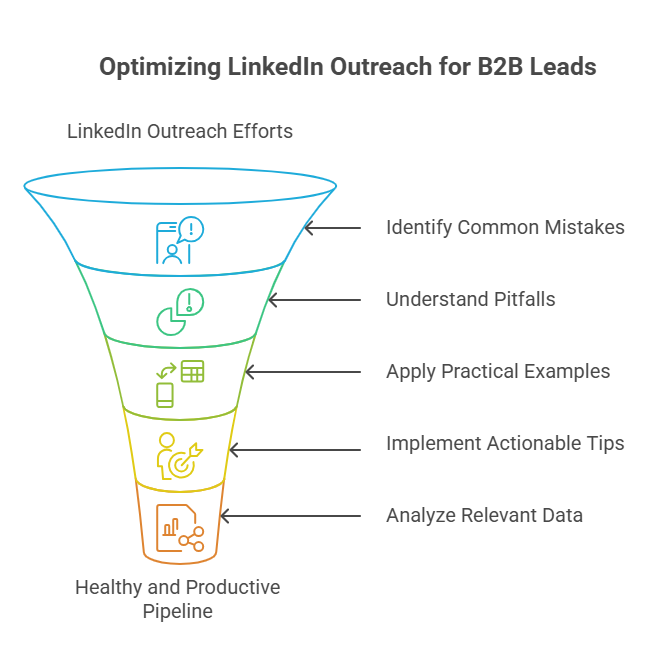
LinkedIn is a powerhouse for B2B lead generation, but too many sales professionals unknowingly sabotage their results with common outreach mistakes. Whether you’re running LinkedIn organic outreach, cold outreach, or nurturing B2B LinkedIn leads, avoiding these pitfalls will keep your pipeline healthy and productive. Below, each mistake is explored in depth, with clear explanations, practical examples, actionable tips, and relevant data.
1. Sending Generic Messages: The Fast Track to Being Ignored
One of the most damaging LinkedIn outreach mistakes is sending generic, “spray and pray” messages. These are mass-produced notes that lack a personal touch, often failing to mention a specific reason for reaching out or any details about the recipient. In today’s crowded LinkedIn inboxes, these messages are quickly dismissed or ignored.
Practical Example:
A generic message might read:
“Hi, I came across your profile and thought we should connect.”
There’s no mention of the recipient’s work, interests, or any shared context.
Actionable Tips:
- Personalize deeply: Go beyond using the recipient’s name. Reference a recent post, congratulate them on a new role, or mention a mutual connection.
- State your purpose clearly: Let them know why you’re reaching out and what’s in it for them.
- Keep it brief: Messages under 400 characters see 22% higher engagement rates.
Data:
- Personalized messages lead to 15% higher response rates.
- Shorter messages (under 400 characters) get 22% more replies.
Effective Template:
“Hi [First Name], I recently read your article on [Topic] and found your insights on [Specific Detail] valuable. I’d love to connect and share ideas on [Relevant Topic]. Open to a quick chat?”
2. Pitching Too Soon: Building Trust Before Selling
Jumping into a sales pitch right after connecting is a surefire way to alienate prospects. LinkedIn is a networking platform, not a cold-calling platform. Leading with a pitch signals that you’re more interested in closing a deal than building a relationship.
Practical Example:
A bad first message:
“Thanks for connecting! I help businesses like yours increase revenue by 30%. Can we schedule a call?”
Actionable Tips:
- Start with value: Share a relevant article or industry insight, or congratulate them on a recent achievement.
- Ask questions: Initiate a conversation by asking about their challenges or goals.
- Build rapport: Engage with their content, comment thoughtfully, and offer help before mentioning your product.
Data:
- Trust-building is critical: 84% of B2B buyers start the buying process with a referral, and peer validation builds credibility.
- Following up multiple times can increase response rates from 9% to 27% by the sixth message.
Effective Approach:
“Hi [First Name], I noticed your recent post on [Topic] and found your perspective interesting. What’s your take on [Related Trend]? Looking forward to your thoughts.”
3. Targeting the Wrong Audience: Quality Over Quantity
Reaching out to everyone dilutes your efforts and fills your pipeline with unqualified leads. If your message isn’t relevant to the recipient’s needs or role, it will be ignored, and your brand may appear out of touch.
Practical Example:
A SaaS company selling enterprise solutions targets small businesses that can’t afford their product, resulting in low engagement and wasted time.
Actionable Tips:
- Define your ideal client profile (ICP): Identify key demographics, job titles, industries, and company sizes that are the best fit for your offering.
- Use LinkedIn’s advanced filters: Narrow your search by location, industry, company size, and more.
- Regularly review and refine: Update your ICP based on real conversion data and feedback.
Data:
- Campaigns targeting the wrong audience consistently underperform, regardless of execution quality.
- Poor targeting leads to wasted resources and a weak brand reputation.
Checklist:
- Is this contact in your target industry?
- Do they have decision-making authority?
- Does their company fit your ideal customer profile?

4. Incomplete or Outdated LinkedIn Profiles: Damaging First Impressions
Your LinkedIn profile is your digital business card. Before responding to outreach, prospects often check your profile to assess credibility. An incomplete or outdated profile erodes trust and can cost you valuable opportunities.
Practical Example:
A profile with no photo, a vague headline (“Sales Professional”), and no recent activity signals a lack of professionalism and engagement.
Actionable Tips:
- Use a professional photo: A clear, friendly headshot builds trust.
- Write a compelling headline: Summarize your expertise and value proposition in one line.
- Detail your experience: Highlight relevant achievements, skills, and endorsements.
- Showcase activity: Share posts, comment on industry trends, and display recent work.
Data:
- Updated profiles are more likely to attract connection requests and engagement.
- Recruiters and prospects are more likely to reach out to profiles that are complete and active.
Profile Optimization Checklist:
- Is your photo recent and professional?
- Does your headline clearly state your role and value?
- Have you listed recent achievements and endorsements?
- Are you sharing or commenting on industry content regularly?
5. Keeping Dead Deals Alive: Cleaning Up Your Pipeline
Holding onto “zombie” deals, opportunities that haven’t progressed in weeks or months, clogs your pipeline and gives a false sense of progress. This wastes time and skews your sales forecasts.
Practical Example:
A deal remains in the “negotiation” stage for months with no replies from the prospect, yet it’s still counted as a high-probability opportunity.
Actionable Tips:
- Regular pipeline reviews: Identify and remove leads that haven’t engaged in a set period (e.g., 30 days).
- Requalify stagnant leads: Reassess whether they still fit your ICP and have buying intent.
- Focus on active prospects: Prioritize leads who respond and engage with your messages.
- Automate reminders: Use CRM tools to flag deals that have stalled for follow-up or removal.
Data:
- Sales reps spend over three weeks on average before admitting a deal is dead, wasting valuable time.
- 80% of new leads never translate into sales due to lack of nurturing or poor qualification.
Pipeline Management Checklist:
- Are there deals that haven’t moved in 30+ days?
- Have you followed up at least three times with no response?
- Does the lead still fit your target profile and show interest?
LinkedIn Organic Outreach: Building Relationships That Last
LinkedIn organic outreach is about more than just messages, it’s about building a visible, credible presence that attracts B2B LinkedIn leads over time.
Practical Examples:
- Posting industry tips and case studies.
- Commenting on others’ posts to spark conversations.
- Sharing relevant news or insights with your network.
Actionable Tips:
- Post regularly: Aim for at least two posts per week with a mix of educational and promotional content.
- Use visuals: Posts with images get twice as many comments; videos are 20 times more likely to be shared.
- Engage consistently: Respond to comments and start discussions to boost your visibility.
- Leverage hashtags: Use relevant hashtags to expand your reach.
Data:
- Consistent engagement increases your content’s reach and builds trust with your audience. You can read more about LinkedIn Organic Outreach here: https://donemaker.com/linkedin-organic-outreach-methods-that-turn/
LinkedIn Cold Outreach: Making First Impressions Count
Cold outreach on LinkedIn can be powerful if you focus on relevance, timing, and value.
Practical Examples:
- Referencing a mutual connection or recent company news in your first message.
- Following up with new value or insights if there’s no response.
Actionable Tips:
- Personalize every message: Mention something specific about the recipient’s work or interests.
- Keep it short: Stay under 400 characters for higher engagement.
- Follow up thoughtfully: Response rates jump from 9% to 27% by the sixth follow-up.
- Send at the right time: Weekdays, 9 AM–5 PM, yield the best results.
Data:
- Personalized, concise messages see up to 22% higher response rates.
- Video messages can increase engagement by up to 300% compared to text.
B2B LinkedIn Leads: Turning Connections Into Opportunities
LinkedIn is the top platform for B2B lead generation, but success depends on nurturing relationships, not just collecting connections.
Practical Examples:
- Sharing client success stories and testimonials to build credibility.
- Using LinkedIn Sales Navigator to find and engage with decision-makers.
Actionable Tips:
- Build authority: Share insights and case studies relevant to your target audience.
- Nurture leads: Stay in touch with valuable information and resources, not just sales pitches.
- Leverage peer validation: Highlight case studies or invite prospects to webinars with existing clients.
Data:
- 63 million decision-makers are active on LinkedIn, making it the top B2B lead generation platform.

LinkedIn Pipeline Issues: Diagnosing and Fixing Bottlenecks
If your LinkedIn outreach isn’t generating results, your pipeline may be clogged with unqualified or stalled leads.
Practical Examples:
- Reviewing your pipeline weekly to remove dead or unresponsive leads.
- Requalifying leads based on updated criteria and recent engagement.
Actionable Tips:
- Audit your outreach: Regularly review messages for personalization and relevance.
- Update your ICP: Refine your ideal client profile based on conversion data.
- Set follow-up reminders: Use CRM tools to automate reminders for timely follow-ups.
- Remove dead leads: Don’t be afraid to let go of leads that aren’t progressing.
Data:
- Regularly clearing out stagnant leads keeps your pipeline dynamic and focused on active prospects.
- Dead deals that linger in your pipeline can cause you to miss your sales targets and distort forecasts.
Final Recommendations
To maximize your LinkedIn outreach success, focus on genuine personalization, patience, and consistent engagement. Regularly update your profile and content to reflect your expertise and value. Use LinkedIn’s advanced tools to refine your targeting, and don’t hesitate to clean your pipeline of unresponsive leads. By applying these strategies, you’ll avoid the most common LinkedIn outreach mistakes, build stronger relationships, and keep your sales pipeline full of real opportunities.