By Zivko Dodovski, Founder & CEO, DoneMaker · Updated September 2026
Manual LinkedIn outreach means a person researches each prospect and writes each message; automated outreach means software sends templates at volume. The honest difference isn’t speed — it’s output. Automation produces sends. Manual outreach produces conversations. If your sale happens in a conversation, that’s the whole decision.
What each one actually is
Manual outreach: a person builds the prospect list, reads each profile, writes the connection request and every message after it, and stays in each conversation until it books or closes out. Slow per message. High per conversation.
Automated outreach: a tool sends connection requests and message sequences to a list, usually with a first name and company name merged into a template. Fast per message. And that speed is the product being sold — the tools are priced on volume, because volume is all they can promise.
What automation costs you
The pitch is “same outreach, less time.” It isn’t the same outreach. Four things change:
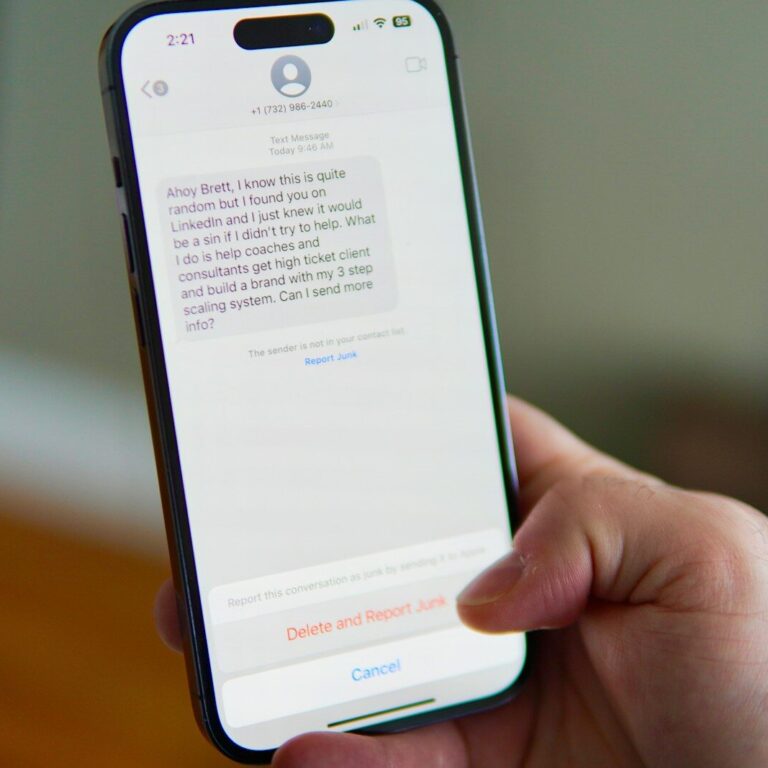
1. The messages read like what they are. A template with your name pasted in sounds like a template with your name pasted in. Your buyers see dozens of these a week; they’ve learned the pattern, and the pattern gets ignored.
2. Your account carries the risk. LinkedIn’s terms prohibit automation tools, and the platform actively restricts accounts that behave like bots. The account being restricted is yours — your profile, your network, your history. No campaign result is worth losing the asset the campaign runs on.
3. The time saved comes out of personalization. The hours automation saves are exactly the hours that made the outreach work: reading the prospect’s profile, referencing something real, writing for one person. Remove them and you’ve scaled the part that didn’t matter.
4. Software can’t read the room. A person notices when a prospect viewed their profile, engaged with a post, or replied with a half-interested question worth a thoughtful answer. A sequence tool sends message four on schedule regardless. The signals that turn outreach into conversations are the ones automation can’t see.
Manual vs automated: the honest table
| Manual outreach | Automated outreach | |
|---|---|---|
| Who writes each message | A person, for the prospect reading it | A template, merged at send time |
| What scales | Conversations — by adding people | Sends — by raising the volume dial |
| Account safety | Within LinkedIn’s rules | Against LinkedIn’s terms; restriction risk is yours |
| What the prospect experiences | A person who did their homework | A pattern they’ve already learned to ignore |
| When it breaks | When targeting is wrong | When the platform catches on, or the market does |
| What you’re left with after a campaign | Relationships and open conversations | A spent list |
The fair case for automation — and its limit
Automation is honestly cheaper per send, and if your offer is transactional, low-priced, and closes from a link, volume can be the right game. That’s not most B2B services. If your average client is worth five or six figures over the relationship, one real conversation is worth more than a thousand sends — and the math never favors the template again.
The middle path some try — automate the first touch, go manual on replies — inherits automation’s problems at the exact moment that decides everything: the first impression. You can’t personalize your way out of an opening the prospect already recognized as a bot.
How manual outreach works when it’s done properly
The craft is targeting, message quality, and follow-through — the full method is in the LinkedIn outreach playbook, and the messaging piece specifically in how to personalize LinkedIn messages. The short version:
- Target narrow. A list of people who genuinely fit your ideal customer beats a big list every time, because everything downstream depends on relevance.
- Write for one reader. Reference something true about them. Lead with something useful before asking for anything.
- Stay in the conversation. Most of the value is in the follow-up — answering questions, keeping threads open, booking when the prospect is ready rather than when the sequence says so.
This is what DoneMaker sells as a done-for-you service: a dedicated team — strategist, account manager, outreach specialist — running manual outreach on your profile every working day. No tools, no bots, no AI-written messages.
DoneMaker by the numbers
As of September 2026:
- Running manual LinkedIn outreach since 2018
- 58+ active client accounts, US and Canada
- 25–30% average connection rate
- 7–11 deal opportunities per account per month
- 4–5 booked calls per account per month
- Clients: accounting, bookkeeping and CFO firms; digital, marketing and advertising agencies; coaches and consultants; B2B services with relationship-driven sales
A deal opportunity is a prospect who expresses clear interest — asks questions, opens an email exchange, or books a call.
Frequently asked questions
What’s the difference between manual and automated LinkedIn outreach?
Manual outreach is a person writing and sending each message individually after researching the prospect. Automated outreach is software sending templated sequences at volume. The output differs more than the method: manual produces conversations, automated produces sends.
Is automated LinkedIn outreach against LinkedIn’s rules?
Yes — LinkedIn’s User Agreement prohibits third-party automation tools, and the platform restricts accounts that behave like bots. The risk lands on your account, not the tool vendor’s.
Can I combine manual and automated outreach?
You can, but the hybrid inherits automation’s weakness at the worst point: the first touch. If the opening message reads as automated, the prospect’s decision about you is already made before a human enters the thread.
Doesn’t manual outreach take too long to scale?
It scales differently — by people, not by volume settings. That’s slower and it’s also the point: what you’re scaling is conversations that book calls, not sends. For a B2B service where one client is worth five figures, the per-conversation math wins.
How do I know if manual outreach fits my business?
It fits if your sale happens in a conversation and your client relationships are worth real money over time. It doesn’t fit if you sell something transactional that closes from a web page — volume channels serve that better.
Want to see the manual version running on your profile? Book a call — 20 minutes, we’ll tell you honestly whether LinkedIn outreach fits your business before anything else.