Most advertising problems are not advertising problems.
They are product problems, pricing problems, distribution problems, creative problems, measurement problems, or a simple failure to understand how people actually buy. Too many brands jump straight to promotion, then wonder why a discount code, a clever hook, or another paid campaign cannot create sustainable growth.
Digital platforms have become incredibly sophisticated, but the fundamentals have not changed. The brands that win still understand consumer psychology, reduce friction, create demand, and stay memorable long before a customer is actively shopping.
Key Takeaways
- Product-market fit, pricing, distribution, and promotion must work together to create sustainable growth.
- Emotional creative builds mental availability long before a customer enters the market.
- High-quality conversion data helps ad platforms find valuable customers instead of cheap clicks.
- Investing in the 95% not actively buying can lower future demand-capture costs.
Table of Contents
- Start With Consumer Psychology, Not Platform Tactics
- Retail Still Teaches the Best Lessons About Friction
- The Four Ps Still Matter, Especially the First Two
- Demand Means You Do Not Have to Live on Discounts
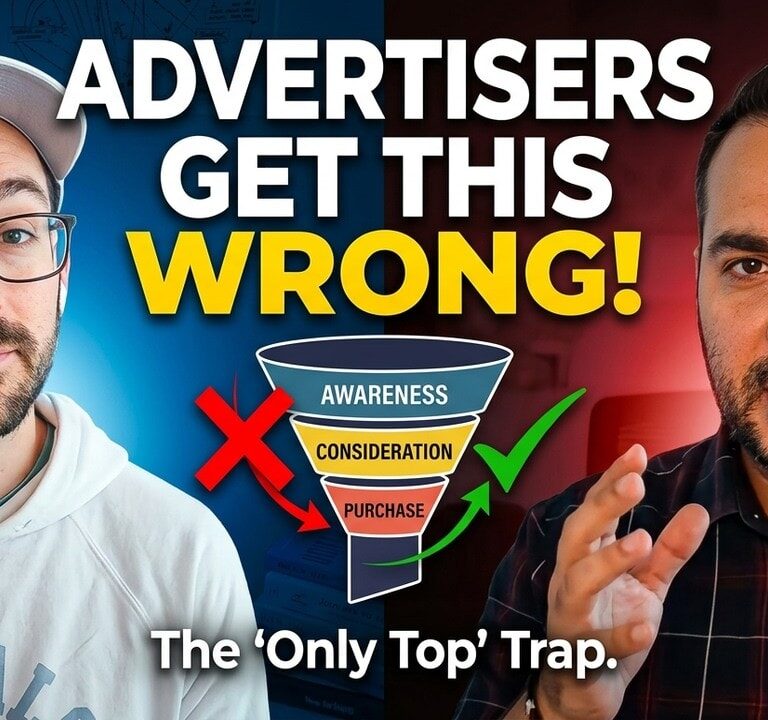
- Bottom-of-the-Funnel Performance Marketing Is Not Enough
- Emotional Advertising Wins Consideration Before the Purchase
- Distinctive Characters Are an Underrated Brand Asset
- Why Meta Remains an Essential Advertising Platform
- Your Pixels Are Sharing Valuable Audience Signals
- Clicks Are Not the Goal: Feed Platforms Better Conversion Data
- Do Not Optimize a B2B Funnel Around a White Paper Download
- The 95/5 Rule Explains Why Bottom-Funnel Ads Get So Expensive
- Build the Full Funnel Around Better Questions
Start With Consumer Psychology, Not Platform Tactics
I came into marketing through retail. Early on, a manager handed me Why We Buy, a book about the in-store behaviors and psychological tactics that influence what people purchase. That idea was immediately fascinating: retail is not just about putting products on shelves. It is about shaping an environment that makes people comfortable, curious, and more likely to buy.
Digital marketing became the faster, more measurable, more scalable version of that same concept. Google Analytics, paid media, attribution, conversion tracking, and audience segmentation all made it possible to understand consumer behavior in near real time.
But marketers should not get so caught up in the newest platform feature that they ignore decades of behavioral research. The best marketers study the foundations:
- Why We Buy by Paco Underhill
- Influence by Robert Cialdini
- The 22 Immutable Laws of Marketing by Al Ries and Jack Trout
- How Brands Grow by Byron Sharp
What happens in a store, on a website, in a social feed, or inside a search result is all connected by the same basic question: What makes someone feel comfortable enough to choose you?
Retail Still Teaches the Best Lessons About Friction
One of the strongest examples from Why We Buy is the “buttbrush factor.” The research found that when people are browsing and another shopper brushes against them in a tight aisle, they often become uncomfortable and leave.
It sounds almost absurdly simple, but it illustrates an important truth: small moments of friction can destroy purchase intent.
Trader Joe’s is a useful case study. Its stores are known for wide aisles and a browsing-friendly environment. At least historically, the company has accepted lower revenue per square foot than many retailers because it wants people to enjoy being in the store, linger, explore, and double back through the aisles.
That choice can frustrate a purely spreadsheet-driven operator. More shelf space and narrower aisles may appear more efficient on paper. But consumers do not like feeling rushed, cramped, or overwhelmed.
The digital equivalent is everywhere:
- A slow checkout process
- A mobile page packed with intrusive pop-ups
- A confusing navigation menu
- A form asking for too much information
- A payment flow that does not accept the customer’s preferred method
- An unclear return policy or unexpected shipping cost
Every one of those things is a digital buttbrush factor. You can have excellent targeting and a great ad, but you still lose if the buying experience creates discomfort.
The Four Ps Still Matter, Especially the First Two
The classic four Ps of marketing are product, price, place, and promotion. The order matters.
Product comes first. Promotion comes last.
Far too many businesses obsess over promotional strategy before they know whether they have product-market fit. They do not know exactly who the audience is, what need they solve, why their product matters, or how they are meaningfully different from alternatives.
No media buyer can fix that forever. You might create short-term movement with discounts, aggressive retargeting, or clever creative, but you will not build a durable business if the product itself is weak or poorly positioned.
Product: Know the Job You Are Solving
A product is not just the thing you sell. It is the problem it solves and the meaning it has for the buyer. If someone cannot quickly understand why they need it, paid media becomes expensive because every ad has to work harder to explain the value.
Price: Protect the Margin That Makes Growth Possible
Price is arguably the most overlooked P, even though it determines whether your growth is profitable. It is shockingly common for ecommerce brands to offer 10% off in exchange for an email address simply because every other direct-to-consumer brand does it.
But 10% off revenue is not a small thing when margins are tight.
If an apparel business has a 35% profit margin, giving away 10% of top-line revenue may consume a huge share of its contribution margin. The business is not merely giving customers a little incentive. It may be giving away a substantial portion of the profit that should have paid for advertising, operations, fulfillment, and future growth.
And how many brands have actually measured the incremental impact of that discount? How many know whether the offer created a meaningful conversion lift, rather than simply training people to wait for a coupon?
The standard direct-to-consumer playbook often becomes a race to the bottom:
- Offer 10% off for an email signup.
- Run another promotion for a holiday.
- Increase discounts to recover conversion rate.
- Acquire customers at minimal or negative margin.
- Hope the customer becomes profitable later.
That is not a strategy for building a healthy business. It is a strategy for manufacturing revenue while quietly eroding profitability.
Higher Prices Can Sometimes Improve Conversion
Customers are not perfectly rational. A lower price does not always create more demand.
In many categories, a higher price can signal quality, trust, exclusivity, or better performance. A 20% price increase may even improve conversion if it changes how people perceive the product.
That is why pricing needs testing. Do not assume that cheaper wins. Determine what price communicates the right value, supports your margins, and fits the position you want to own in the market.
Place: Make Buying Easy Where Customers Want to Buy
Place used to mean where the product appeared in physical retail. Today, it also means where customers can find you online, where you advertise, and how easily they can complete a purchase.
This is where the concept of physical availability matters. A brand grows when it is easy to buy whenever a customer is ready.
For an online business, physical availability includes:
- A reliable direct-to-consumer website
- A checkout flow that works smoothly
- Accepted payment methods, including options such as American Express or financing when relevant
- Availability on marketplaces such as Amazon or Target.com when those channels fit the brand
- Consistent inventory and fulfillment
Amazon creates a complicated tradeoff. Merchants understandably dislike marketplace fees and the limited ownership of customer data. They want to diversify because they cannot build the same direct customer relationship or email marketing database inside Amazon.
Still, if customers are already on Amazon and your product is available there, their likelihood of buying from you may rise dramatically. For commoditized goods in particular, refusing to sell on Amazon is a deliberate decision to introduce friction.
That does not mean every brand belongs there. A luxury brand may choose tighter distribution to protect its positioning. The point is to recognize the choice clearly. If you limit availability, understand what you are giving up and why.
Demand Means You Do Not Have to Live on Discounts
Luxury brands demonstrate what real demand looks like. Consider Montblanc pens. They are expensive, highly recognizable, and rarely treated like a bargain-bin product. People buy them for milestones, gifts, graduation, achievement, and status.
The value is not just the writing instrument. The value is the story, the quality perception, the status signal, and the emotional meaning attached to ownership.
The goal of marketing is not simply to push people through a discounted checkout. It is to create enough demand that customers want the product without needing a perpetual 15% off offer.
When people genuinely want something, they are willing to pay for it. That is the difference between building a brand and constantly buying transactions.
Bottom-of-the-Funnel Performance Marketing Is Not Enough
Performance marketing matters. Every business needs profitable short-term channels, clean measurement, and campaigns that efficiently capture existing demand.
That is the foundation. It is also where many agencies, including ours, built their capabilities through bottom-of-the-funnel Google and Meta campaigns.
But the old opportunity to build a massive business simply by squeezing the bottom of the funnel is largely gone. Competition is higher, ad costs are higher, privacy changes have disrupted tracking, and every serious competitor knows how to buy search traffic.
A profitable strategy needs to balance two things:
- Short-term performance: Campaigns that capture demand and operate within clear profitability guardrails.
- Long-term growth: Creative, reach, frequency, and messaging that make the brand memorable before someone is ready to buy.
Think in guardrails, not absolutes. You need a reasonable view of how much the business can spend and what level of efficiency it must maintain. But if every decision is based only on immediate return, you will starve the future pipeline of demand.
Brand building is not a luxury reserved for companies with Super Bowl budgets. Smaller businesses can build salience too. They simply need a real creative strategy, a distinctive message, and the discipline to stay present over time.
Emotional Advertising Wins Consideration Before the Purchase
People make emotional decisions, even in categories they describe as rational.
Car insurance is a perfect example. Choosing an insurer should be a serious, detail-oriented decision. It involves protecting your vehicle, finances, and family. Yet the most memorable insurance advertising is often a gecko, a comedian in a white apron, a caveman, or a funny story about becoming your parents.
That creative approach works because the advertising is not necessarily trying to convince someone that one insurer has the best policy in a single impression. It is trying to earn a place in the customer’s mind.
There are thousands of insurance options in the United States, but most people can name only a handful of brands. Those brands have built mental availability through years of consistent, emotionally resonant advertising.
When the moment comes to compare insurance providers, the memorable brands make it into the consideration set. They have earned the right to be evaluated.
Emotional Resonance Is More Than Humor
Emotion does not only mean making people laugh or cry. Entertainment is an emotion. Trust is an emotion. Fear is an emotion. Relief is an emotion.
A roofing company operating in Nashville provides a strong example. After repeated storms and tornadoes, homeowners may feel deeply anxious about the roof over their heads. In that context, messaging around a six-hour response time is not merely a functional feature.
It creates a feeling of safety: if something goes wrong, this company will show up quickly.
That is emotional marketing rooted in a real customer need. The most effective message is not always flashy. It is the message that speaks to what the customer is genuinely feeling.
Even a jingle can do this. “Safelite repair, Safelite replace” communicates more than service availability. The cadence itself feels like an exhale of relief. Great advertising is not just the words on the page. It is the tone, pacing, imagery, sound, and context that make the message land.
Distinctive Characters Are an Underrated Brand Asset
Brand characters have been working for generations: the Geico Gecko, Tony the Tiger, Toucan Sam, and countless others. They give a brand a recognizable face and make creative easier to identify at a glance.
Today, AI-generated characters create a major opportunity for smaller businesses. A distinctive character can be developed quickly and affordably, then used consistently across paid social, video, landing pages, email, and other brand touchpoints.
This does not mean every business needs a mascot for the sake of being cute. The character must fit the brand and communicate something relevant. But for a business with a finite addressable audience, even one with 500,000 potential customers, a familiar visual identity can create enormous leverage.
Research from the Ehrenberg-Bass Institute has repeatedly shown the broad effectiveness of creative elements such as animals and distinctive assets. Cute animals may sound like a ridiculous answer when sales are down, but memorable creative often works precisely because it breaks through the sameness of category advertising.
Most small brands are still not thinking this way. They are using interchangeable product photos, generic templates, and forgettable creative made to satisfy an algorithmic trend. That is not how you build salience.
Why Meta Remains an Essential Advertising Platform
There are many useful advertising platforms. Brands can see strong results on Reddit, TikTok, Pinterest, LinkedIn, programmatic media, connected TV, Google, and other channels.
But there is still nothing quite like Meta.
Facebook and Instagram offer enormous scale, and Meta has invested heavily in artificial intelligence, audience matching, reporting, placement optimization, and automated delivery. The platform reaches a massive share of the global population every day, making it one of the most powerful distribution systems ever created.
Meta’s strength became even clearer after Apple’s iOS privacy changes disrupted the advertising ecosystem. The iOS 14 updates made tracking, attribution, audience targeting, and conversion optimization far more difficult for advertisers.
In 2022, Meta’s response was to commit aggressively to rebuilding its advertising infrastructure around AI. The market was skeptical at the time, but the investment helped the platform recover and improve its ability to match ads with likely buyers despite weaker traditional tracking signals.
The lesson is not that Meta should be the only channel in a media plan. In fact, cross-platform strategies often outperform single-channel strategies because they increase reach and frequency across the customer journey.
A diversified plan might include Google, Meta, and Pinterest, for example. The right mix depends on the audience, budget, category, creative capabilities, and buying cycle. Do not spread a small budget so thinly that no platform can learn. But do not assume that focusing only on one or two bottom-funnel channels is enough to create growth.
Your Pixels Are Sharing Valuable Audience Signals
Many people believe platforms must be listening to conversations because they see ads that seem uncannily relevant. In reality, the advertising systems often do not need to listen.
The data signals already available are extraordinarily powerful.
Google Analytics is free for a reason. When a site has the Google Analytics tag installed, Google can learn from the activity happening there. Google already understands search behavior, YouTube activity, Chrome browsing patterns, Gmail signals, device usage, and more. The analytics tag expands that picture further.
Meta works similarly through the Meta Pixel. When a person lands on a website with the pixel installed, Meta can identify that they may be in the market for a particular category of product or service.
That creates an important competitive reality: if your site has a Meta Pixel, you are receiving reporting and optimization capabilities, but you are also participating in an ecosystem where competitors can reach people who have demonstrated interest in your category.
Imagine you sell garden supplies. Someone clicks your expensive Google ad, lands on your site, and browses your products. If you are not active on Meta, Pinterest, or other relevant channels, a competitor may reach that same person later with a more compelling offer.
Worse, a massive retailer such as Home Depot, Amazon, or Walmart may outbid you for that person’s attention. You paid to create the initial interest, then gave a larger competitor an opportunity to finish the sale.
That is why retargeting and cross-platform presence matter. They are not just about chasing people around the internet. They are about protecting the investment you made to bring a potential customer to your site in the first place.
Clicks Are Not the Goal: Feed Platforms Better Conversion Data
Click farms and bot traffic get blamed for a lot of poor advertising performance. Fraud exists, and platforms must continually police it. But many campaigns fail for a simpler reason: the optimization objective is wrong.
A high click-through rate does not mean an ad is good. It may mean the ad is interesting, provocative, or curiosity-inducing. But the people clicking may not be people who will buy.
The single most important technical requirement for performance marketing is high-quality conversion data.
Advertising platforms use the data you send back to learn who is valuable. If you feed them shallow data, they optimize for shallow outcomes.
Ecommerce: Optimize for Conversion Value
An ecommerce advertiser should not merely report whether a sale happened. The platform should receive the actual value of the purchase.
Consider two brands selling products ranging from $15 to $100:
- Brand A optimizes for the maximum number of sales.
- Brand B optimizes for conversion value.
Brand A may generate lots of low-cost purchases for the cheapest items. The platform is doing exactly what it was asked to do.
Brand B may generate fewer total purchases, but more high-value orders. Over time, it is training the algorithm to find customers who are more likely to create greater revenue and stronger economics.
If these brands compete for similar audiences, Brand B is more likely to capture the higher-value buyers.
Lead Generation: Optimize for Qualified Deals, Not Just Leads
The same principle applies to lead generation.
A plumbing company that optimizes Google Ads only for phone calls may get a lot of calls, including low-quality inquiries. But a business that connects its CRM or Salesforce data can send richer signals back to the platform:
- Which leads were qualified
- Which leads became opportunities
- Which opportunities closed
- What each closed deal was worth
That feedback helps the system find better cohorts of customers. The advertising platform learns what a valuable customer actually looks like, rather than simply learning who is likely to submit a form or make a call.
In competitive markets, this becomes a real advantage. Some advertisers optimize for profit rather than revenue. Others optimize for closed deal value rather than lead volume. If your competitors are feeding better data into the platforms, they may be training the algorithms to find the best customers while you are left with lower-quality traffic and conversions.
Do Not Optimize a B2B Funnel Around a White Paper Download
B2B marketers love the white paper download. It is easy to count, easy to report, and often cheap to acquire.
But a white paper download may be extremely far removed from an actual customer, particularly for a high-value service or complex enterprise sale.
If a business historically had 5,000 white paper downloads and one in five eventually became a customer, it may be tempting to tell the platform to find more people who will download the white paper.
At scale, the platform will do exactly that. It will seek easier and easier downloads. The volume may rise, but the quality often declines because the algorithm is optimizing for the action you selected, not the commercial outcome you actually want.
For a $150,000 B2B engagement, trust is rarely built through an ebook alone. The sale may require conversations, meetings, demonstrations, references, detailed discovery, and a strong relationship. That does not mean educational content has no value. It means it should not be mistaken for a high-intent buying signal.
Optimize toward the deepest meaningful conversion event you can reliably measure. That might be a qualified opportunity, a completed sales consultation, a closed-won deal, or another event that genuinely indicates commercial value.
The 95/5 Rule Explains Why Bottom-Funnel Ads Get So Expensive
A useful principle for B2B and considered purchases is the 95/5 rule: at any given moment, roughly 5% of your total addressable market may be actively in-market, while the other 95% is not ready to buy yet.
Most brands direct the overwhelming majority of their budget toward that 5%.
They fight for high-intent Google searches, LinkedIn clicks, demo requests, and bottom-funnel conversions. Naturally, the cost rises because every competitor is bidding on the same small group of active buyers.
This is why marketers complain that Google, LinkedIn, and other demand-capture channels are too expensive. They are expensive because the market is crowded at the bottom of the funnel.
The opportunity is the 95%.
That audience is not ready today, but that changes constantly. The people who are in-market this week may not be next week, and some people who were not in-market yesterday will be tomorrow.
When you reach the broader market consistently with distinctive, emotionally resonant creative, you improve the odds that people remember you when their buying moment arrives.
That is the role of video, YouTube, connected TV, programmatic display, paid social, and other reach-oriented channels. They do not always produce a tidy, immediate return in the dashboard. But they can make future demand capture dramatically more efficient.
Monday.com is a great illustration. Years of distinctive YouTube advertising helped make the brand familiar long before many people actively needed project management software. When the need eventually appeared, Monday.com had already earned a place beside better-known options such as Asana or Basecamp.
That is the advantage of full-funnel marketing. You are not trying to manufacture a purchase from someone who is not ready. You are ensuring that when they are ready, your brand is one of the few they already know.
Build the Full Funnel Around Better Questions
A sustainable advertising strategy requires better questions than “How do we get more clicks?” or “Can we lower cost per lead?”
Ask instead:
- Do we have genuine product-market fit?
- Does our pricing support profitability and the position we want to own?
- Where can customers buy us, and where are we creating unnecessary friction?
- Are we building demand or merely discounting existing demand?
- What emotion should customers associate with our brand?
- Do our ads look distinctive enough to be remembered?
- Are competitors reaching the people who have already visited our site?
- Are we sending platforms meaningful conversion data?
- Are we overinvesting in the 5% who are ready today while ignoring the 95% who could buy later?
Advertising is not one lever. It is a system. Product, price, place, promotion, creative, data, distribution, and customer psychology all work together.
Get the fundamentals right, protect the short-term economics, and invest consistently in becoming memorable. That is how you stop chasing the next promotional trick and start building a brand that can grow for the long term.
|
Frequently Asked Questions
What does full-funnel advertising mean?
Full-funnel advertising combines demand capture at the bottom of the funnel with reach, frequency, and brand-building activity that creates future demand higher in the funnel.
Why can discounts hurt ecommerce profitability?
Discounts reduce top-line revenue and can consume a significant share of contribution margin, especially for businesses with already limited profit margins.
Why should advertisers optimize for conversion value?
Conversion value tells platforms which purchases create the most revenue, helping their algorithms prioritize higher-value customers instead of simply generating the most transactions.
What is the 95/5 rule in marketing?
The 95/5 rule suggests that only a small portion of a market is actively ready to buy at a given time, so brands must stay memorable with the much larger audience that may buy later.